Joe Geiser, 51Blank and shear operator at GM’s metal fabrication plant in Lordstown, Ohio. When General Motors announced plans to shut down its plant in Massena, N.Y., in 2008, Joe Geiser pulled up roots and moved to the automaker’s factory in Lordstown, Ohio. Six months later, Geiser was laid off when GM, which posted a loss of $31 billion for 2008, continued cutting costs. But slowly, manufacturing picked up. In 2009, after nine months out of work, Geiser was rehired. “I was getting 40 hours a week at my full rate—$28 an hour,” he says, noting that his UAW contract guaranteed him pay security. Eventually, GM added back its third shift. It also hired new workers, though their “Tier 2” union contracts aren’t as generous as the costly legacy contracts that have made competition with nonunionized automakers difficult for GM. “I feel bad for them,” says Geiser.
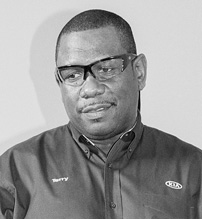
Terry Gosha, 46Assembly-line group leader at Kia’s plant in West Point, Ga. Kia Motors opened its first American plant in West Point, Ga., in 2009. Before landing his job there that year, Terry Gosha was laid off by Panasonic twice. The first factory relocated to Mexico, and the second shut down. Today, with Kia doing brisk business, he feels secure. “Now I got bills caught up, and when I’m off the job I can actually relax, get a good night’s sleep, and enjoy my family.” In the past three years, Gosha has been promoted from a $14.90-an-hour assembly-line job to a salaried group leader position overseeing 35 people. “I’ve been here since the plant’s infancy, before there were even 1,000 people,” he says. Right-to-work states like Georgia and S. Carolina, where companies are freed from union demands, have attracted automakers including Honda, BMW, and Mercedes. Gosha doesn’t mind that he’s not part of a union. “There’s plenty of work here—and everyone feels secure,” he says.
Discussion questions:
1. Compare the policies of the two companies.
2. For which company would students prefer to work? Why?