

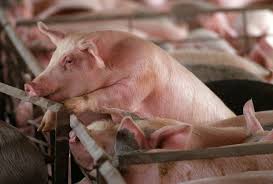
Now 100+ years later, if you read the latest edition of BusinessWeek (Dec. 9-15, 2013), you will likely eat a lot less pork in 2014. The lengthy article, titled “The Truth About Pork,” documents how the US Dept. of Agriculture cut the number of inspectors on the pork processing line with the agreement that plants would hire their own quality assurance officers. Line speeds that are now “dangerously fast” and there are vastly increased violations of food safety requirements. A recent USDA Inspector’s General report states: “As a result, there is reduced assurance of inspectors effectively identifying pork that should not enter the food supply.”
The good news is that the data provided makes for a nice example which can be used to construct a Pareto chart when you are teaching Chapter 6. Using the 223 violations in 2012 at a sample plant (Quality Pork Processors, in Minnesota), students can construct an interesting chart. Here are the safety violations: Food contact preoperational sanitation–69 violations: Contamination such as fecal matter–60: Sanitation lacking–46: Nonfood contact surfaces unclean–20: Record keeping errors–10: Condemned carcasses–8: Inhumane hog handling, mislabeling, misc. violations–10.
Sinclair predicted that the industry would make sure inspection addressed only the barest concerns about the deadliness of a product. Repeatedly he warned against letting meatpackers carry out their own inspections. His warnings still resonate.