

For 25 years, carmakers and aerospace companies have used industrial-grade 3D printers to fashion prototype parts for their vehicles. Businessweek (April 30-May 6, 2012) reports that more recently, the medical field has turned to the machines to make custom hearing aids and invisible braces, while architects use the technology to produce models and consumer electronics companies to build prototypes of their latest gadgets.
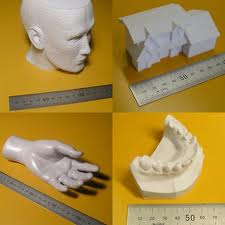
Mercedes , Honda, Boeing, and Lockheed Martin use 3D printers to fashion prototypes or to make parts that go into final products. The technology has broadened out to attract vacuum maker Oreck and Invisalign, which produces custom braces for teeth. Microsoft also uses a 3D printer to help design computer mice and keyboards. “A person who buys a BMW will want a part of the car with their name on it or to customize the seats to the contours of their bodies,” says 3D Systems’ CEO. “We’re printing with chocolate in our research labs today, so Godiva might print a candy bar with your face on it.”
As so often happens with industrial-grade technologies, 3D printing has flowed downstream to consumer. For $1,299, anyone can now buy a 3D printer, hook it up to a Wi-Fi network, and begin downloading files that will turn into real objects. The beauty and value of 3D printing & prototyping is that it can unleash the creative energy that is so unique to our minds. People who previously only “thought” about an invention or improvement can now make it real in a short time.
Discussion questions:
1. Why are 3D printers an important OM tool?
2. Why are the printers catching on as a household device?