OM in the News: Additive Manufacturing is Shaping the Factory of the Future

Additive manufacturing has long been heralded for its flexibility as a production method, writes Industry Week (Oct. 18, 2022). More recently, additive’s ability to safeguard against global supply chain challenges has helped accelerate adoption, making it a leading technology for many manufacturers. In addition, additive possesses unique benefits that are complementary to sustainability and automation, which are increasingly important to manufacturers as they look to build the factory of the future. We discuss the concept in both Chapter 5 (see page 170) and Chapter 7 (page 290).

Industrial organizations are beginning to further use additive manufacturing to achieve their environmental goals. Stricter European and U.S. regulations are driving companies to focus on environmentally friendly production methodology. For instance, Ford and Volvo are using 3D printing across their production lines and printing components, tooling and spare parts. Additive allows these goods to be produced on-demand, on-site, and at scale, eliminating the bulk of carbon emissions from transportation and delivery models. As the scale of these applications grow , they could have an even bigger impact on reducing emissions in the manufacturing sector.

And there is very little waste associated with additive. Compared to “subtractive manufacturing”, such as CNC machining, where materials are cut away and disposed of, additive manufacturing can reduce waste and materials costs by nearly 90% while also improving energy use by 25 to 50%. These benefits extend to the related supply chains and lead to more efficient production paths that help businesses lower their environmental footprints.

Additive manufacturing can also help deliver end products to users swiftly and efficiently, boosting supply chain resiliency. COVID-19 exposed the weaknesses of companies with limited flexibility that were highly dependent on traditional manufacturing setups. Hospitals and medical clinics, for example, were hit hard when the pandemic impacted global supply chains, cutting off access to much-needed medical equipment and supplies. To combat the shortage, additive manufacturing was used to produce supplies on demand quickly, locally and in low to mid volumes.

On-demand 3D printing reduces the amount of capital tied up in work-in-progress and finished goods inventories, enabling manufacturing agility. Engineers can design their parts in-house and iterate as often and as quickly as needed. Local facilities can print designs on-demand from files sent across the globe or print securely from a nearby supplier.

Classroom discussion questions:

  1. Describe the difference between “additive” and “subtractive” manufacturing.
  2. Why are 3D printers an important OM tool?

OM in the News: The Explosion of 3D Printing at GE

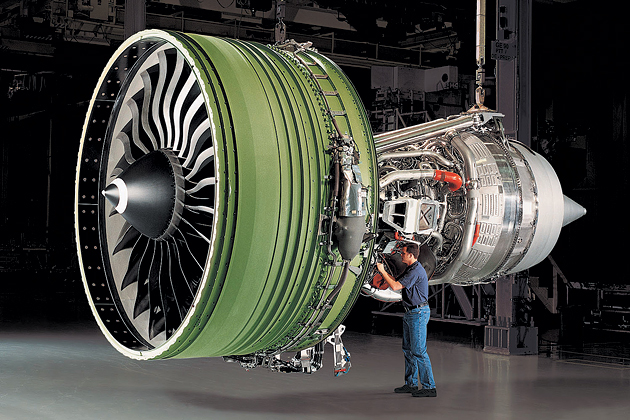
GE produces one of the world's most powerful engines
GE produces one of the world’s most powerful engines

GE, on the hunt for ways to build more than 85,000 fuel nozzles for its new Leap jet engines, is making a big investment in 3D printing, reports BusinessWeek (Dec. 2-8, 2013). Usually the nozzles are assembled from 20 different parts. Also known as additive manufacturing, 3D printing can create the units in one metal piece, through a successive layering of materials. The process, discussed in Chapter 5,  is more efficient and can be used to create designs that can’t be made using traditional techniques. The finished product is stronger and lighter than those made on the assembly line and can withstand the extreme temperatures (up to 2,400F) inside an engine. There’s just one problem: today’s industrial 3D printers don’t have enough capacity to handle GE’s production needs.

“With today’s technology, it would take too many machines,” as many as 60 to 70, to efficiently make the nozzles, says GE. As part of a $3.5 billion investment in its aerospace supply chain, GE will spend tens of millions of dollars to invest in new technology and, over the next five years, triple the size of its 70-person 3D-printing staff and expand its factory floor fourfold.

The company’s embrace of 3D printing throws the weight of the world’s largest jet-engine maker behind the technology. Today, Boeing uses the process to make plastic air-conditioning ducts for its 787 jet, and Nike has a football cleat made on 3D printers. But “GE’s investment changes everything, and it’s also unprecedented,” says an industry expert. Expanding 3D printing will give GE clout with manufacturers, an opportunity to guide the growth of the industry. “There doesn’t exist a supply chain out there right now for this kind of work,” a GE VP says. “GE has to be involved in developing it.”

Classroom discussion questions:

1. What are the advantages and disadvantages to GE’s push for 3D?

2. What role does OM play in introducing 3D printing into manufacturing firms?

OM in the News: A 3D Printer on Every Desk?

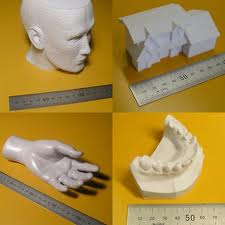
For 25 years, carmakers and aerospace companies have used industrial-grade 3D printers to fashion prototype parts for their vehicles. Businessweek (April 30-May 6, 2012) reports that more recently, the medical field has turned to the machines to make custom hearing aids and invisible braces, while architects use the technology to produce models and consumer electronics companies to build prototypes of their latest gadgets.

One of the most exciting innovations in OM, 3D printers have become indispensable for doing business. The large industrial systems, ranging  from  $5,000 to $1 million can print in different colors of plastic and employ other materials such as metal, glass, and ceramics. Software makers are harnessing this power, making much better tools for manipulating objects. The market for 3D printers, about $1.7 billion, will reach $3.7 billion by 2015.

Mercedes , Honda, Boeing, and Lockheed Martin use 3D printers to fashion prototypes or to make parts that go into final products. The technology has broadened out to attract vacuum maker Oreck and Invisalign, which produces custom braces for teeth. Microsoft also uses a 3D printer to help design computer mice and keyboards. “A person who buys a BMW will want a part of the car with their name on it or to customize the seats to the contours of their bodies,” says 3D Systems’ CEO. “We’re printing with chocolate in our research labs today, so Godiva might print a candy bar with your face on it.”

As so often happens with industrial-grade technologies, 3D printing has flowed downstream to consumer. For $1,299, anyone can now buy a 3D printer, hook it up to a Wi-Fi network, and begin downloading files that will turn into real objects. The beauty and value of 3D printing & prototyping is that it can unleash the creative energy that is so unique to our minds. People who previously only “thought” about an invention or improvement can now make it real in a short time.

Discussion questions:

1. Why are 3D printers an important OM tool?

2. Why are the printers catching on as a household device?