

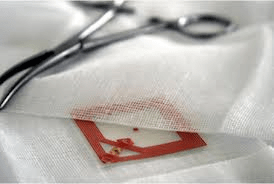
Innovapaedics’ 3-5-year goal is to offer a “Smart Implant” solution that would include RFID tags and sensors permanently attached to implants. After an item is implanted into a patient, its RFID sensors would detect pressure and temperature changes, among other events, in order to track a patient’s healing process, as well as the device’s condition, and transmit that information to a reader. In the short-term, meanwhile, the company has developed MedEx, an RFID solution for tracking implants prior to their use within a patient, to track which items were used on that individual. The resulting data is incorporated into medical and billing records.
MedEx also enables hospitals to track surgical tools. A tag can be permanently attached to each surgical tool, and the tag’s ID number is linked to specific data about that tool in the MedEx. As a new tray of tools is created for use during a surgery, each tag is interrogated as the tool is placed into the tray and linked to that tray’s RFID number. Post-surgery, the tools are cleaned and sterilized, and are then placed in a tray once more. MedEx stores a record of which tools belong in that tray, and displays an alert if the wrong tool is placed there, or if a tool is missing. The software cannot only track the tray in which a specific tool is stored, or to which patient a particular implant has been administered, but also enable the reordering of inventory based on which implants were used.
Discussion questions:
1. Why is this an important OM advancement?
2. Describe other medical applications of RFID tags already in use–(see Chapter 5).