


One of the challenges of teaching linear programming is the intangible nature of the topic which causes many students to have anxiety. One method that I use in my LP class is to pass out 6 large and 8 small Duplo-sized Legos to small groups of students and ask them to build tables and chairs. This is an example of a product mix problem with the objective of maximizing profit.
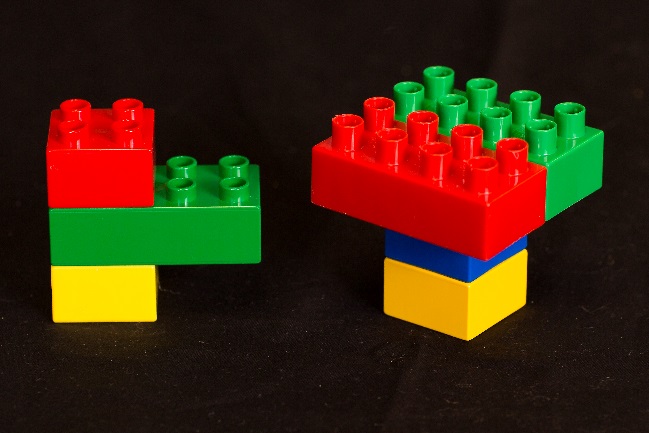
|
Tables |
Chairs |
Availability |
|
| Large Blocks |
2 |
1 |
6 |
| Small Blocks |
2 |
2 |
8 |
| Profit |
$16 |
$10 |
I start a class discussion on the feasible solutions that were discovered along the way to the optimal solution, which is to produce 2 tables and 2 chairs earning a profit of $52.
|
Tables |
Chairs |
Profit |
|
0 |
4 |
$40 |
|
1 |
3 |
$46 |
|
2 |
2 |
$52 |
|
3 |
0 |
$48 |
I solve this problem graphically showing the 4 corner points and the optimal solution.
I introduce shadow prices by offering the students an additional large block and ask how much they are willing to pay for it (answer = $6). I show a second large block and ask how much the students are willing to pay for it (answer = $6). Finally, I show the students a third large block and ask how much they will pay for it (answer = $0). I lead a discussion on the concept of shadow prices and finally wrap up with solving the Legos problem on Excel.
I find that playing with Legos in class lightens the mood and makes LP more understandable.