

Yesterday’s New York Times (Oct.24,2011) reports that a faltering economy explains much of the job shortage in America, but advancing technology has sharply magnified the effect . “Many workers are losing the race against the machine”, state two MIT researchers. Adds the current issue of the McKinsey Quarterly: “Technology is quickly taking over service jobs, 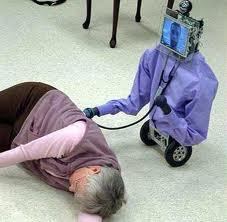
Technology in production and services is an important topic in Chapter 7, and this Times article can contribute to your class discussion of the issue. The MIT profs argue that the pace of automation has picked up in recent years because of robotics, NC-controlled machines, computerized inventory control, voice recognition, and e-commerce. Their new e-book, “Race Against the Machine”, states that automation is moving rapidly beyond factories to jobs in call centers, marketing, and sales, which are the parts of the service sector providing most jobs in the economy.
Since the recession started , corporate spending on equipment and software has increased 26%, while payrolls have been flat. Corporations are expected to report record profits of $927 billion this year, a 50 year high.
But technology has always displaced some work and jobs. As early as 1930, the economist John Maynard Keynes warned of a “new disease” that he called “technological unemployment”, the inability of the economy to create new jobs faster than jobs were lost to automation. Yet computers tend to be narrow and literal-minded, good at assigned tasks, but low at intuition and creativity. The key, writes the Times, “is not to compete against machines but to compete with machines”.
Discussion questions:
1. Is this a major change in business, or just a slow, continuing trend towards automation?
2. Do students believe that less and less service-oriented jobs will be available to them?