

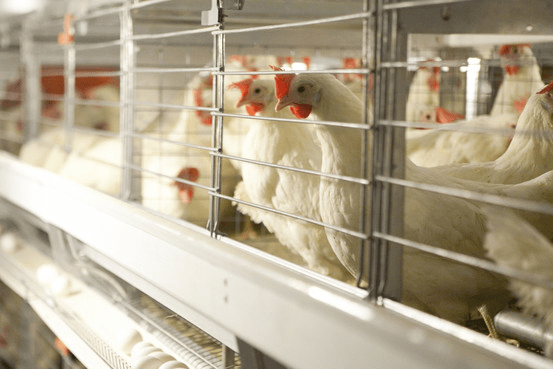
Five states have joined a lawsuit challenging a California law that would require producers of all eggs sold in the Golden State to house hens in roomier cages, reports The Wall Street Journal (March 6, 2014). Officials in those states, all of which have big agriculture sectors, argue the California law violates the principle of interstate commerce. They say out-of-state farmers would have to spend hundreds of millions of dollars to change their facilities to comply with the law.
“It’s one thing for them to regulate their own egg producers, but when they regulate the egg producers of the other…states, including Iowa, I think it’s a clear violation,” says Iowa’s governor. The plaintiffs note that California—the nation’s most populous state—represents the biggest domestic market for eggs. Missouri’s Attorney General sued to block California’s law on Feb. 3, saying it would hurt his state’s egg producers, which sell about a third of their eggs in California.
In 2008, California residents approved a ballot initiative that would ban farmers from housing egg-laying hens in enclosures that are too small for the birds to lie down, stand up or fully spread their wings. In 2010, state legislators passed a law extending the standards to all producers selling eggs in California.
About 80% of egg-laying hens in the U.S. are raised under guidelines from the United Egg Producers, which include 67 to 86 square inches of floor space per bird and enough room for hens to stand “comfortably upright.” The California law requires at least 116 square inches of space per bird. Consumers can also buy “cage-free” eggs, laid by hens raised in open barns. Cage-free production accounts for more than 5% of laying hens.
Classroom discussion questions:
1. What are the ethical implications of housing chickens in such confined spaces to lower costs?
2. What process changes (see Chapter 7) are needed to meet the California standards?