Teaching Tip: Is Amazon Benchmarking–or Cheating?

At the end of each chapter of our text, we present an Ethical Dilemma for class discussion. The Wall Street Journal‘s expose on Amazon (April 19, 2024), called “Inside Amazon’s Secret Operation,” provides one such issue. Here is a summary:

For nearly a decade, workers in a warehouse in Seattle have shipped boxes of shoes, beach chairs, Marvel T-shirts and other items to online retail customers across the U.S.  The operation, called Big River Services, sells around $1 million a year of goods through e-commerce marketplaces including eBay, Shopify, Walmart and Amazon under made up brand names. “We are entrepreneurs, thinkers, marketers and creators,” Big River says on its website.

Big River’s website says it sells on Amazon’s marketplace but doesn’t mention anywhere that it is part of Amazon. It also misspells Seattle.

What the website doesn’t say is that Big River is an arm of Amazon that secretly gathers intelligence on its competitors.  Amazon publicly says that it pays little attention to competitors, instead focusing all its energies on being “customer obsessed.”

But Big River team members attended their rivals’ seller conferences and met with competitors, identifying themselves only as employees of Big River, instead of disclosing that they worked for Amazon.  They were given non-Amazon email addresses to use externally, but internally they used Amazon email addresses. They took extraordinary measures to keep the project secret, disseminating their reports to Amazon execs using printed, numbered copies rather than email. In the event of a leak they were told to say they were formed to improve the seller experience on Amazon, and that such research is normal.

“Amazon, like many other retailers, has benchmarking and customer experience teams that conduct research into the experiences of customers, including our selling partners,” says the firm. This benchmarking team got top corporate approval to buy inventory, use a shell company and find warehouses in the U.S., Germany, England, India and Japan so they could pose as sellers on competitors’ websites. To get information about rival logistics services, Big River stored inventory with companies including FedEx, UPS, and DHL.

Virtually all companies research their competitors, reading public documents for information, buying their products or shopping their stores. But lawyers say there is a difference between such corporate intelligence gathering of publicly available information, and what is known as corporate or industrial espionage. Companies that misrepresent themselves to competitors to gain proprietary information are open to suits on trade secret misappropriation.

Classroom discussion questions:

  1. What are the ethical implications of Amazon’s actions?
  2. How would such benchmarking be legal?

OM in the News: Child Labor Abuse in the U.S.

Throughout our text, we offer chapter-by-chapter Ethical Dilemmas. What would you do in the case of underage workers at a subcontractor’s plant in Viet Nam? Slave laborers making your Nikes in China? But in a New York Times (Feb, 26, 2023) expose, the headline reads “Brutal Jobs Common for Migrant Kids. Well Known Brands Use Vulnerable Labor Force.” 

Migrant children gather on a school day to find roofing, landscaping or other work in Florida.

Except the article is about manufacturers in the U.S. It opens: “The factory in Michigan was full of underage workers who had crossed the southern border by themselves and were now spending late hours bent over hazardous machinery, in violation of child labor laws.”  In L.A., children stitch “Made in America” tags into J. Crew shirts. They bake dinner rolls sold at Walmart and Target, process milk used in Ben & Jerry’s ice cream, and help debone chicken for Whole Foods. Middle-schoolers make Fruit of the Loom socks in Alabama. In Michigan, children make auto parts for Ford and GM. Girls as young as 13 wash hotel sheets in Virginia, 12 year old roofers work in Florida and Tennessee and other underage workers are employed by slaughterhouses in Delaware, Mississippi and N. Carolina.

Migrant child labor benefits both under-the-table operations and global corporations. The workers are part of a new economy of exploitation: Migrant children, who have been coming into the U.S. without their parents in record numbers. This shadow workforce flouts child labor laws that have been in place for nearly a century.

The number of unaccompanied minors entering the U.S. climbed to 1/4 million in the last 2 years – three times what it was 5 years earlier. Nearly half are coming from Guatemala, where poverty is fueling a wave of migration. Parents know that they would be turned away at the border or quickly deported, so they send their children in hopes that remittances will come back.

But as more and more children have arrived, the White House has ramped up demands to move the children quickly out of shelters and release them to adults who will agree to house them. Caseworkers say they rush through vetting sponsors, and the government lost contact with 1/3 of migrant children. Caseworkers complained that the U.S. regularly ignored obvious signs of labor exploitation.

Classroom discussion questions:

  1. As a hotel operator, what do you do when you find 13 year-olds working for you?
  2. What is the solution?

OM in the News: The High Cost of Operating in California

In Chapter 8, Location Strategies, we talk about the Key Success Factors (KSFs) that firms need to achieve competitive advantage in selecting a location for their plants. It turns out that these KSFs are also the reason why some manufacturers are leaving California.

Hog production at Smithfield Foods

The Wall Street Journal (June 13, 2022) article, “Smithfield Foods, Citing High Costs of Operating in California, to Close Pork Plant,” explains why the largest pork processor in the U.S., is closing an 1,800-person plant in California and shrinking the size of its hog herd in the region. Smithfield says “the cost of doing business in the state wasn’t worth it,” citing higher taxes, utility costs and labor costs in the state compared with other areas where it operates.

The decision to close the plant comes as food suppliers are dealing with increased costs on items like livestock feed, transportation and packaging. Russia’s invasion of Ukraine, one of the world’s top grain-producing regions, has recently sent the price of livestock feed higher.

In California, the cost of utilities is 3.5 times higher per head to produce pork compared with the 45 other U.S. plants Smithfield operates. “It’s increasingly challenging to operate efficiently there,” said the company. “We’re striving to keep costs down and keep food affordable.”

Smithfield also said part of the reason it closed the facility was the regulatory environment in the state. Specifically, a state law passed by voters in 2018 and backed by the Humane Society, called Proposition 12. It requires breeding pigs to be able to lie down and turn around in spaces in which they are housed, essentially outlawing pork produced using small gestation stalls in most circumstances.

Pork producers and suppliers have resisted, saying such moves would raise meat prices by causing farmers to spend millions of dollars changing their operations, create supply-chain chaos and risk their pigs’ health.

The supply of hogs in the U.S. also isn’t expected to grow soon as higher feed, labor and material costs have weighed on pig farmers, making it too expensive for them to expand. For processors, if the supply of hogs isn’t increasing, it makes sense to cut high-cost plants that might not even be running at capacity.

Classroom discussion questions:

  1. On the issue of hog comfort and safety (see the Ethical Dilemma in Chapter 7), what position do your students take?
  2. What KSFs in Chapter 8 (see Figure 8.1) are driving Smithfield to leave California?


OM in the News: The Pig Debate Continues

In West Liberty, Iowa, Mike Deahr houses his 3,000 breeding pigs in small enclosures that keep them from turning around and interacting with others for the first 28 days of their 115-day pregnancy.

Whether those enclosures represent the best way to safeguard hogs’ health or the mistreatment of vulnerable animals is at the center of a debate over how pigs in the $43 billion U.S. pork industry are housed, writes The Wall Street Journal (March 28, 2022).

The state of California, animal-welfare groups like the Humane Society, and billionaire investor Carl Icahn are pressing fast-food giants like McDonald’s, meatpacking companies and hog farmers like Mike Deahr to provide pregnant hogs more space. They say the crates confine sows to the degree that they can barely turn around or walk.

Pork producers are resisting, saying such moves would raise meat prices by causing farmers to spend millions of dollars changing their operations, create supply-chain chaos and risk their pigs’ health.

“Sows are aggressive animals,” said one Iowa farmer. “The stalls prevent them from fighting each other and stop larger sows from stealing food from smaller ones. They can also prevent accidents if a worker gets between two fighting pigs.”

A 2018 California law (backed by the Humane Society) is prompting change among some farmers. The law requires breeding pigs to be able to lie down and turn around in spaces in which they are housed, essentially outlawing pork produced using small gestation stalls. Supermarkets and restaurants found in violation of the law could be punished with fines of up to $1,000 or as many as 180 days in jail. Only about 7% of U.S. sow housing meets California’s standard.

Getting rid of gestation stalls can make hog farmers less efficient. Farmers would have to house fewer hogs in their barns to comply with larger square-footage requirements.

This article complements our similar Ethical Dilemma on page 300 of the text and should generate a lively class discussion.

Classroom discussion questions:

  1. Make the case for and against the current system of breeding hogs.
  2. What OM tools might be helpful in analyzing the cost differences between the two processes? (Hint: see Chapter 10’s Methods Analysis).

OM in the News: The Great Bacon Shortage

Americans love few things more than bacon, writes TNR (Aug, 10, 2021). And now, as California prepares to implement wide-ranging standards mandating more humane housing for pigs, the media have been filled with dire predictions about the coming “bacon apocalypse.”

The vast majority of the 130 million pigs slaughtered for meat in the U.S. every year come from “factory farms,” where animals will spend their entire lives confined indoors as they are fattened for slaughter. This economies-of-scale model of producing standardized animal commodities is predicated on squeezing as much productivity as possible from female pigs. It relies on individually confining 7′ x 2′ metal cages into which pregnant sows will be locked for the 114 days of their gestation, unable to turn around or stretch.

Crates are objectively cruel and have been at the heart of animal rights campaigns for decades, producing promises from major processors like Smithfield Foods and major fast-food chains to shift some of their operations to crate-free systems.  But even if local producers are obliged to go cage-free by new regulation, most bacon sold in those states will come from leading pig-producing states like North Carolina and Iowa, where crates are standard. (About 96% of all factory-farmed animals come from such crate systems.)

In 2018, California passed Proposition 12,  giving pork producers until January 1, 2022, to conform to new standards, which included giving breeding pigs 24 square feet of space. Prop 12 applies not only to California-based producers but to all producers who want to sell pork in California, including those in places like Iowa.

Given that Californians consume 255 million pounds of pork every year, Prop 12 has the power to shift how pigs are produced around the U.S. But retrofitting factory farms is expensive–in the billions of dollars– and changes how most pork companies produce their animals. These costs that might be borne by already highly indebted “contract farmers” who work with major processors like Smithfield and Tyson.

But even in gestation-stall-free systems, sows may be locked in individually confining farrowing crates to nurse their young, injected with drugs so that they can be impregnated artificially, and have their piglets euthanized if they don’t gain weight fast enough. In industrial animal production, cruelty is systemic, endemic, and inescapable, even if it can be moderated by things like cage-free regulations. And, of course, all animals produced for food, regardless of production system, are slaughtered.

Classroom discussion questions:

  1. Discuss the productivity implications of this new law.
  2. Discuss the ethical implications of the pork industry.


OM in the News: Ethical Dilemmas in U.S. Auto Parts Plants

Alabama has been trying on the nickname “New Detroit.” Its burgeoning auto parts industry employs 26,000 workers, who last year earned $1.3 billion in wages. Georgia and Mississippi have similar, though smaller, auto parts sectors. This factory growth, after the long, painful demise of the region’s textile industry, would seem to be just the kind of manufacturing renaissance the U.S. needs.

Except that it also epitomizes the global economy’s race to the bottom,” writes Businessweek’s cover story (March 27-April 2, 2017). Parts suppliers in the American South compete for low-margin orders against suppliers in Mexico and Asia. They promise delivery schedules they can’t possibly meet and face ruinous penalties if they fall short. Employees work ungodly hours, 6-7 days a week, for months on end. Pay is low, turnover is high, training is scant, and safety is an afterthought, usually after someone is badly hurt. Many of the same woes that typify work conditions at contract manufacturers across Asia now bedevil parts plants in the South. In 2015, the chances of losing a finger or limb in an Alabama parts factory was double the amputation risk nationally for the industry, 65% higher than in Michigan and 33% above the rate in Ohio–both union states.

Korean-owned plants, which make up roughly a quarter of parts suppliers in Alabama, have the most safety violations in the state, accounting for 36% of all infractions and 52% of total fines, from 2012-2016. According to OSHA, one of them, Matsu Alabama, had provided no hands-on training, routinely ordered untrained temps to operate machines, sped up presses beyond manufacturers’ specifications, and allowed oil to leak onto the floor. “Upper management knew all that. They just looked the other way,” said a staffing specialist. “They treated people like interchangeable parts.”

Classroom discussion questions:

  1. The Ethical Dilemma exercise in Chapter 10 describes Johnson Foundry. Have your students read this Businessweek article and compare the two stories.
  2. What does the article mean by “race to the bottom?”

OM in the News: Treating Chickens With Respect in California

Chickens at a farm in Atwater, CA

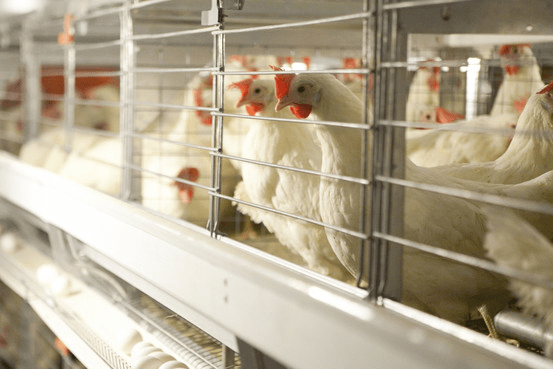
Five states have joined a lawsuit challenging a California law that would require producers of all eggs sold in the Golden State to house hens in roomier cages, reports The Wall Street Journal (March 6, 2014). Officials in those states, all of which have big agriculture sectors, argue the California law violates the principle of interstate commerce. They say out-of-state farmers would have to spend hundreds of millions of dollars to change their facilities to comply with the law.

“It’s one thing for them to regulate their own egg producers, but when they regulate the egg producers of the other…states, including Iowa, I think it’s a clear violation,” says Iowa’s governor. The plaintiffs note that California—the nation’s most populous state—represents the biggest domestic market for eggs. Missouri’s Attorney General sued to block California’s law on Feb. 3, saying it would hurt his state’s egg producers, which sell about a third of their eggs in California.

In 2008, California residents approved a ballot initiative that would ban farmers from housing egg-laying hens in enclosures that are too small for the birds to lie down, stand up or fully spread their wings. In 2010, state legislators passed a law extending the standards to all producers selling eggs in California.

About 80% of egg-laying hens in the U.S. are raised under guidelines from the United Egg Producers, which include 67 to 86 square inches of floor space per bird and enough room for hens to stand “comfortably upright.” The California law requires at least 116 square inches of space per bird. Consumers can also buy “cage-free” eggs, laid by hens raised in open barns. Cage-free production accounts for more than 5% of laying hens.

Classroom discussion questions:

1. What are the ethical implications of housing chickens in such confined spaces to lower costs?

2. What process changes (see Chapter 7) are needed to meet the California standards?

Teaching Tip: An Ethical Dilemma for Beauty Companies

animal testingThe “Ethical Dilemmas” at the end of each of the 17 chapters in our text provide a rich selection of classroom discussion topics.  Here is one more, from BusinessWeek (Sept.30-Oct.6, 2013), that you can share with your students when discussing new product development in Chapter 5. It relates to the tradeoff between animal rights and foreign laws.

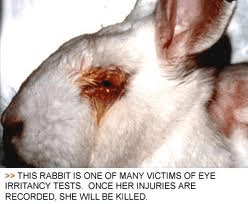
Western cosmetics makers are ecstatic about the prospect of continued growth in China’s $32 billion beauty market. Animal rights activists, not so much. That’s because hundreds of thousands of animals are killed each year in tests mandated for all new cosmetics and personal-care products to win approval there. (At least 72 animals are used for each product. Since 4,249 beauty products were introduced in China last year, this translates to 305,928 animals.)

China is the only major market where companies must test their mascaras and lotions on animals. Rabbits, for instance, have ingredients dripped into their eyes or are killed after skin irritation tests. That’s created a dilemma for companies like L’Oreal and Procter & Gamble that want to sell in the giant market without alienating consumers in countries where public sentiment frowns on such animal treatment. The U.S. discourages, but doesn’t bar, animal tests. India bans animal testing for beauty products. And the EU, which has long barred such trials, also prohibits the sale of newly developed products tested on animals elsewhere.

Beauty makers aren’t about to turn away from China. L’Oréal, the world’s biggest cosmetics maker, sells its namesake beauty goods in the country, while P&G sells products such as Olay and Head & Shoulders. P&G gets about 18% of its annual sales from Asia; L’Oréal, about 19%. Both companies’ shares have been rising. Niche brands, however, such as L’Oréal’s Body Shop and Pangea Organics, which refuse to do animal tests, are blocked from the Chinese market entirely. L’Oréal in a statement said the company always abides with local regulations.

“The consumer here doesn’t think as much about ideals such as animal testing,” says a Chinese exec. “They care about the price, the brand, and the product.”

What should Western manufacturers do?

Teaching Tip: Pigs and Operations Management Ethics

 The Ethical Dilemmas at the end of each of our 17 chapters are a popular feature that many OM instructors assign as homework or use for lively class discussions. Some colleges, such as Benedictine University,  view ethics as an important part of their OM curriculum (as noted in their linked syllabus).  If you look over the Ethical Dilemma in Chapter 7, which deals with the trade-off between increased productivity/ lower costs of pork vs. the comfort of the pigs, you will appreciate the article in the New York Times (Oct.6, 2012) on this very sensitive subject.

The article opens: “Sow 44733 had broken the shoulder of one of her pen mates, rousted another who was huddled in the corner and was chewing on the ear of a third. Other sows in the pen sported abrasions, torn ears and bloody tail stumps. It was that kind of behavior that led hog farmers like Tom Dittmer to isolate sows in individual stalls called gestation crates that are barely bigger than the pigs themselves.”

“The reason the industry switched to crates wasn’t because we wanted to harm our animals,” Mr. Dittmer said. “We did it because we thought it was what was best for the animals.” The move also kept the price of pork reasonably low for consumers, he said.

Now, hog farmers are under increasing pressure from corporate pork buyers and animal rights groups to return to the old way of doing things: putting sows in group housing. In September alone, three companies — Dunkin’ Donuts, ConAgra Foods and Brinker (Chili’s) — announced that they would no longer buy pork derived from pigs housed in gestation crates. Farmers resent the tactics, saying they worry that the move will be unsustainably costly for them and result in soaring pork prices for consumers.

Research is mixed about which type of housing is best for the animals’ welfare, according to the American Veterinary Medical Association.

Want to ask your students what they think?

Teaching Tip: Apple’s Ethical Dilemma

We end each chapter in the book with an Ethical Dilemma, intended to enhance class discussion on topics of interest. Here is a timely issue regarding Apple, based on a front-page New York Times (Jan.26,2012) report that details the shocking working conditions in Chinese factories that build the company’s  products. The article tells the story of one worker who was killed in an aluminum dust explosion at a  factory last year and paints a picture of the “harsh” and “bleak” environment in which iPads and other devices are built.
 
One former Apple executive says: “Most people would still be really disturbed if they saw where their iPhone comes from.” An ex-employee of Foxconn, the biggest of Apple’s suppliers in China, which has made headlines because of suicides among workers, said: “Apple never cared about anything other than increasing product quality and decreasing production cost. Workers’ welfare has nothing to do with their interests.”
 
And while excited buyers eagerly anticipate new products,  Apple’s audits have found evidence of employees being forced to work  more than 6 days a week and put in extended overtime. There have been allegations of involuntary labor, under-age workers, record falsification and the improper disposal of hazardous waste.

 
The  Times also details the pressure manufacturers are under. “Executives want to know every financial detail. Afterward, Apple calculates how much it will pay for a part. Most suppliers are allowed only the slimmest of profits. So suppliers often try to cut corners, replace expensive chemicals with less costly alternatives, or push their employees to work faster and longer.”
 
The lengthy article notes that companies like Nike and Gap have been forced to change their ways in the face of public outrage, but ends with the words of a current Apple exec: “Right now, customers care more about a new iPhone than working conditions in China.”  Do your students agree?