OM in the News: Weight-Loss Drugs Crush Food Demand as Farmers Face Dumping Mountains of Potatoes

The rising popularity of weight-loss drugs like Ozempic, Wegovy, and Zepbound (GLP-1 agonists) is significantly impacting the food industry, resulting in reduced food demand, changes in consumer purchasing habits, and potential surpluses for agricultural producers, according to Fox News (April 1, 2026).


Impact on Food Demand and Consumption

  • Reduced Overall Demand: Users of weight-loss drugs often eat less and report a decreased appetite, with some users consuming up to 50% less than before taking the medications.
  • Andy Goodacre has about 1.3 million pounds of top-quality potatoes at risk of going to waste because of changing diet habits

    Surplus Agricultural Products: Farmers, particularly in the United Kingdom, are facing challenges with rising surpluses of traditional staples, such as potatoes, as consumer demand declines.

  • Shifting Restaurant Trends: Restaurant owners report that customers are ordering fewer items, selecting lighter options, and often not finishing their meals, leading to a decline in overall food sales at restaurants.
  • Impact on Packaged Goods: Food companies, including snack manufacturers, are evaluating the long-term impacts of these drugs on consumer purchasing behavior for high-sugar or less-healthy items.
Changes in Eating Habits and Nutrition
  • Reduced “Food Noise”: Users report decreased cravings for alcohol, salty snacks, and high-fat foods, which is reshaping American tastes and reducing demand for ultra-processed foods.
  • Focus on Healthier Options: Many users are pivoting towards healthier, lower-calorie options, and in some cases, increasing their intake of protein to combat muscle loss.
  • Concerns About Malnutrition: Some researchers are flagging potential risks of malnutrition and micronutrient deficiencies, as reduced food intake can limit the intake of necessary nutrients.
Future Projections
  • Long-Term Industry Shift: By 2035, it is projected that 9% of the U.S. population may be on weight-loss drugs, which could lead to a sustained, significant reduction in the consumption of soft drinks, alcohol, and snacks.
  • Adapting the Food Sector: The food industry is beginning to adapt by considering adjustments in portion sizes and developing products that align with the dietary needs of GLP-1 users.

    Classroom discussion questions:

  • 1. What forecasting approaches do the farmers and restaurants need to consider?
  • 2. How should a firm like Frito-Lay address this issue?

Guest Post: What a Chinese Drone Ban Means for U.S. Farming

Dr. Misty Blessley is a professor at Temple U. She shares her insights monthly.

DJI, a Chinese company and the world’s largest manufacturer of commercial and industrial drones, faces scrutiny in the U.S. over alleged cybersecurity risks. It is now close to being banned here.

One U. S. business that sells spray-drone kits reported that its challenges began last year when importing DJI drones became significantly more difficult. This uncertainty has caused concern across industries that rely on these tools, from public safety and construction to supply chain logistics. For American agriculture specifically, a ban could cut off access to vital equipment, leaving fields unmonitored, untreated, and risking harvest losses.

DJI drones are favored by farmers as they save weeks of labor by spraying seeds, fertilizer and fungicide from the sky.

Agriculture has adopted drones more rapidly than almost any other sector. Monitoring drones help detect disease and water stress early, while spray drones enable precise application of fertilizer and pesticides during narrow weather windows. They have become crucial for reducing input costs (China is accused of subsidizing their drone industry, which might explain some of the cost differences), protecting yields, and facilitating smooth food movement through supply chains. If imports are halted, many farmers could miss critical windows, leading to lower yields and creating issues along the supply chain, from processors to consumers.

Mitigation Strategies
To prepare, farming businesses should apply lessons learned from managing recent supply chain disruptions:
 Diversify suppliers – Start testing U. S. or non-Chinese alternatives, even if they are currently less cost-effective. Early adoption minimizes dependence.

Stock critical parts – As restrictions tighten, building an inventory now provides a safety buffer.

Use mixed fleets – Combine current drones with alternative technologies like ground sprayers to prevent single points of failure.

Plan operational slack – Stagger schedules or adjust operations to account for potential delays.

Collaborate and advocate – Engage with farm bureaus and trade associations to push for phased implementation, subsidies, or funding for domestic options.
 

Classroom discussion questions:
1• What are the challenges and drawbacks of each mitigation strategy?
2• Considering that the Chinese drone ban is likely, how should user decision-making be updated? (Refer to Module A Decision-Making Tools and consider these facts:◦ Drones can cut labor costs by up to 90% and reduce chemical use by 20–30%. ◦ A high-end U.S.-made drone can cost nearly $30,000, compared to a similar DJI unit costing $6,500).

OM in the News: The High-Tech Chinese Pig Farm

One Chinese firm uses video to capture pig faces because they move a lot.

The new Chinese pig farm: A database of every pig’s face; Voice scans that detect hogs with a cough: Robots that dispense just the right amount of feed. “Chinese companies are pushing facial and voice recognition and other advanced technologies as ways to protect the country’s pigs,” writes The New York Times (Feb. 25, 2019). In this Year of the Pig, many Chinese hogs are dying from a deadly swine disease, threatening the country’s supply of pork, a staple of Chinese dinner tables. China has already culled a million pigs (out of a population of 400 million), set up roadblocks and built fences, to no avail.

There’s a lot at stake. China is the world’s largest pig breeder and its largest pork consumer. The meat is so important that China has its own strategic pork reserve. With 10’s of millions of pig farms, the Chinese government has endorsed technology on the farm. Its most recent 5-year plan calls for increased use of robotics and network technology, saying it wants to promote “intelligent farming.” Officials praised “raising pigs in a smart way” using the A-B-C-Ds: artificial intelligence, blockchain, cloud computing and data technology.

Technology companies say they can help farmers isolate disease carriers, reduce the cost of feed, increase fertility, and reduce unnatural deaths. JD.com’s system uses robots to feed pigs the correct amount of food depending on the animals’ stage of growth. SmartAHC uses A.I. to monitors pigs’ vital statistics, and hooks up sows with wearable monitors that can predict ovulation time.

Chinese are quick to embrace high-tech solutions to just about any problem. A digital revolution has transformed China into a place where nearly anything can be summoned with a smartphone. Facial recognition has been deployed in public bathrooms to dispense toilet paper, in train stations to apprehend criminals, and in housing complexes to open doors.

Classroom discussion questions:
1. Why will this high-tech approach be difficult to implement?

2. What technology is used in American farming?


OM in the News: Farms, Robots, and Illegal Immigrants

Maria Guadalupe has gone from packing bagged salads into boxes to setting up and monitoring robots that do her old job.

Lettuce-packing facilities are wet, loud, and freezing — and much of the work is physically taxing, even mind-numbing. Now, a fleet of robots designed to replace humans, has become one of the agriculture industry’s latest answers to a diminishing supply of immigrant labor, reports The New York Times (Nov. 24, 2018). Smart machines can assemble 60 to 80 salad bags a minute, double the output of a worker.

Enlisting robots makes sound economic sense, with Americans’ insatiable appetite for healthy fare, at a time when companies cannot recruit enough people to work in the fields or the factory. A decade ago, people lined up by the hundreds for jobs at packing houses during the lettuce season. No more. But moving up the technology ladder creates higher-skilled positions that attract young people.

A 2017 survey found 55% of farmers reported labor shortages– 70% for those who depend on seasonal workers. About 3/4 of U.S. crop workers were born abroad, and they are overwhelmingly illegal. Beefed up border enforcement has rendered “follow-the-crop” migration a relative rarity.

California’s $54 billion agricultural industry is leading the move to automate in the fields and packing plants. Driscoll’s, the berry titan, has invested in several robotic strawberry harvesting start-ups which use imaging technology to assess a berry’s ripeness before it is harvested. Christopher Ranch, a giant in garlic, began using a 30-foot-tall robot to insert garlic buds into sleeves for sale in supermarkets. Bartley Walker now offers a robotic hoeing machine with a detection camera capable of identifying the weeds that sprout between row crops like broccoli and cauliflower. One machine replaces 11 workers. About 60% of the romaine lettuce and half of all cabbage and celery produced by Taylor Farms are harvested with automated systems. (Delicate fruit, like peaches, plums and raspberries will remain labor intensive for the foreseeable future).

Classroom discussion questions:

  1. How is technology changing the crop industry?
  2. What can be done to resolve the labor shortage?

OM in the News: Will Manufacturing Jobs Ever Return?

The production line of a lamp factory in China. Despite efforts to revive manufacturing in the U.S., economists say the chances of a recovery are slim, and developing countries face extra challenges as industry fades.
A lamp factory in China. Developing countries face extra challenges as manufacturing jobs fade.

Half a century ago, harvesting California’s 2.2 million tons of tomatoes required 45,000 workers. In the 1960s, though, scientists at U. California-Davis developed an oblong tomato that lent itself to being machine-picked. César Chavez’s United Farm Workers union was furious and made stopping mechanization its No. 1  priority. In 1980, the Carter administration declared that the federal government would no longer finance research that could lead to the “replacing of an adequate and willing work force with machines.” The freeze on research may have slowed the mechanization of California’s harvests, but 20 years later, only 5,000 workers were employed to pick a 12-million-ton crop of tomatoes.

In America’s factories, jobs are disappearing, too. Despite political rhetoric, though, the problem is not mainly globalization. Manufacturing jobs are on the decline in factories around the world, reports The New York Times (April 27, 2016). “Global employment in manufacturing is going down because productivity increases are exceeding increases in demand for manufactured products by a significant amount,” says Joseph Stiglitz, Columbia U.’s Nobel economist.

Will America be able to produce a manufacturing renaissance at home? “The likelihood that we will get a manufacturing recovery is close to nil,” says Stiglitz. Over the course of the 20th century, farm employment in the U.S. dropped to 2% of the work force from 41%, even as output soared. Since 1950, manufacturing’s share has shrunk from 24% to 8.5% of jobs–and is still in decline. But the shrinking of manufacturing employment is global–and a worldwide zero-sum game. Japan’s long stagnation is a consequence of a decades-long development strategy that left it overly dependent on manufacturing. What options does the U.S have? Health care, education and clean energy, to name a few.

I highly recommend you read this thoughtful article. It is a great piece to share with students as you cover Chapter 1.

Classroom discussion questions:

  1. Why are manufacturing jobs important to any nation?
  2. What is keeping the U.S. from regaining millions of factory jobs?

OM in the News: Technology Driving the Farm Tractors

Dwindling farm incomes and open-source software are inspiring homespun hackers, helping advance farming technology. In Manitoba, farmer Matt Reimer has created a tractor that drives itself.
Homespun hackers are helping advance farming technology. Farmer Matt Reimer has created a tractor that drives itself.

The green tractor trundling across a Manitoba field with an empty cab looks like it’s on a collision course with Matt Reimer’s combine—until it neatly turns to pull alongside so he can pour freshly harvested wheat into its trailer. The robot tractor isn’t a prototype or top-of-the-line showpiece. It’s an 8-year-old John Deere that Reimer modified with drone parts, open-source software and a Microsoft  tablet. All told, those items cost him around $8,000. “Reimer’s alterations are part of a technology revolution sweeping North America’s breadbasket,” writes The Wall Street Journal (April 19. 2016).

Farmers, many of them self-taught, are building their own robotic equipment, satellite-navigation networks and mobile applications, moving their tinkering projects out of machine sheds and behind a computer screen. This homespun hacking—which sometimes leapfrogs innovations by big equipment companies like John Deere and Trimble Navigation—reflects dwindling farm incomes, the low price of electronic hardware and, sometimes, off-season boredom. Technology is already firmly rooted in modern farming, allowing a shrinking number of farmers to oversee more acres. Advances like auto-steering tractors have freed some farmers to trade futures contracts on their smartphones from inside a tractor cab, pausing only to turn and stop their machines. Defectors from Silicon Valley powerhouses like Google and Yahoo are building software to analyze soil and manage fertilizer use.

With less money to spend, some farmers say they can build their own tools, suited to their farms, at a lower cost. “Poverty is the mother of invention,” said farmer Jim Poyzer, who used to be a programmer. During the winter months Poyzer began tinkering with a microprocessor, eventually developing a system to monitor and adjust how many seeds his planter places in his Iowa fields. The system tailors the flow of seeds to the soil’s ability to produce healthy crops.

Classroom discussion questions:

  1. What other tools of OM can farmers employ to increase productivity and profits?
  2. Why are the large equipment manufacturers leading the technology charge?

OM in the News: Hunger for Organic Foods Stretches Supply Chains

organicLast year, organic cereal maker Nature’s Path Foods grew so frustrated with organic-grain shortfalls that it took a radical step: It bought a farm. In this example of backward integration, the Canadian company plunked down $2 million for 2,800 acres of Montana cropland. Its goal was to seize greater control of its supplies of wheat, oats and other ingredients. Nature’s Path is among a number of organic-food purveyors taking steps to tackle supply constraints that are hampering the growth of one of the hottest food categories, reports The Wall Street Journal (April 3, 2015). Companies including soup maker Pacific Foods and burrito chain Chipotle are digging deeper into the supply chain with such moves as financing farmers, offering technical training and hiring headhunters to recruit organic growers.

The efforts are aimed at ramping up organic-food output that has failed to keep pace with surging consumer demand, due in part to the significant costs and risks that farmers face in converting from conventional to organic farming.  High land costs, for example, make starting an organic farm expensive, and switching to one is onerous. Conventional cropland and dairies can become certified as organic after a 1-3-year transition period in which farmers eschew pesticides, genetically modified seeds, and synthetic fertilizers and hormones. Organic farmers also have greater trouble securing bank loans, and organic crops don’t have forward or options markets, which ease the risks of wide swings in prices for many conventional farmers.

Nature’s Path began wrestling with acute supply shortages in the late 2000s that forced it to import some ingredients on short notice from Sweden, driving up its costs. It plans to dedicate at least $2 million each year to purchase additional conventional farmland that it can then convert to organic production in order to fill 1/4 of its grain needs over the next decade. Two years ago, Chipotle, which said it seeks to purchase as many organic ingredients as practical, began providing financial incentives to help farmers of black beans transition from conventional to organic production. Pacific Foods, worried its organic chicken supply could run short, started building its own chicken-raising sheds.

Classroom discussion questions:

1. What is backward integration– give other examples of it in industry.

2. Why is the organic food industry more complex than conventional production?

OM in the News: The Downside of Increasing Productivity

summers article“What has happened in agriculture over the past century is remarkable,” writes Harvard Prof. Larry Summers in The Wall Street Journal (July 8, 2014). The share of American workers employed in agriculture has declined from over 1/3 a century ago to 1-2% today. Why? Because agricultural productivity has risen spectacularly, with mechanization reducing the demand for agricultural workers even as food is more abundant than ever. What has happened in agriculture is happening to much of the rest of the economy.

In Marc Andreessen’s phrase, “Software is eating the world.” Already the number of Americans doing production work in manufacturing and the number on disability are comparable. Despite an expected uptick in the next few years in manufacturing employment, the long-term trend is inexorable and nearly universal. As in agriculture, technology is allowing the production of far more output with far fewer people. No country can aspire to more of an increase in competitiveness than China, yet even it has suffered a decline in manufacturing employment over the past 2 decades. And the robotics and 3-D printing revolutions are still in early stages.

What about services? A generation from now, Summers thinks taxis will not have drivers; checkout from any kind of retail establishment will be automatic; call centers will have been automated with voice-recognition technology; routine news stories will be written by bots; counseling will be delivered by expert systems; financial analysis will be done by software; single teachers will reach hundreds of thousands of students, and software will provide them with homework assignments customized to their strengths and weaknesses.

Those losing jobs due to increased productivity will be freed up to do things in other sectors. But there are many reasons to think the software revolution will be even more profound than the agricultural revolution. This time around, change will come faster and affect a much larger share of the economy. Workers leaving agriculture could move into a wide range of jobs in manufacturing or services. Today, however, there are more sectors losing jobs than creating jobs.

Classroom discussion questions:

1. What are the OM implications of Summers’ article?

2. What do you think American manufacturing will look like in 20 years?

OM in the News: Treating Chickens With Respect in California

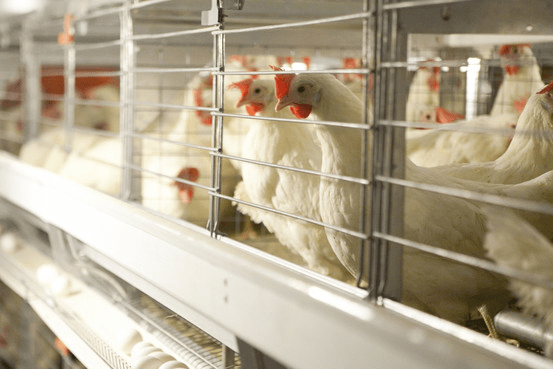
Chickens at a farm in Atwater, CA

Five states have joined a lawsuit challenging a California law that would require producers of all eggs sold in the Golden State to house hens in roomier cages, reports The Wall Street Journal (March 6, 2014). Officials in those states, all of which have big agriculture sectors, argue the California law violates the principle of interstate commerce. They say out-of-state farmers would have to spend hundreds of millions of dollars to change their facilities to comply with the law.

“It’s one thing for them to regulate their own egg producers, but when they regulate the egg producers of the other…states, including Iowa, I think it’s a clear violation,” says Iowa’s governor. The plaintiffs note that California—the nation’s most populous state—represents the biggest domestic market for eggs. Missouri’s Attorney General sued to block California’s law on Feb. 3, saying it would hurt his state’s egg producers, which sell about a third of their eggs in California.

In 2008, California residents approved a ballot initiative that would ban farmers from housing egg-laying hens in enclosures that are too small for the birds to lie down, stand up or fully spread their wings. In 2010, state legislators passed a law extending the standards to all producers selling eggs in California.

About 80% of egg-laying hens in the U.S. are raised under guidelines from the United Egg Producers, which include 67 to 86 square inches of floor space per bird and enough room for hens to stand “comfortably upright.” The California law requires at least 116 square inches of space per bird. Consumers can also buy “cage-free” eggs, laid by hens raised in open barns. Cage-free production accounts for more than 5% of laying hens.

Classroom discussion questions:

1. What are the ethical implications of housing chickens in such confined spaces to lower costs?

2. What process changes (see Chapter 7) are needed to meet the California standards?

OM in the News: Productivity and Technology Down on the Farm

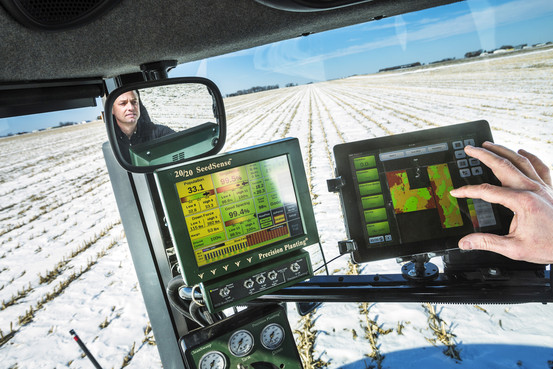
An Iowa farmer using tractor-mounted computers to help make decisions about planting crops

We are fully aware that few of our students will be entering jobs in agriculture (see Figure 1.5  in Chapter 1 for employment figures in the U.S. manufacturing, service, and farm sectors). Yet this Wall Street Journal (Feb. 26, 2014) article on the next revolution on the farm is still worth sharing with your class. The revolution will come from feeding data gathered by tractors and other machinery into computers that tell farmers how to increase their output of crops like corn and soybeans.

Monsanto, DuPont, and other companies are racing to roll out “prescriptive planting” technology to farmers across the U.S. who know from years of experience that tiny adjustments in planting depth or the distance between crop rows can make a big difference in revenue at harvest time. Many tractors and combines already are guided by Global Positioning System satellites that plant ever-straighter rows while farmers, freed from steering, monitor progress on iPads and other tablet computers now common in tractor cabs. The same machinery collects data on crops and soil. But many farmers have haphazardly managed the information, scattered in piles of paperwork in their offices or stored on thumb drives clattering in their pickup truck ashtrays.

Algorithms and human experts crunch all the data and can zap advice directly to farmers and their machines. Supporters say the push could be as important as the development of mechanized modified seeds in the 1990s. Data-driven planting advice to farmers could increase world-wide crop production by about $20 billion a year, or about one-third the value of last year’s U.S. corn crop. The technology could help improve the average corn harvest to more than 200 bushels an acre from the current 160 bushels. Such a gain would generate an extra $182 an acre in revenue for farmers.

Classroom discussion questions:
1. Why are farmers concerned about Monsanto’s involvement?

2. How has productivity improved over the past decades on farms?