

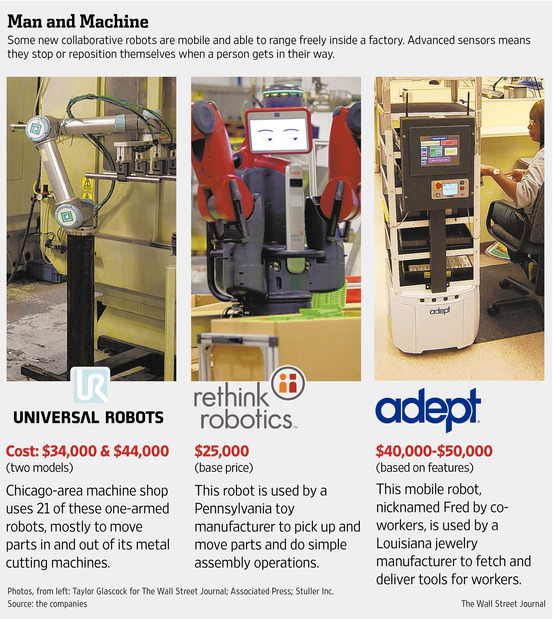
Robots have been on factory floors for decades. But they were mostly big machines that cost hundreds of thousands of dollars and had to be caged off to keep them from smashing into humans. Such machines could only do one thing over and over, albeit extremely fast and precisely. As a result, they were neither affordable nor practical for small businesses.
Collaborative robots can be set to do one task one day—such as picking pieces off an assembly line and putting them in a box—and a different task the next. Some are mobile and able to range freely inside a factory. The use of advanced sensors means they stop or reposition themselves when a person gets in their way, solving a safety issue that long kept robots out of smaller factories.
Classroom discussion questions:
1. Why will factories always need people?
2. What are the advantages and disadvantages of these smaller robots?