

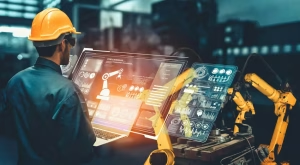

AI vision systems (Chapter 7) can catch defects on production lines at a pace beyond human capabilities and without the repetition-induced fatigue and employee turnover. Collaborative robots (cobots) and automated mobile robots transport material and can assist with assembly and repetitive operations. AI’s coding capabilities extend to numerical control and other industrial equipment, speeding up setup time and productivity in hard-to-fill technical positions.
The interaction of embedded AI, agent-based AI, and machine learning across different areas of an organization holds the greatest promise in solving long-term labor shortages. AI can already let a customer snap a photo of a damaged part and identify it for replacement. Its real power will manifest when AI can also determine the part’s inventory status and locations, establish shipping terms and timing, add the part to the procurement queue to replenish once it’s sold, alert engineering that a design change for a chronic defect may be in order, and propose alternative designs.
Here is a current example involving AI across systems: the big semiconductor company AMD is using generative AI to track down the root cause of delivery delays, simplifying complex supply chain interactions to transform a complex, specialist-dependent, labor-intensive manual process into faster issue resolution and better decision-making. The system cuts the time needed for what was a 14-step process taking 20-30 minutes by 90%, saving more than 3,100 staff hours a year.
Also coming soon to these intelligent product recommendation engines is an ability to parse what can be 50-page tender documents to extract multiple configurable products for sales quotes. That not only saves time, but also enables junior staff to handle work that has previously required experienced hands.
Classroom discussion questions:
- What can AI do to improve a procurement system?
- What does “embedded AI” mean?