
Some of America’s biggest manufacturers are backing away from forklifts, reports The Wall Street Journal (Jan. 5, 2024). The vehicles have been integral to factories and warehouses for more than a century, but now companies are aspiring to go “forklift-free” to improve productivity and safety. Each year around 7,500 workers are injured in forklift-related collisions, tip-overs and other mishaps, while nearly 100 are killed. Orders for forklifts dropped 28% in 2023.
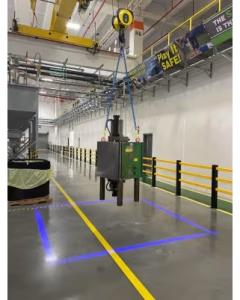
Plastic-pipe manufacturer Ipex designed its new factory in North Carolina to minimize the use of forklifts. That made the plant, which opened in 2023, a safer, quieter and less stressful workplace. “Employees feel like they can walk anywhere within the interior shop floor and not have to look out for forklifts,” said Ipex.
Mercedes is also reducing forklifts in its U.S. plants, replacing some with autonomous vehicles. Tesla is making a similar effort, using push carts and trailer-hauling “tuggers” inside its factories to cut down on traffic and injuries. Whirlpool’s washing-machine factories have been eliminating forklifts from production areas, and use robotic tuggers to deliver parts to assembly-line workers.
Forklift makers say they have added numerous safety features to their vehicles. These include high-visibility seat belts that make it easy to see whether an operator is wearing it, lighting that warns pedestrians a forklift is coming and sensors that slow the vehicle before a collision takes place. Forklift manufacturers say there is high turnover among drivers and lament what they call the glorification of unsafe operation. Dozens of TikTok and YouTube accounts feature videos showing drivers skidding, crashing and dropping oversize loads that smash across warehouse floors.
Classroom discussion questions:
- Why will it be difficult to totally replace forklifts?
- What are the safety issues that are frequently seen in factories with many forklifts?
