OM in the News: 150 Shades of Red Drown Mattel’s Supply Chain

Mattel has gotten to the heart of one of its problems: Too many reds aren’t a good thing. The company’s designers until recently could choose from about 150 types of red when making Barbie dolls, Hot Wheels cars or other toys in its stable. Each variation added storage costs and downtime at factories for cleaning equipment to swap out shades.

“Complexity is really a killer,” said Mattel’s chief supply-chain officer. Mattel has chopped the choices of reds by more than 1/3 and is doing the same for other colors, part of a broad edict to simplify the company’s supply chain. The goal is to improve, modernize and ultimately tame a sprawling supply chain that operates 13 factories, employs  35,000 people and delivers toys to 375,000 retail locations world-wide, reports The Wall Street Journal (Jan. 2, 2020). “Supply chain had become one of our handicaps,” adds the CEO.

Mattel says it plans to keep factories that are “strategically important” or that can make certain products at a better quality and lower cost than a third party could, while consolidating plants that are underused. The company already changed how it sells and fulfills orders to retailers. In Europe, Mattel implemented an automated, online ordering system for wholesale orders, eliminating the need for its sales team to manually process orders. It also increased the minimum order size so that it wasn’t shipping orders valued at just a few hundred dollars into a fragmented retail market.

More broadly, Mattel is using new algorithms to tie its manufacturing output more closely to demand, helping the toy maker to gauge the right number of toys for the holidays. Mattel also will be making fewer products. The company is planning to cut the number of items it sells by 30%, targeting the 45% of the items it sells that only make up 6% of its revenue.

Classroom discussion questions:

  1.  Why does Mattel have so many plants? So many colors?
  2.  What inventory strategy is Mattel using to cut SKUs (see Ch. 12 of your Heizer/Render/Munson text)?

OM in the News: Apple Wrestles With Conflicts in its Supply Chain

Tim Cook in China recently

Apple is asking suppliers to study shifting final assembly of some products out of China, as trade tensions prompt the company to consider diversifying its supply chain, reports The Wall Street Journal (June 19, 2019). While any major changes would be difficult and could take time to implement, Apple is looking into the feasibility of shifting 1/3 of the production for some devices to S.E. Asia.

Manufacturers of apparel, footwear and other low-margin items have been moving out of China for years due to rising costs, and tariffs have accelerated that trend. Many tech companies, however, find it more difficult to move. Among China’s chief attractions are well-developed chains of suppliers and reliable infrastructure, much of it built in the past 20 years. A plentiful labor force skilled in precision manufacturing as well as trained engineers and pro-business government policies also make China appealing. And for those companies looking to sell into the large Chinese market, producing in the country is more competitive than importing.

Apple remains deeply rooted in China. About 1/5 of its total sales are recorded there, while on the manufacturing side its supply chain accounts for three million jobs. Foxconn, which assembles iPhones, iPads and Macs, is, however, ready to shift some Apple production to plants elsewhere. It has also put more than $213 million into India recently and is looking to invest in Vietnam.

Outsourcing to China helped solidify Apple as one of the world’s largest and most profitable companies. CEO Tim Cook helped build the company’s sophisticated and efficient supply chain there, relying on Foxconn and others to crank out hundreds of millions of iPhones annually.

International moves won’t come easy. Production equipment and assembly lines would need to be dismantled and packed,. They then must be reinstalled, tested and calibrated, and their output rate adjusted. Software and environmental-control systems would need to be put in place, and line operators, engineers and quality managers must be available and trained.

Classroom discussion questions:

  1. Why isn’t more of Apple’s manufacturing coming to the U.S?
  2. What are the advantages and disadvantages of moving production?

OM in the News: The 737 MAX’s Supply Chain Disruption

Fuselages under construction at Spirit.

The grounding of Boeing’s 737 MAX is pushing some aerospace supply chains into a slow descent. Some suppliers are reconsidering decisions to keep making parts for the plane at full steam, The Wall Street Journal (June 14, 2019) writes, as inventories swell and a timeline for recertifying the plane remains hazy.

The new look at production highlights the tough economics of shifting gears in big supply chains for high-cost manufacturing operations. The grounding of the 737 MAX is stretching into its fourth month. Suppliers have largely kept pumping out parts, betting the grounding would be relatively short-lived. Some even saw it as a chance to catch their breath after years of blistering deadlines. Stopping and restarting production can be more costly and disruptive than keeping assembly lines humming, even at the expense of building inventories, but the calculation is changing as Boeing’s jet remains in limbo.

German seat maker Recaro initially kept production lines going full throttle but now is dialing back as fewer seats are needed in the short term. CFM International, which makes the MAX’s engines, has so far kept producing at its pre-grounding target rate, but is considering slowing that down. CFM also wants to make sure the company can quickly provide technical support to airlines once the MAX is cleared to fly again. Around 500 MAX planes have been idled. Their engines will need some maintenance from CFM before airlines can use them again.

Spirit AeroSystems, which makes the 737 fuselage, is still building 52 of them a month– matching Boeing’s pre-grounding output for the plane. Boeing has since throttled back to 42 planes a month.  Boeing pays for the parts on delivery, but Spirit is keeping them at storage sites. The large fuselages are lined up outside the company’s Kansas facility. It is storing wing flaps and pylons, used to mount engines, indoors.

Classroom discussion questions:

  1. What are the OM issues involved in this production slowdown?
  2. What is the role of the engine manufacturer in the MAX shutdown and startup?

OM in the News: Jet Makers’ Supply Chains Under Strain

A plane engine made by CFM remains behind schedule, forcing Airbus to postpone aircraft deliveries

Boeing and Airbus, swamped with orders for new jets, are struggling to deliver them all on time—in some cases angering customers and delaying payments, reports The Wall Street Journal (July 16, 2018). Airbus has missed a number of delivery deadlines, forcing airline customers to find alternatives, change routes or cancel flights. It has delivered fewer planes than it did by this time last year, despite promising 80 more this year. The missed deliveries mean delayed payments because most cash changes hands only upon delivery.

Boeing is straining with the same supplier shortfalls as Airbus. The company has made investments to help manage its suppliers, including in technology to help monitor their performance. Those efforts are crucial, with Boeing poised to deliver more than 800 planes for the first time this year and more than 900 annually by 2020.

For years, booming demand for new aircraft has made it more challenging for jet makers to deliver planes on time to airline customers. A supply-line crunch for items including engines and wing components is now magnifying the strain. The result: Some airlines have been left waiting for months for new planes, angering executives.

Suppliers to Boeing and Airbus have struggled to keep up with the surging demand. Engine-production delays have been among the most painful. At one point this year, Airbus had more than 100 nearly finished planes waiting on the tarmac for their engines. In the first 6 months, the company delivered 303 jets against a full-year target of 800 deliveries, mostly because of late engines. Airbus considered slowing production of planes while the engine makers recovered, but it feared that could disrupt other parts makers, causing further delays.

“The job today is not just about running a factory but running the entire supply chain,” said the head of a major supplier to both manufacturers.

Classroom discussion questions:

  1. What is causing the strain on both firms’ supply chains?
  2. What can the manufacturers do to alleviate supply chain issues such as these? What parts will always be an issue?

OM in the News: “Reefers” and the Fresh Food Supply Chain

The Jules Verne unloading reefer containers with live lobsters at the port of Dunkirk, France, after sailing from Nova Scotia

One of the shipping industry’s hottest markets is cold boxes. Demand to ship fresh food across the oceans is twice as high as it is for other products. The reason is twofold: (1) Refrigerated containers known as “reefers” can keep food fresh for more than a month, allowing distributors to safely send everything from orange juice to lobsters around the world.  And (2) the growing affluence of the global population, especially in Asia, has boosted demand for more-expensive foods.

“For the growing middle class, basic food like rice is no longer enough,” said the head of one French shipping giant. “They want their fruit, vegetables and fresh meat, and that’s pushing the industry to move more and more products under cold management.” Ten years ago, you could find strawberries in Denmark for only 3 months a year. Now, writes The Wall Street Journal (April 30, 2018), it’s year-round, thanks to reefers, and everyone from the smallest to the biggest shippers can join the supply chain.

It takes as long as 18 days to ship grapes from Peru to Philadelphia. The fruit “is put to sleep” in a controlled atmosphere that delays the ripening process before it’s distributed to supermarkets across the East Coast. Until the late 1990s, fresh produce was shipped on break bulk ships—general cargo vessels with big refrigerated spaces—from the production site to a single destination. Cargoes were usually limited to bananas, with the ships being operated by major distributors like Chiquita. Smaller producers that couldn’t afford to hire such vessels confined themselves to local markets.

Classroom discussion questions:

  1. What is the role of “reefers” in the global fresh food supply chain?
  2. Why have they proliferated?

OM in the News: Airbus Outgrows its European Supply Chain

Since it was cobbled together from a passel of national aerospace groups a half-century ago, Airbus has spread its operations across Europe in a delicate effort aimed at maximizing political expediency without sacrificing too much economic efficiency. There’s little industrial logic, after all, in shuttling airplane parts among 14 factories in a half-dozen countries, with some wing components crossing the English Channel 9 times before being mounted on planes.

The company’s airliner business employs more than 53,000 people across Europe, reports Businessweek (Feb. 12, 2018). And of the 11,000 passenger jets Airbus has built since it was founded in 1970, all but 400 have come out of the region’s factories. Europe, however, accounts for fewer than 1 in 5 planes in Airbus’s order book, and China, the U.S., and other countries are clamoring for a bigger share of production. A decade ago Airbus opened a plant in China, that’s expected to make 6 planes monthly by 2020, up from 4 now. Production is also ramping up at a factory in Alabama that’s been building Airbus single-aisle planes since 2015.

Airbus already has a global network of suppliers, ranging from Kansas-based Spirit AeroSystems, which produces the central fuselage of the A350, to a Korean Air Group that makes wingtip devices for the A330 widebody, to China’s Xi’an Aircraft, which manufactures wings for planes assembled at the Chinese plant. All told, Airbus has some 12,000 subcontractors in more than 40 countries from Finland to Sri Lanka.

As we note in the Global Company Profile that opens Chapter 2, Boeing also relies on vendors around the globe. The 787 Dreamliner, the first all-composite aircraft, uses components from such far-flung places as Japan and Italy, part of a plan to spread the manufacturing risk among partners.

Classroom discussion questions:

  1. Why is the aerospace supply chain so complex?
  2. What are the advantages and disadvantages of this approach?

OM in the News: Elon Musk and Vertical Integration at Tesla

teslaTesla’s move to vertical integration (see Chapter 11) reminds us of Henry Ford’s approach in the 1920s. Ford’s massive Rouge complex in Michigan made most of the components, including engines, glass, and steel, used in its assembly plants and was supplied by Ford-owned iron mines and limestone quarries. Ford even owned and operated a rubber plantation in Brazil.

To secure the huge number of cells it needs and drive down the cost, Tesla is collapsing the supply chain and bringing battery-cell production in-house,” writes Businessweek (June 27-July 3, 2016). Musk’s vision now includes Tesla buying SolarCity, so his passionate customers can get rooftop solar panels, electricity storage units, electric cars, and charging units from Tesla.

Musk needs unprecedented quantities of the metals (ie., nickel, cobalt, lithium, aluminum) used to make lithium ion batteries to reach an ambitious goal: producing 500,000 electric vehicles a year by 2018. That’s no small task. When the factory was announced in 2014, Tesla said it would produce more lithium ion batteries annually by 2020 than were produced worldwide in 2013. The accelerated schedule to supply the Model 3, the automaker’s first mass-market car, doesn’t leave much time to create a complex supply chain that includes expanded mining and exploration operations.

It also pits Tesla against consumer-electronics companies, which use the batteries in everything from mobile phones to laptops, and carmakers in China, where the government wants 5 million electric and other new-energy models on the road by 2020.  Tesla knows that it’s going to have to source the raw materials themselves, and they are competing with China. (Tesla’s Model S sedan, which starts at $66,000, contains more than 7,000 battery cells).

Classroom discussion questions:

  1. Provide other examples of vertical integration (see Figure 11.2).
  2. What is the difference between backward and forward integration? How does this relate to Tesla?

OM in the News: China and its Rare Earths

rare earthsChina is home to most of the world’s deposits and almost all processing of the 17 minerals classed as rare earths — elements with uses ranging from iPhones to instrument panels to lasers. China’s 2011 quotas on rare earths exports– a shock to electronics manufacturers across the globe– have just been replaced with a resources tax, reports The Financial Times (Jan. 5, 2015). This eliminates its policy that caused friction with its trading partners and heightened awareness of their importance as strategic assets. The US  recently won a challenge against the quotas at the World Trade Organization.

In some respects, China’s quota policy had been a success. Implemented at a time when its rare earths were exported cheaply and processed primarily in Japan, the price differential created by the quotas inspired many Japanese companies to move their plants to Inner Mongolia, one of the centers of rare earths mining in China.

are earth2But other goals of the quotas have not been successful: there has been little let-up in the environmental damage caused by rare earths mining and processing, and the pace at which they are mined has slackened little. The run-up in prices as quotas tightened also spurred funding for rare earths mining outside China, which had previously been unprofitable. The volatility in prices after China tightened quotas, has also led manufacturers to find other materials for applications, including magnets. That has alleviated some of the strategic concerns of China’s trading partners, which centered around the minerals’ importance to defense and high-tech industries.

Classroom discussion questions:
1. Why are rare earths so important in manufacturing?
2. When China disrupted supply lines in 2011, what did manufacturers do to adjust to shortages?

OM in the News: Apple Again Faces Supplier Labor Violations

apple workerApple has once again been accused of poor and unsafe working conditions at one of its factories in China,” writes The Christian Science Monitor (Sept. 4, 2014). A  report compiled by China Labor Watch, which has previously targeted Apple for labor violations, says that a factory in Suqian has violated Chinese laws in addition to violating policies put in place by Apple and its supplier, Catcher Technology. Labor violations at the factory included “excessive overtime work, long work shifts while standing, a lack of occupational safety training and heavy dust in the workplace.” Subsequent investigations, 16 months after the initial investigations, found that working conditions had not improved and, in some cases, had worsened.

The 22 labor violations documented include discriminatory hiring practices, insufficient safety training, and a lack of protective equipment provided to workers handling toxic chemicals. Fire exits were blocked, while flammable alloy dust and shavings filled the air. Working overtime was mandatory for all workers, who were forced to work up to 100 hours of overtime per month, almost 3 times the 36-hour limit prescribed by Chinese law. Apple replies it has sent a team to investigate operations at the factory.

China continues to be Apple’s largest source of suppliers, in addition to being the place where nearly all Apple products are assembled. But factory safety for workers assembling Apple products has come under close scrutiny in recent years. About 150 Chinese workers at Foxconn threatened to commit suicide 2 years ago unless their working conditions were improved. Earlier this year, an Apple audit uncovered human rights violations at different levels of its supply chain, including abuses of migrant laborers and the use of underage workers. In response, Apple has increased supplier audits from 173 in 2012 to 451 last year.

On a separate note, the release of the iPhone 6 this week is expected to add 1% a month to China’s export growth for the rest of 2014.

Classroom discussion questions:

1. Why do these supplier problems persist?

2. What more can Apple do?

Good OM Reading: Rethinking Corporate Social Compliance in the Supply Chain

 third worldFollowing widely publicized human rights scandals in the early 1990s, corporations, dominated by those in the footwear and apparel industries, invested heavily in social compliance programs to enforce a minimum standard of human rights and employee safety throughout their supply chains. These standards, framed loosely on a U.N. declaration, typically sought to separate the worst human rights abuses from production processes where finished goods were manufactured. In the contract manufacturing sector, such abuses include child labor, forced labor, excessive overtime and unsafe conditions.

One might expect that given the pervasiveness of corporate social compliance programs and the volume of audits being performed that the evidence of abuses in corporate supply chains would be diminishing. If anything, the opposite may be true. The collapse of the Rana Plaza Garment Factory in Bangladesh in 2013 put a spotlight back on the issue of human rights in contract manufacturing. Social compliance programs have presented a dangerous illusion of progress while conditions, egregious even by 19th-century standards, have persisted unaddressed.

In the garment sector, countries such as Bangladesh, Haiti, Lesotho and Cambodia represent large and growing sources of production. The reason these countries have become major players has had little to do with a proximity to raw materials or a uniqueness of expertise, and much more to do with these countries possessing large volumes of impoverished labor.

What needs to change?  In this excellent (12 page) report, titled Human Right and Professional Wrongs, by Ernst & Young (2014),  several recommendations emerge:  (1) Companies need to use 3rd-party certifiers and auditors more strategically; (2)Procurement systems need to be tightened to prevent orders from being placed with factories that have not had their social compliance status assessed; (3) Agents need to be brought in line with the social compliance expectations of retailers; (4) Companies need to maintain longer relationships with a smaller number of suppliers; and (5) Companies need to incorporate human rights before they begin manufacturing.


OM in the News: War and the Global Supply Chain

conflict mineralsIn the next week, says The Wall Street Journal (May 20, 2014), some 6,000 U.S.-listed companies are expected to release lots of detail about their supply chains in the first reports required by law on whether their products contain “conflict minerals.” The law, part of the 2010 Dodd-Frank Act, was intended to choke off financing for violent militia groups in and around the Democratic Republic of the Congo, which sell minerals used in products ranging from smartphones to engagement rings. The SEC estimated that conflict-mineral reports would cost companies a total of $3-$4 billion in the first year, then drop to about $200-$600 million in following years.  But the law has been under continuous assault from business groups, which consider it too burdensome.

AMD Inc., has spent years investigating the manufacturing of its computer chips, trying to determine whether the company’s suppliers used any tin, tungsten, gold or tantalum sold by armed groups in Africa’s war-torn Congo region. Just days before a June 2 regulatory deadline, the chip maker still doesn’t know. And neither do most companies. Affymetrix, a California biotech company, said it had found 209 smelters and refineries in its supply chain, but could only be certain that 68 of those were conflict-free. Many companies say they are still years away from knowing the source of their minerals. Hewlett-Packard Co. has disclosed that it is unsure of the “conflict” status of its materials. There may be as many as 10 companies between H-P and the initial buyer of the minerals, which for now makes it almost impossible to learn where many materials are obtained.

Plenty of products still contain the four targeted metals from the Congo region. More perplexing, the supply-chain audits have had little impact on Congo’s market share. Last year, Congolese production of tantalum was estimated to have increased slightly to about 18% of the world’s total. The country’s tin production is holding steady at about 2%.

Classroom discussion questions:

1. Why is it so difficult for companies to document 2nd and 3rd tier suppliers?

2. Can these Congo mineral suppliers be easily replaced?

Good OM Reading: Reducing the Risk of Supply Chain Disruptions

MIT SloanFor supply chain executives, recent years have been notable for major supply chain disruptions that have highlighted vulnerabilities for individual companies and for entire industries globally. (The Japanese tsunami in 2011 left the world auto industry reeling for months. Thailand’s 2011 floods affected the supply chains of computer manufacturers dependent on hard disks. The 2010 eruption of a volcano in Iceland disrupted millions of air travelers and affected time-sensitive air shipments.) This excellent article in the MIT Sloan Management Review (Spring, 2014), by Professors Sunil Chopra and ManMohan Sodhi, is worth the 23 minutes it will take you to read it–especially if you teach Chapter 11 and Supp.11 in our text.

Today’s managers, they write, know that they need to protect their supply chains from serious and costly disruptions, but the most obvious solutions — increasing inventory, adding capacity at different locations and having multiple suppliers — undermine efforts to improve supply chain cost efficiency. While managers appreciate the impact of supply chain disruptions, they have done very little to prevent such incidents or mitigate their impacts.This is because solutions to reduce risk mean little unless they are weighed against supply chain cost efficiency. Financial performance is, we know, what pays the bills.

Supply chain efficiency, which is directed at improving a company’s financial performance, is different from supply chain resilience, whose goal is risk reduction. Although both require dealing with risks, recurrent risks (such as demand fluctuations) require companies to focus on efficiency in improving the way they match supply and demand, while disruptive risks require companies to build resilience despite additional cost.

The authors suggest two strategies for reducing supply chain fragility through containment while simultaneously improving financial performance: (1) segmenting the supply chain or (2) regionalizing the supply chain. In many instances, though, reducing disruption risk involves higher costs. The reason executives are reluctant to deal with supply chain risk comes from the perception that risk reduction will reduce cost efficiency significantly. Managers can do much to ensure that loss of cost efficiency is minimal while the risk reduction is substantial by avoiding excessive concentration of resources like suppliers or capacity. And nudging trade-offs in favor of less concentration by overestimating the probability of disruptions can be much better in the long run compared to underestimating or ignoring the likelihood of disruptions.

OM in the News: Flawed Inspections of Factories Abroad

Factory inspection checklist audit form

A major New York Times (Sept. 2, 2013) investigation reveals how the factory inspection system intended to protect workers abroad and ensure manufacturing quality is riddled with flaws. The inspections are often so superficial, writes The Times, that they omit the most fundamental workplace safeguards like fire escapes. And even when inspectors are tough, factory managers find ways to trick them and hide serious violations. There is little enforcement or follow-through to guarantee compliance.

Inspectors, for example, came and went from a Walmart-certified factory in China, approving its production of more than $2 million in specialty items. But unknown to the inspectors, none of the items had been manufactured at the factory. Instead, Chinese workers sewed the goods at a rogue factory that had not gone through the certification process set by Walmart for labor, worker safety or quality. A subcontractor just moved the items over to the approved factory. Soon after the merchandise reached Walmart stores, it began falling apart.

As Western companies use low-cost foreign labor for manufacturing, factory inspections have become a vital link in the overseas supply chain. One expert said little had improved in 20 years of factory monitoring, especially with increased use of the cheaper “check the box” inspections (click on attached graphic) at thousands of factories. “The auditors are put under greater pressure on speed, and they’re not able to keep up with what’s really going  on,” he said.

Monitoring companies have established a booming business in the 2 decades since Gap, Nike, Walmart and others were tarnished by disclosures that their overseas factories employed underage workers and engaged in other abusive workplace practices. Each year, these companies assess more than 50,000 factories that employ millions of workers. Walmart alone commissioned more than 11,500 inspections last year. But unauthorized subcontracting is very common, and audits can be very brief. A single inspector might visit a 1,000-employee factory for 6-8 hours.

Discussion questions:

1. If monitoring systems are failing, what is the next step?

2. Why have overseas manufacturers resisted major changes?

Good OM Reading: The Box That Built the Modern World

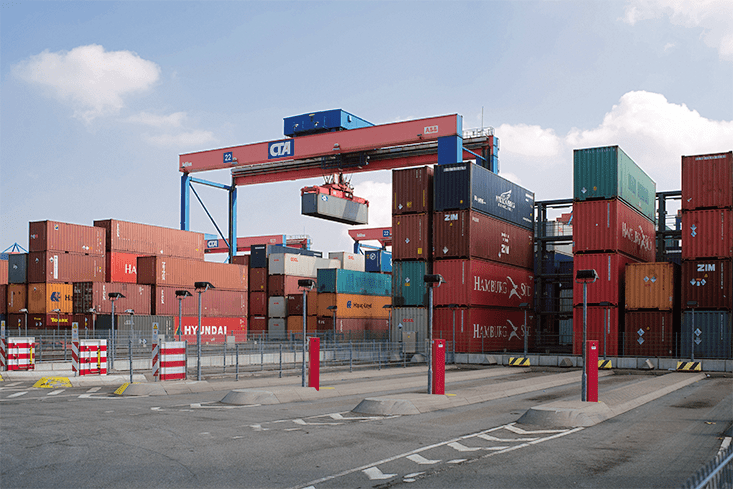
shipping containersFor a fascinating story called “The Box That Built the Modern World,” enjoy this article in In Transit (Issue 3, 2013). The piece follows the Hong Kong Express, docked at Hamburg’s Container Terminal for 33 hours. “Already, the ship was half empty. Cargo from Asia was stacked in neat rows of shipping containers on the dock. The ship is nearly a quarter of a mile long; from side to side it’s 157 feet. It can carry 13,167 20-foot-long containers, the standard box used in commerce around the world.” In less than 2 months the Hong Kong Express will call at 11 ports and travel more than 12,500 miles. Circling the world 4-5 times a year, it can move 1.4 million tons of cargo annually.

More than any other single innovation, the shipping container epitomizes the enormity, sophistication, and importance of our modern transportation system.  Fundamental to how practically everything in our consumer-driven lives works, it is the Internet of things. Just as email is disassembled into bundles of data you send, then re-assembled in your recipient’s inbox, the boxes are designed to be interchangeable, their contents irrelevant.

Once they enter the stream of global shipping, the boxes are shifted and routed by sophisticated computer systems that determine their arrangement on board and plot the most efficient route to get them from point to point. The exact placement of each box is critical: ships make many stops, and a box scheduled to be unloaded late in the journey can’t be placed above one slated for offloading early.

The In Transit article traces a T-shirt sewn at a factory near Beijing. Tagged, folded, and boxed, the T-shirt is stuffed into a container with 33,999 identical shirts at the factory. The merchandise passes through 36 steps before arriving at a discount clothing retailer’s distribution center near Munich. There’s the trucker who moves the box to a waiting ship in Xinjiang, the feeder ship that moves it to Singapore to be loaded onto a bigger Europe-bound freighter, the crane operator in Hamburg, customs officials, train engineers, and more. The total time in transit for a typical box from a Chinese factory to a customer in Europe might be as little as 35 days. Cost per shirt? “Less than one U.S. cent,” says a shipping exec. “It doesn’t matter anymore where you produce something now, because transport costs aren’t important.”

OM in the News: Li & Fung, The Most Important Company You Never Heard Of

Li & Fung workers protesting unpaid wages

Li & Fung — the most important company that most American shoppers have never heard of — has long been on the cutting edge of globalization, chasing cheap labor to garment factories first in China, then elsewhere in Asia, including Bangladesh. Now, with sweatshop disasters there drawing international scrutiny, the business is looking for the next best place where it can steer apparel buyers seeking workers to stitch clothing together for a few dollars a day.

As the world’s largest sourcing and logistics company,” writes The New York Times (Aug. 8, 2013), “Li & Fung plays matchmaker between poor countries’ factories and affluent countries’ vendors, finding the lowest-cost workers, haggling over prices and handling the logistics for 1/3 of the retailers found in the typical American shopping mall, including Sears, Macy’s, JCPenney and Kohl’s.”

The Hong Kong merchandiser owns no clothing factories, no sewing machines and no fabric mills. Its chief asset is the 15,000 suppliers in over 60 countries that make up a network so sprawling that an order for 500,000 bubble skirts that once took 6 months from drawing board to store shelf now takes 6 weeks at a sliver of the price.

“If globalization is a race to the bottom, where lowest wages win,” says an A.F.L.-C.I.O. spokeswoman, “Li & Fung is the sherpa showing companies the fastest route down that slope.” Li & Fung’s ability to exert pressure on factories can have unfortunate consequences, adds a labor advocacy group executive: “Every extra penny you squeeze from a factory is a step closer to that factory cutting the kind of corners that lead to deadly disasters.”

Meanwhile Li & Fung’s CEO says his company is considering South America and sub-Saharan Africa as possible places for growth. “I wouldn’t write Bangladesh off,” he said. “It still has some of the cheapest labor in the world. For factories to get safer, clothing prices would have to go up. So far, consumers have just not been willing to accept higher costs.”

Discussion questions:

1. What is the firm’s role in the apparel supply chain?

2. What risks do clothing companies take in depending on Li & Fung?