OM in the News: Japan Inc. Looks to Offshoring

Just as the US has faced the political and economic decisions to offshore and outsource much of its manufacturing needs, Japan is now accelerating its own move of factories overseas. Today’s Wall Street Journal (April 11,2011) reports that the reality of the earthquake and tsunami is prompting Japanese companies to reassess their risk profiles. With damaged factories, displaced workers, crippled infrastructure,  rolling blackouts, and supply shortages, Japan will not be able to rebound as quickly as it did after the 1995 Kobe earthquake. It is estimated that the nation lost 5% of its capital stock, compared to 2% from the Kobe tremor.

Although much of the capacity will be restored in time, Japanese offshoring will accelerate even more than its gradual trend line (see graph). Microprocessor Reneses Electronics, for example, will increase production outsourcing from 8% to over 25%. It plans to move auto chip production to Singapore.

Similarly, Nissan which already only got 25% of its auto production out of Japan, will move even more now. The Micra subcompact is going to Thailand and the Rogue SUV to Canton, Mississippi. “After the quake, managers signaled that they will step up efforts to shift output and sourcing abroad”, says Nissan’s COO.

Discussion questions:

1.What pressure will Japanese companies face when they close factories at home?

2. Why are these changes being made? Is it only because of the disaster?
OM in the News: Hitachi’s Airflow Sensor Shuts Auto Plants Worldwide

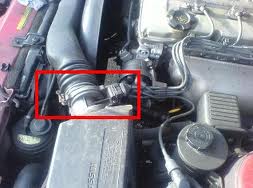
The Wall Street Journal (March 24,2011) reports today that a small electronic part that measures airflow to car engines (and retails for $90) is shutting or cutting auto production at  plants around the world. The impact of the Hitachi sensor is, of course, tied to the earthquake in Japan 2 weeks ago. Hitachi makes 60% of the world’s market for airflow sensors, but its plant in northern Tokyo remains shut down.

Here is the ripple effect from the one part you probably never heard of before:

GM Shreveport, assembly halted March  21.

GM Buffalo engine plant, 10% of workers laid off.

Peugeot-Citreon and  Vigo in Spain,  and Peugeot in France, production cut in half.

Opel in Germany, Zaragoza in Spain,  and Trnava in Slovakia, output slowed.

Hitachi also supplies  Ford, Renault, Nissan, Toyota, and VW.  “Ford is monitoring availability of sensor supplies ‘hourly’ as it runs low on the same part”, says The Journal. But this may be just the tip of the iceberg. Auto makers keep different  supply levels (say 10 days for this part), and since the sensor arrives by ship, it may take another few weeks for the full impact to be felt. The last shipments made before the quake should arrive in the US next week.

On a more positive note, an accompanying article in The Journal announces that Japanese chip makers are gradually resuming operations in northeastern Japan. The problem for Fujitsu, Renesas, and Toshiba is that power supplies are still inconsistent.  Designed to operate 24/7, when systems are shut down, it takes up to a week to reboot all the machines in the plant.

Discussion questions:

1. What can auto makers do to prevent this situation from happening in the future?

2. How can the restart process be speeded up?

OM in the News: “Thin Strands” Supply Chains

Today’s  New York Times (March 20,2011) article opens: “Tony Prophet, a senior VP for operations at H-P, was awakened at 3:30am in California and told an earthquake and tsunami had struck Japan. Soon after, Mr. Prophet had set up a virtual ‘situation room’, so managers in Japan, Taiwan, and America could instantly share information. Mr. Prophet oversees all hardware purchasing for H-P’s $65 billion-a-year global supply chain, which feeds its huge manufacturing engine. The company’s factories churn out 2 PCs a second, 2 printers a second and one data-center computer every 15 seconds. ‘It’s like being in an emergency room, doing triage’ “, he says.

Today’s global supply chains indeed mirror complex biological systems like the human body. At times they can be quite vulnerable to a seemingly small weakness; it’s like a tiny tear in a crucial artery causing a heart attack. But the disaster in Japan (see our blogs on March 14 and 16) presents a first-of-a-kind challenge. Plants around the world, some not even knowing their 3rd tier suppliers were in Japan, are starting to close (eg., the GM truck plant in Louisiana).

The buying and shipping of supplies has been transformed in the past 20 years. Manufacturing is outsourced around the world, with each component made in locations chosen for expertise and low costs. That means supply lines are longer and more complex—called the thin strands phenomenon— or the difficulty and cost of seeing deeper into the supply chain. “Major companies have constant communications and deep knowledge of primary suppliers”, says Harvard Prof. David Joffe. “It’s the secondary layer of suppliers where the greater risk is”.

“Lacking some part (and the new Apple iPad2 has 5 from Japanese suppliers), even if it costs just dimes, can mean shutting a factory,”‘ says a former Apple exec. Will the Japan quake prompt companies to re-evaluate risk in their supply chains? Will there be a shift from JIT to a “just-in-case” mentality? This is a great article to share with your class.

Discussion questions:

1. How has the production of electronic components evolved in the past decades?

2. Why does Apple treat its supply chain as a trade secret?

3. What is the role of “smart technology” in solving the “thin strand” problem?

OM in the News: Global Supply Chains in Turmoil…or a Painful Blip?

With the words “global supply chain” continuing to dominate business headlines around the world, OM will remain in the news until Japan is able to stabilize its economy. And that may not be for some while. Today’s Wall Street Journal (March 16,2011) lead story writes: “International companies from BMW to Boeing girded for possible disruptions to supply chains.” In these early days of assessing the quake’s damage, it is tempting for a gloomy view to carry the news.

After all, Japan is a key supplier of advanced parts used in the final assembly of products throughout the world.  Malaysia’s Eita Electronics depends on parts from Japanese factories for its circuit breakers. BMW receives  electronic components for navigation systems and digital displays. And Boeing’s 787 wings and fuselages are produced there (see our Global Company Profile in Ch.2). It truly is amazing  how dependent one nation’s manufacturers have come to depend on anothers.

The Journal adds:” Supplier logistics are severely dislocated by restrictions on using highways for freight, as well as unpredictable power cuts”. Mazda, Honda, Nissan, and Toyota have all suspended operations even though most of their plants were not heavily damaged. Toyota is even slowing US production, just in case it cannot ship parts it makes in Japan. American auto makers cannot celebrate just yet, as they in turn receive specialized parts, such as batteries, from Japan.

Just to balance the picture, financial services giant UBS  issued this  report (March.14,2011): “We believe this catastrophe is unlikely to inflict a significant blow to Japan’s growth outlook for this year…First, the major business centers suffered only limited damage as most of the destruction was concentrated in the northeast coast, which accounts for about 7% of Japan’s industrial output. Second, outside of the worst affected areas, business activity moved towards normalization over the weekend”.

Discussion questions:

1. What are some products not impacted by the damage to Japan?

2. What important issues might the UBS report be overlooking?

OM in the News: Earthquakes, Japan, and the Global Supply Chain

It is much too early to predict how soon Japan will recover from the terrible devastation of last week’s earthquakes and tsunami. Your students, though, are aware of the situation on the ground and the implications for global commerce and manufacturing, so this is a topic worth discussing in class.

Various newspapers have taken differing views on how the devastation will affect the global economy. Today’s Wall Street Journal (March 14, 2011) comes right out and asks the question: “Are global supply chains so taut that a disruption in the world’s No. 3 economy will be felt around the world?” Their answer: Japan’s factories play an out-size role in global production , ranging from a fifth of the world’s semiconductors to advanced machine tools. The result could be shortages of key components around the world. For eaxample, Reneses Electronics is the world’s largest maker of micro controllers for cars and other equipment. In suffering major damage, it places customers at risk. Its chips are key ingredients and its inventory is not stockpiled nor readily replaced,  employing the JIT concept. And most auto makers use only 1-2 suppliers for parts.

Likewise, today’s New York Times writes: “Most high-tech goods these days are produced through carefully orchestrated procurement and manufacturing networks that combine parts from around the globe, often shipped on tight daily production schedules. Even temporary shortages can drive up prices sharply.”

Forty percent of chips for smartphones and tablet computers  and most LCDs for appliances are also made in Japan. Further, Sony’s Blu-ray disc and magnetic tape factories were flooded. And with rolling blackouts twice a day to conserve power, most manufacturers are unable to operate expensive machinery that requires stable energy.  Toyota, Nissan, and Honda are not even sure the logistics are available to get their cars to ports for shipping.

Discussion questions:

1. Discuss the importance of having manufacturing facilities around the world?

2. How are Japanese automakers impacted with respect to US sales?

OM in the News: Japan, Inc. Faces Offshoring Dilemma

If you think offshoring of jobs and production is a problem unique to the US, Nissan and Toyota would disagree. The Wall Street Journal (Feb.1, 2011) just reported that Japanese auto makers will be holding production steady in Japan (for now), but opening new plants overseas over the next 5 years to meet increased demand.  This move to offshoring ( a topic in Supp.11) comes as the yen hovers near record highs against the dollar. Nissan, Toyota and the other auto firms are having trouble making money on exports when the dollar is at 90 yen or weaker. (It sits at 82 this week).

Nissan “will significantly reduce the number of models it exports from Japan over the next 3 years, while boosting production …overseas”, says the company. It turns out that a move in the dollar by one yen in either direction is equivalent to $219 million in operating profit annually at Nissan.

For political and union reasons, Nissan promises to keep making 1 million cars in Japan, while Toyota vows to stay at 3 million per year. But Nissan just shifted production of its Micra model from Tokyo to Thailand. And the Rogue SUV will begin production at a Smyrna, Tenn., plant in 2013–departing  its current Kyushu, Japan location.

The additional good news for other countries wanting the jobs: Nissan will shift the outsourcing of many parts to cheaper production sites outside Japan.

Discussion questions:

1. Why are major Japanese auto makers attracted to the US, and other countries,  for production?

2. Is offshoring a political decision in Japan?

OM in the News: Japan’s Offshoring is Restructuring Its Economy

If you think outsourcing (transferring in-house processes to another company) and offshoring (which we define in Chapter 2 as moving business processes to another country, but retaining control) are a problem only in the US, think twice. Today’s Wall Street Journal (Oct.25,2010) reports that more and more Japanese companies are transferring their manufacturing abroad, creating a major restructuring of that country’s economy.

The reasons: too strong a yen and high wages, both of which make their goods more costly and less competitive in the global economy.

Toyota, for example, will make 57% of its cars abroad this year, including its flagship hybrid, the Prius, which it starts producing at  a Bangkok plant. Nissan will hit 71% offshoring this year. And Sony is skyrocketing from 20% abroad in 2010 to 50% in the next fiscal year.

As Nissan CEO Carlos Ghosn recently stated: “sourcing more and more products outside Japan–there is no other way to compete”. Only 10.3 million Japanese now work in manufacturing, down from over 12 million in 2002.

Discussion questions:

1. Although controversial, why is Japan not fighting outsourcing/offshoring as much as the US does? (See our blog of Oct. 12th for some background on the battle against outsourcing in the US).

2. Why is Japan finding it necessary to go abroad?

3. Japanese are consumers are reluctant to spend. Why?