OM in the News: The Great Pacific Garbage Patch

Let’s begin the week with a “good news, bad news” story about what we can do to save our planet. First, the bad news.

In the Pacific Ocean between Hawaii and California floats a massive collection of debris that has long been accumulating trash — from fishing nets to microplastics — known to be harmful to the marine environment. For years, researchers said it might not be possible to remove this Great Pacific Garbage Patch. One of the largest marine debris patches in the world, there are at least 79,000 tons of plastic inside the Patch’s 1.6 million-square-kilometer area. Microplastics (plastic materials smaller than 5 centimeters) make up 8% of the mass, but 94% of the 1.8 trillion pieces of debris floating in the area.
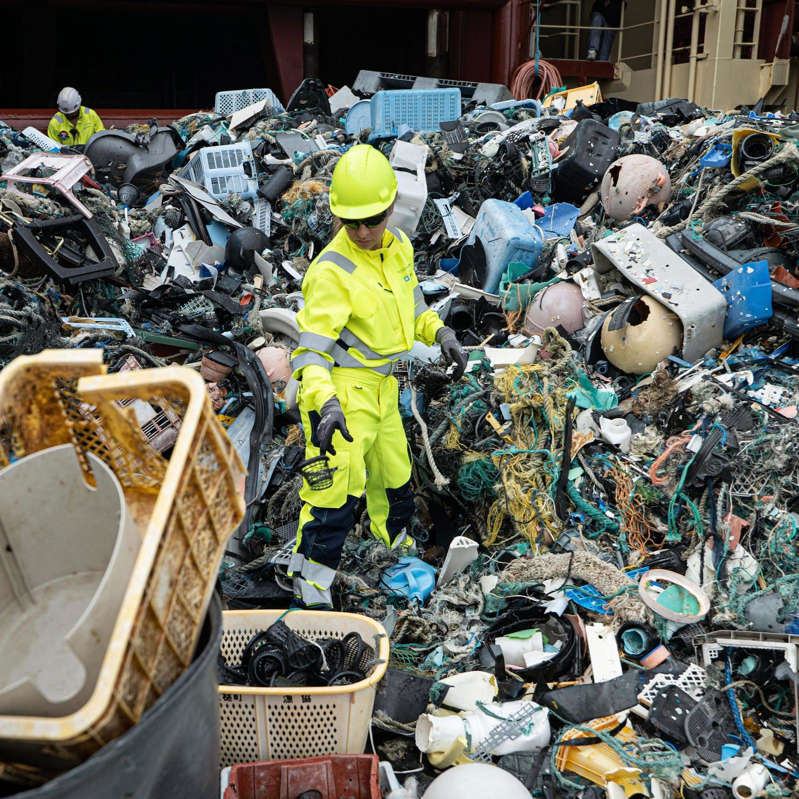
Ocean Cleanup’s massive trash haul on October 8, 2021

Marine garbage patches such as this are large areas where debris collects. The aquatic piles are formed by rotating currents called “gyres,” which are like “big whirlpools that pull objects in.” There are five gyres in our oceans — one in the Indian, 2 in the Atlantic and 2 in the Pacific. The Great Pacific Garbage Patch is the most famous of these piles.

More than 24 trillion pounds of plastic is dumped into oceans ever year. And without immediate and sustained action, the annual flow of pollution could triple by 2040. “Without meaningful change, about 4 billion people worldwide are likely to be without organized waste collection services by 2040, contributing significantly to the projected amount of ocean plastic pollution,” said a 2020 Pew Charitable Trusts study.

Now the good news! In July, The Ocean Cleanup non-profit, which has been developing a system to help clean up the Great Pacific Garbage Patch, took its first large-scale cleanup system, called System 002, to the Pacific. They conducted a series of tests consisting of System 002 being taken offshore to safely gather plastic from the ocean. Just last week, according to CBS News (Oct. 16, 2021), The Ocean Cleanup tweeted it had gathered about 20,000 pounds of debris. (See the photo).

System 002 works by two boats slowly guiding a U-shaped barrier through the polluted area. The circulating currents in the garbage patch move the plastic around, which helps guide that plastic into a retention zone. Workers then empty the plastic onto the marine vessel. They take the plastic to shore to recycle, and The Ocean Cleanup reuses some of the materials gathered to make products. The group predicts it could remove 90% of all floating ocean plastic by 2040.

Critics stress that “priorities should be set on preventing plastic from entering the ocean.”

Classroom discussion questions:

  1. How is this an OM issue? (Hint: see Supp. 5 in your Heizer/Render/Munson text).
  2. Are the critics right?

OM in the News: Trapping Plastic Waste

What do old televisions, street signs, motorbike helmets, windsurf boards, and Christmas trees have in common, asks CNN (June 10, 2021)? They were all caught floating down Amsterdam’s Westerdok canal — by a curtain of bubbles. “The Bubble Barrier” was developed as a simple way to stop plastic pollution flowing from waterways into the ocean. An air compressor sends air through a perforated tube running diagonally across the bottom of the canal, creating a stream of bubbles that traps waste and guides it to a catchment system. It traps 86% of the trash that would otherwise flow to the River IJssel and further on to the North Sea. The idea is to catch plastic without having a physical barrier like a net or boom blocking the river, which could disrupt aquatic life or interfere with shipping.

Up to 80% of ocean plastic is thought to come from rivers and coastlines. Much of the plastic in Amsterdam’s Westerdok canal comes from trash bags that local residents leave outside their homes. If the bags tear, wind and rain can carry trash into the canal.

seabirdseal

Globally, 11 million metric tons of plastic waste flows into the oceans every year, where it can suffocate and entangle some aquatic species. Plastic debris less than five millimeters in length, known as microplastics, can also affect marine life. Often mistaken for food, microplastics are ingested and have been found in zooplankton, fish, invertebrates and mammalian digestive systems.

The albatross chick shown in the photo above is being fed pieces of plastics by its parents, which mistake the waste for food. Seabirds which ingest plastic waste are smaller, lighter, and suffer from a litany of health problems. Plastic waste kills about 1 million seabirds every year. The second photo shows an Hawaiian monk seal chewing on a plastic bottle.

Classroom discussion questions:

  1. How is plastic waste an issue for operations managers?
  2. What are companies doing to minimize plastic usage and waste?

OM in the News: Pollution and Sustainability on the Seas

Some shipowners want to avoid the financial impact of investing in new fuel and equipment to meet environmental targets by simply slowing ships down.

The new editions of our OM texts feature Celebrity Cruises, and Supp. 5 (Sustainability in the Supply Chain) includes a video case study called “Saving the Waves at Celebrity Cruises.” This recent article in The Wall Street Journal (May 11, 2019) provides a complementary discussion of sustainability issues at sea, as more than 100 shipowners have just signed a UN motion calling for slower sailing speeds to cut greenhouse gas emissions.

The measure could ripple across international supply chains, with products taking more time to be delivered and cargo owners paying more for transport costs because of the longer sailings. But some container carriers oppose the slow-steaming plan, which they believe would undermine their efforts to improve service in the time-sensitive supply chains of their big consumer-goods customers.

Ships move the world’s commodities like oil, iron ore and grains and the vast majority of manufactured goods, including cars, home appliances, clothing and food. They also contribute around 3% of the world’s global pollution, an amount comparable to major emitting countries.

A new maritime environmental target takes effect Jan. 1st,, when vessels will be required to slash sulfur emissions that come from burning the heavy oil that powers ships. International Maritime Organization members have also agreed to improve ship fuel efficiency by 30% by 2025 and to slash greenhouse gas emissions by half by 2050, compared with 2008 levels.

Much of the sulfur-emissions reduction will come from using new low-sulfur fuel that oil refiners are preparing for the market. Operators also are buying equipment known as scrubbers that treat engine exhaust. The shift will add up to $15 billion a year to fuel costs industrywide.

Classroom discussion questions:

  1. What are the tradeoffs shippers and cruise lines are facing?
  2. What issues impact sustainability on the seas?