OM in the News: China Begins to Lose Jobs

Some assembly line jobs are reshoring or moving to cheaper countries

Between 1999 and 2011, the U.S. lost 2 million jobs because of a surge in Chinese imports. With its large pool of workers who earned much lower wages than their U.S. counterparts, China attracted manufacturers seeking to reduce costs, bolster profitability and keep prices low. But “China’s labor market has changed sharply in recent years. China is moving up the value chain,” reports The New York Times (July 23, 2016).

Wages for Chinese factory workers now average $424/month, 29% more than just 3 years ago, and labor costs are now significantly higher than in many other emerging economies. Workers in Vietnam earn less than 1/2 the salary of a Chinese worker, while those in Bangladesh get paid 1/4 as much. The costs of manufacturing in China are now almost the same as in the U.S., after taking into account wages, worker productivity, energy costs and other factors.

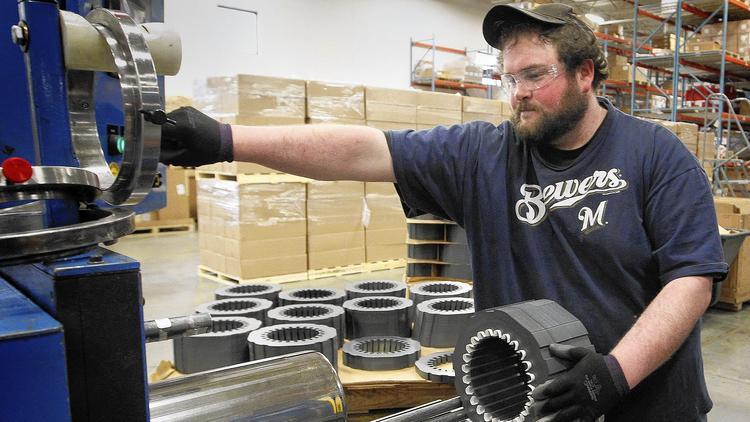
Without the lure of large cost savings, more American companies are “reshoring,” with 24% saying they are actively shifting production home from China or are planning to do so over the next 2 years–up from only 10% in 2012. As a result, the number of manufacturing workers here is expected to increase over the next 5 years.

But it is not just the U.S. that is taking jobs away. Almost 1/2 are moving into other developing countries in Asia, while nearly 40% are shifting to the N. America. Foxconn, which makes Apple iPhones in Chinese factories, is planning to build 12 new assembly plants in India, creating 1 million new jobs there. Many Chinese companies are burdened by excess capacity, and downsizing may be unavoidable. China estimates that 1.8 million workers could lose their jobs in the steel and coal sectors alone.

Classroom discussion questions:

1. Will the U.S. recapture all the manufacturing jobs it lost? Why?

2. What is China doing to stay competitive?

OM in the News: Walmart Promises to Buy American

walmart“We are committed to American renewal,” writes Walmart, with the announcement that it will purchase an additional $50 billion in U.S. products by 2023. The commitment means a cumulative increase in U.S. manufactured purchases of U.S. products of $250 billion. Items that are made, sourced or grown in American already account for about 2/3 of what Walmart spends to buy products for its U.S. stores.

Walmart says that 1 million new U.S. jobs will be created through this initiative, including direct manufacturing job growth of 250,000, and indirect job growth of 750,000 in the support and service sectors. “Purchasing products closer to the point of consumption enables procurement of the best price, highest quality products and the most reliable sourcing of goods,” adds the firm. The effort allows Walmart to respond to the customer faster, respond to seasonal demands, and mitigates risks such as currency and volatility in port delays. Sourcing U.S. goods improves in-stock rates and sales.

Walmart states that Made in USA is important to its customers for 3 reasons:
Made in USA is a strong driver of purchase decisions – 2nd only to price
– 85% of women said it is important for a retailer to sell Made in USA products
– Products are perceived to have higher quality if U.S. manufactured

Our coauthor, Prof. Chuck Munson, notes: “The most interesting aspect about this to me is that when Sam Walton was there and I lived in Bentonville back in the 1980s, Walmart had a big “Buy America” program. They were very proud about how they helped local business thrive. Then it was abandoned as they starting sourcing so much from China. Now we see them move back in the other direction. As the biggest retailer, their demand can move the bar on U.S. manufacturing jobs. And they are recognizing once again that their customers (many of whom are manufacturing workers) care about this issue.”

Classroom discussion questions:

  1. Why is sourcing in America advantageous to Walmart?
  2. What has Walmart’s impact been on the sustainability movement in the U.S? (see Supp. 5)

OM in the News: Reshoring to the U.S. Gains Momentum

reshoringIn a sharp reversal, more large manufacturers that are planning to add production capacity for goods consumed in the U.S. say that they will add that capacity in the U.S. than in any other country,” reports the Reshoring Initiative (Feb., 2016). Thirty-one percent of respondents to The Boston Consulting Group’s annual survey of manufacturing executives said that their companies are most likely to add production capacity in the U.S. within 5 years, while 20% said they are most likely to add capacity in China. Asked the same question in 2013, 30% of respondents said that China was the mostly likely destination for new capacity, while only 26% said capacity would be added in the U.S.

Moreover, the share of executives saying that their companies are actively reshoring production increased by about 250% since 2012. This suggests that companies that were considering reshoring in previous years are now taking action. By a 2-to-1 margin, executives said they believe that reshoring will help create U.S. jobs at their companies rather than lead to a net loss of jobs. “These findings underscore how significantly U.S. attitudes toward manufacturing in America seem to have swung in just a few years,” said the BCG report. “We are seeing more evidence of an American manufacturing renaissance. There is good reason to believe that the cost-competitiveness of the U.S. compared with China and many other economies will continue to improve in the near term.”

This year’s survey also confirmed that factors such as logistics, inventory costs, ease of doing business, and the risks of operating extended supply chains are weighing heavily in executives’ decisions. (76% of respondents reported that a primary reason for reshoring production of goods sold in the U.S. was to “shorten our supply chain,” while 70% cited reduced shipping costs and 64% said “to be closer to customers.”) The decreasing costs and improved capabilities of advanced manufacturing technologies such as robotics also make manufacturing in the U.S. more attractive than in economies whose chief advantage is cheap labor.

Classroom discussion questions:

  1. Does reshoring mean a resurgence in manufacturing jobs?
  2. Why are more companies considering returning?

OM in the News: Why Manufacturing Still Counts in the U.S.

manufacturingThe U.S. economy,” writes The Wall Street Journal (Jan.14, 2015), “is dominated by service work but manufacturing matters because it includes many middle-class jobs.” The Bureau of Labor Statistics estimates that employers in manufacturing, mining and construction pay an average of $36.37 an hour in wages and benefits, compared with $31.46 paid by stores, restaurants and other service companies. The U.S. lost more than 6 million manufacturing jobs between 1998 and 2010, largely to low-cost countries. Since then, the number of U.S. factory jobs has recovered nearly 7% to 12.2 million, compared with about 17.5 million in 1998.

Manufacturing creates demand for supplies and raw materials, as well as such services as delivery and machinery repair. Every $1 of sales by U.S. manufacturers yields $1.37 of output in other parts of the economy. A dollar of retail sales adds 64 cents. Expanding U.S. manufacturing allows the country to export more and rely less on imports. (The U.S. has run trade deficits every year since 1976). Manufacturing also is a source of innovation. It accounted for 83% of R&D conducted by businesses in 2013.

More U.S. companies would shift production from abroad if they analyzed the costs of overseas production to include such things as the shuttling of executives abroad and holding large inventories as a hedge against supply disruptions, says the Reshoring Initiative. But Harvard Prof. Willy Shih is less optimistic. “China has really captured the whole electronic supply chain,” he said, “and that is unlikely to return to the U.S. Instead of trying to make established products in the U.S., we’re going to have to focus on next-generation technologies” in, for example, advanced pharmaceuticals.

Some of the hurdles are practical. The U.S. needs to rebuild its supplier base, as well as invest in more efficient manufacturing equipment. The average age of industrial equipment in the U.S. has passed 10 years old, the highest since 1938. This article is a good way to start off the new semester as it brings current OM issues to the fore.

Classroom discussion questions:

1. What factors work against the U.S. regaining the millions of manufacturing jobs that were lost?

2. Why is manufacturing so important?

OM in the News: Manufacturing in the U.S.–The Negative View

manufacturingExemplified by headlines such as “The Insourcing Boom” and “More U.S. Companies Are Reshoring,” the publicity for these cases has influenced public opinion and public policy. About 57% of U.S. manufacturing CEOs now believe that the U.S. is undergoing a manufacturing renaissance. But “the purported increase in the reshored jobs to offshored jobs ratio has not materialized,” writes Industry Week (Jan. 12, 2015). Around 30,000-40,000 manufacturing jobs are reshored while 30,000-50,000 jobs are offshored annually. Certainly this is an improvement from the 2000s, when the U.S. offshored as many as 150,000 jobs annually. U.S. manufacturing has been growing since 2010, adding 520,000 jobs and expanding 2.4% in real value added growth. But almost all of this growth represents cyclical recovery from the lows of the Great Recession.

Industries that suffered large declines in demand during the recession have increased production as demand has recovered. This is most evident in durable goods, which typically have the largest cyclical swings. In fact, durable goods have accounted for 72% of manufacturing job growth since 2010. By comparison, all non-durable goods together comprised just 3% of the job growth and had negative real value added growth of 6.8% from 2010 to 2013. So why is the reality so much more disappointing than the hype?

Experts cite increased global shipping costs with making producing in America more cost effective. In fact, global shipping costs, while elevated significantly in the late 2000s, have fallen dramatically and are back to normal. Likewise those who claim that a weak dollar will spur reshoring ignore that the value of the dollar is no lower than it was in mid-2000s when the U.S. lost a significant share of manufacturing to foreign competition, and has increased 13% in the last year.

Others write that labor cost differentials are narrowing with China. While this is true, the Chinese manufacturing laborer earns just 12% of U.S. wages and it appears that Chinese productivity is growing significantly faster than U.S. productivity. Finally, many tout the miracle of shale gas. While lower energy costs certainly help, energy costs are less than 5% of total costs in 90% of U.S. manufacturing industries. In other words, for most manufacturing industries energy savings are modest.

Classroom discussion questions:

1. Why is reshoring so difficult?

2. Is there a resurgence in American manufacturing?

OM in the News: Offshoring Still Outpaces ‘Reshoring’

 Black & Decker recently opened a plant in N.C. to assemble power drills previously made only overseas. But that factory relies on parts and materials bought outside the U.S
Black & Decker recently opened a plant in N.C. to assemble power drills previously made only overseas. But that factory relies on parts and materials bought outside the U.S

The U.S. has continued to grow more reliant on imports from China and other Asian countries despite a much-discussed trend toward “reshoring” of manufacturing, reports The Wall Street Journal (Dec.15, 2014). Consultants in recent years have heralded the potential for the U.S. to regain many of the manufacturing operations sent overseas in the past 2 decades in search of lower costs. A variety of companies, including Whirlpool and G.E., have moved production of some items back to the U.S. But there is still a gap between hopes raised by these scattered developments and the reality of a deteriorating U.S. trade performance.

Reshoring “is not what it’s cracked up to be,” says consulting firm A.T. Kearney. “There’s basically still more stuff being pushed out of the U.S. to lower-cost countries than is brought back.”

The U.S. is gradually becoming more competitive in manufacturing, partly because energy costs are lower than in most other countries and the gap between U.S. and Asian wages is narrowing. Companies also can reduce shipping costs and respond faster to shifts in demand if they produce closer to their customers. That trend doesn’t yet show up in the data, however. In 2009 through 2013, U.S. manufacturing output grew by an average rate of nearly 6% a year. But U.S. imports of manufactured goods from China and other low-cost Asian countries grew even faster, at an average rate of 8%.

One big hurdle for efforts to move production from Asia to the U.S. is that American manufacturing expertise and supplier networks have withered. Companies considering moving production to the U.S. often worry about finding enough suppliers and skilled workers. “They’re looking for an ecosystem to plug into,” says A.T. Kearney.

Classroom discussion questions:

1. Why are more companies reshoring?

2. Why don’t more companies reshore?

OM in the News: Making the Decision to “Reshore”

reshoring-5_0“Recently, rising energy prices, wage inflation and customer demand for shorter lead times have led many U.S. companies to consider “reshoring” the production of goods bound for domestic markets back to America,” writes Industry Week (Aug.5, 2014). But getting it right can be tricky. A decision to reshore needs to consider the following 7 issues:

1. A focus on total costs instead of unit costs: By focusing on unit costs instead of the total cost of ownership – which includes costs such as transportation, intellectual property risks and inventory carrying costs – manufacturers are overestimating potential savings from overseas operations by 20%- 30%.

2. Invest time to understand domestic labor markets: Supply, quality, and cost of labor are critical to the success of almost all reshoring projects. Plant closures and an aging workforce have depleted the pool of skilled manufacturing workers in some parts of the country.

3. Pursue government incentives to offset costs: local, state, and federal governments have actively supported the resurgence of American manufacturing.

4. Analyze transportation cost differentials: In- and out-bound transportation costs, including the delivery of raw materials and the shipment of finished product, can comprise a major share of the cost of goods sold in the U.S., and can vary widely depending on the location.

5. Carefully assess product demand: Spurred by efforts such as Walmart’s $250 billion “Buy American” campaign, locally produced goods are in high demand. However, miscalculations can lead to lost investment and time.

6. A review of utility services and rates: Reliable, cost-competitive electric power is critical for many manufacturing operations. Power prices can vary from below 4¢ to above 12¢ per KWH.

7. Consider tax climates: State and local tax rates and structures vary greatly across the country. Carefully assess the potential impact of corporate income taxes and taxes on the purchase of production equipment, real estate, machinery, and inventory.

In short, deciding whether and/or where to reshore a manufacturing operation in the U.S. is a complex decision involving many considerations.

Classroom discussion questions:

1. Why has reshoring become an important OM issue?

2. How does reshoring differ from nearshoring?

Good OM Reading: Reshoring Revisited

A recent study, Where in the World, compiled by the Entrada Group,  provides some interesting insight as to why small- and mid-size manufacturing executives are now ranking the U.S. and Mexico as “prime locations” for lower-cost production of goods bound for North America.

Here are some of the findings from Entrada’s survey:

  • Proximity is appealing — While the U.S. is the most attractive low-cost manufacturing location among all respondents (at 33%), it’s worth noting that among respondents from companies that already manufacture in 2 or more locations (their headquarters plus one), Mexico and the U.S. tied as the top choice, each with 23% of the response.
  • Experience with expansion matters — Respondents from companies that currently manufacture at 2 or more locations revealed a greater appetite for future expansion to a low cost location or locations, when compared to firms producing solely at their headquarters. Of companies that manufacture in 2 or more places, 67% said they plan additional expansion in the future, compared to just 33% of single-location manufacturers that plan future expansion.
  • Quality and the bottom line both count — While respondents overall rank high-quality production as the most important factor when choosing a manufacturing destination, low operating costs was tops among companies when reflecting on motivation for past expansion, by more than 2-to-1 over high-quality production.
  • Cost savings are not always realized — Companies that expanded to a “low-cost manufacturing location” achieved their goals to a large extent just half of the time, with half realizing just moderate savings or worse.
  • Today China is the most common low-cost location, followed by Mexico — More than half of survey respondents (51%) currently manufacture product in China, with 35% manufacturing in Mexico, the 2nd-greatest response.
  • China, Mexico not “either-or” — Out of firms that manufacture product in China, 40% also produce in Mexico. Indeed, for many manufacturers, a presence in both countries makes sense for delivery to regional markets.

OM in the News: American Manufacturing Heads to Mexico

mexicoWith labor costs rising rapidly in China, The New York Times (June 1, 2014) reports that American manufacturers of all sizes are looking south to Mexico with an eagerness not seen since the early years of the NAFTA in the 1990s. From border cities like Tijuana to the central plains where new factories are filling farmland, Mexican workers are increasingly in demand. American trade with Mexico has grown  30% since 2010, to $507 billion, and foreign investment in Mexico last year hit a record $35 billion. Over the past few years, manufactured goods from Mexico have claimed a larger share of the American import market, reaching a high of about 14%, while China’s share has declined.

“When you have the wages in China doubling every few years, it changes the whole calculus,” says Chris Wilson, at the Mexico Institute in D.C. “Mexico has become the most competitive place to manufacture goods for the North American market, for sure, and it’s also become the most cost-competitive place to manufacture some goods for all over the world.”  Wilson calls for a focus on “globally literate workforces in both countries.”

Many American companies are expanding and spending billions in Mexico — including well-known brands like Caterpillar, Chrysler, Stanley Black & Decker and Callaway Golf. Economists say that the U.S. benefits more from outsourcing manufacturing to Mexico than to China because neighbors tend to share more of the production. Roughly 40% of the parts found in Mexican imports originally came from the U.S., compared with only 4% for Chinese imports.

Yet Mexico is still a country of vast differences in efficiency and education, where only a small minority of the population has the training needed to compete with the world. The kinds of companies succeeding now in Mexico are those big enough to manage their own factories and those that did not give up their technical knowledge by outsourcing to China. To draw more companies now, experts say, Mexico and the U.S. will need to be more focused on sharing labor and moving products.

Classroom discussion questions:

1. Why Mexico?

2. Why does Chris Wilson say that “a globally literate workforce” is needed in both the U.S. and Mexico?

OM in the News: Offshoring and Reshoring Reach a Balance for U.S.

Generac has reshored manufacturing of a key alternator component

In 2001, Generac Power Systems joined the wave of American companies shifting production to China. The move wiped out 400 jobs in Wisconsin, but few could argue with management’s logic: Chinese companies were offering to make a key component for $100 per unit less than the cost of producing it in the U.S. Now, however, Generac has brought manufacturing of that component back to its Whitewater plant. The move is part of a sea change in American manufacturing, reports the Los Angeles Times (May 13,2014): After three decades of an exodus of production to China and other low-wage countries, companies have sharply curtailed moves abroad. Some, like Generac, have begun to return manufacturing to U.S. shores. The tipping point came when Generac had enough sales to justify investing millions of dollars in new equipment for the Whitewater plant. The company can now produce an alternator with 1 worker in the time it took 4 workers in China.

Harry Moser, of Chicago’s Reshoring Institute, tracks the inflow of jobs and estimates that last year marked the first time since the offshoring trend began that factory jobs returning to the U.S. matched the number lost, at about 40,000 each. “Offshoring and ‘re-shoring’ were roughly in balance — I call that victory,” said Moser.

Several factors lie behind the change:  (1) Over the last decade, Chinese labor and transportation costs have jumped while U.S. wages have stagnated; (2) Manufacturing also has become more automated, further reducing labor’s weight in the cost equation; (3) The boom in natural gas production in the U.S., largely driven by fracking, has led to a 25% decrease in gas prices in the U.S., contrasted with a 138% increase in China; and (4) the rise of online commerce has made local control of supply chains more important, especially because many U.S. manufacturers report growing problems with quality control of goods made in China.

Classroom discussion questions:

1. Why are more U.S. firms reshoring?

2. Why did Generac reshore this component?


OM in the News: Otis Finds Reshoring Manufacturing Is Not Easy

Otis demonstrating his "safety lift" in 1854
Otis demonstrating his “safety lift” in 1854

Otis Elevator has found that bringing manufacturing jobs back to the U.S. can be a lot trickier than it sounds, writes The Wall Street Journal (May 3-4, 2014). The company’s 2012 move to relocate its plant from Mexico to South Carolina was hailed as a sign of a renaissance in American manufacturing. The relocation was supposed to save money and help fill orders faster by putting the people who make new elevators next to the engineers who design them, and their customers. But the reality hasn’t been so smooth. Production delays created a backlog of overdue elevators. Customers canceled their orders. The Nogales plant Otis was leaving behind had to stay open for half a year beyond its planned closing date to deal with the backlog.

The company’s experience shows that with supply chains and skilled labor following American factories overseas in recent decades, coming home can be more complex than just deciding where to site a plant. When the elevator maker opened its new 423,000-square-foot facility in a vacant Maytag factory in Florence, S.C., it was a notable participant in a trend of “reshoring,” where some companies reversed the movement of manufacturing work offshore to places like China.

For Otis, the return to the U.S. was supposed to herald a step up in efficiency. The relocation was to lower the company’s freight and logistics costs by 17%, and would cut costs a further 20% by having all of its white-collar elevator design and production workers on hand at the factory. The company now says it was trying to do too much at once. In addition to moving the plant, Otis also was replacing the computer system that manages supply, manufacturing, shipping and financial information. “The challenge, I think, was moving your supply chain, with your factory and your engineering center all at once,” says the CFO.

Classroom discussion questions:

1. Why did Otis decide to reshore?

2. Will the move ultimately prove to be a success?

OM in the News: Whirlpool Jobs Return to U.S.

Whirlpool is shifting some production from Mexico to this Ohio plant

Whirlpool is moving some of its washing-machine production to a plant in Clyde, Ohio, from one in Monterrey, Mexico, reports The Wall Street Journal (Dec. 20, 2013). The shift—another sign of the trend for U.S. manufacturers to bring back some of their production from abroad—will create 80-100 jobs at the Clyde plant, which currently employs about 3,300 people and is the company’s biggest washing-machine factory.

Wages for production workers in Clyde, typically around $18-$19 an hour, are roughly five times higher than in Monterrey. But the shift should lower costs overall. The Clyde plant is more automated and electricity costs are much lower than in Monterrey. Whirlpool also expects to save on transportation because the products won’t have to be shipped across a border before going into the company’s North American distribution network. Like many other companies, Whirlpool is trying to make products closer to where it sells them. That reduces the time needed to respond to changes in demand.

Since 2010, companies have created more than 80,000 manufacturing jobs by moving production to the U.S. from foreign countries, states the head of the non-profit Reshoring Initiative. “The U.S. continues to lose other manufacturing jobs to offshore plants, but those losses now are being offset by inflows,” he says, adding: “We’ve stopped the bleeding.”

Apple, which relies heavily on plants in China for its top selling gadgets, recently began making some of its high-end Mac Pro desktop computers in Austin, Texas. Wal-Mart Stores Inc. has been prodding some of its suppliers, including makers of socks and light bulbs, to provide U.S. made alternatives.

Classroom discussion questions:
1. Why are more firms “reshoring” in recent years?

2. Name several companies (besides the 3 in this article) that have brought manufacturing back to the U.S.

OM in the News: Small Manufacturers Giving Up On “Made in China”

As costs in China rise and owners look closely at the hassles of using factories 12,000 miles and 12 time zones away, Businessweek (June 25, 2012) reports that many small companies have decided manufacturing overseas isn’t worth the trouble. American production is “increasingly competitive,” says the head of the Reshoring Initiative, a group  trying to bring factory jobs back to the U.S. “In the last two years there’s been a dramatic increase” in the amount of work returning. Here are 2 examples:

For LightSaver, a lighting manufacturer, the decision was simple. Neither of the founders has ever been to China, which made communicating with manufacturers difficult. Components that were shipped from the U.S. sometimes got stuck in customs for weeks. “If we have an issue in manufacturing, in America we can walk down to the plant floor,” says the CEO. “We can’t do that in China.” He believes manufacturing in the U.S. is probably 2-5% cheaper once he takes into account the time and trouble of outsourcing production overseas.

Even with strong Mandarin skills, the founder of Pigtronix, which makes electric guitar pedals, discovered that he couldn’t  monitor quality at Chinese factories. After several years of finding glitches in 30% of the pedals, the company decided to move production to  N.Y. Now Pigtronix can run multiple tests on its products and even has a guitarist play each of the 500 to 1,000 pedals it sells monthly before they’re shipped. While manufacturing in the U.S. can cost  from 3 to 6 times as much as it does in China,  Pigtronix benefits from not having capital tied up in products that spend weeks in transit and then pile up in inventory. “In China, you have high minimum quantities you have to order, so you’re building a couple thousand of every guitar pedal. Your carrying costs start to get huge.”

The bottom line: Although manufacturing in China can cost a third what it does in American factories, small companies are bringing production back to the U.S.

Discussion questions:

1. Why is reshoring gaining traction?

2. Why do many companies continue to move production to Asia?

OM in the News: Manufacturing Jobs Begin the Long March Back (From China)

For more than a decade, deciding where to build a manufacturing plant to supply U.S. markets was simple: China was the  answer. But the International Business Times (June 2, 2012) estimates that in the next 10 years, increased production from manufacturing re-shored from China will add  $20-$55 billion annually to the U.S. economy. And in 5 years, U.S. exports could increase by  $65 billion annually, creating  1.8-2.8 million new manufacturing jobs here.  In the next few years, rising Chinese wages, higher U.S. productivity, a weak dollar, and other factors will virtually close the cost gap between the U.S. and China.

The article, a good starting point for the semester, looks at 4 issues:

Labor Costs. In 2000, factory wages in China averaged just 52 cents an hour,  3% of what average U.S. factory workers earned. Since then, Chinese wages have risen by double digits each year, while costs for U.S. production workers increased by less than 4% annually. Since wages account for 20- 30% of a product’s total cost, manufacturing in China will soon be only 10-15% cheaper than in the U.S. — before inventory and shipping costs are considered. After those costs are factored in, the total cost advantage will drop to single percentage digits or be erased entirely.

Logistics. Logistical issues — such as shipping costs, the time it takes get a manufactured product to the market, and the proximity of production lines to engineering and design teams — are big factors in comparing China vs. U.S. manufacturing.

Supply-Chain Threats. There are the many costs and headaches of relying on extended supply chains. These include inventory expenses, quality-control problems, and the threat of supply disruptions. For example, the floods in Thailand last year left Apple with a shortage of  hard drives.

Currency Risk. In the past, the risk of currency fluctuation was minimal in China because the central bank kept the yuan rigidly pegged to the U.S. dollar. But in 2005, Beijing allowed the yuan to fluctuate. Since then, the yuan has appreciated about 30% against the dollar.

Discussion questions:

1. How can OM help the US recapture manufacturing jobs?

2. What advantages does China retain in manufacturing, and what are the advatages of producing here?

OM in the News: Why GE Decided to Reshore Appliance Production

It seems that after decades of neglect, GE has a newfound love affair with its appliance manufacturing division. Manufacturing & Technology News (Feb. 28, 2012) reports that the 122-year-old company is reinvigorating its 900 acre Appliance Park in Louisville with a $1 billion investment in designers, engineers, workers, and production systems to produce a new line of innovative products. And for the first time, it is applying the lean methodology to all of its operations.

In moving production back to the US from China, GE decided that every aspect of its water heaters, for example, needed to be redesigned through a team approach under a lean planning system that included GE’s sales division, designers, product and process engineers, accountants, execs, workers, retailers, and customers (including the plumbers that install them). In the process, it made the unit more affordable, reducing the retail price from $1,600 (when made in Asia) to $1,200 when made in Louisville. The bright and modern factory production line, with visual controls, uses the common lean practice of a “pull” system based on demand.

Why did GE reshore?  “What you have to look at is the total cost of the whole product,” says one GE exec. “When you make a product far away from where consumers buy it, you have costs of shipping, duties, customs and you have to carry more inventory. You can respond faster if your factory is domestic. The whole notion of going to the cheapest labor place isn’t always the best answer.”

Adds the local union leader, a partner in the reshoring effort: “Lean takes the waste out of a process. We become more competitive with Mexico or China.” (Please note that this magazine requires a $495 subscription fee).

Discussion questions:

1. Why did the union back lean production, when its efficiencies usually mean fewer workers are needed on the line?

2. Why is GE reshoring its appliance division to the US, yet sending its x-ray headquarters to China (as noted recently in our blog)?