OM in the News: Israel, Terrorists, and Global Supply Chains

“Let’s call it Operation Chutzpah,” writes The Wall Street Journal (Sept. 23, 2024). If, as is widely believed, the Mossad detonated pagers and walkie-talkies used by Lebanese Hezbollah terrorists, killing dozens and wounding thousands, it will go down as an intelligence operation for the history books. This strike is the latest in a string of daring operations from the tunnels beneath Gaza to the heart of Tehran by The Startup Nation, as Israel is known in tech circles.

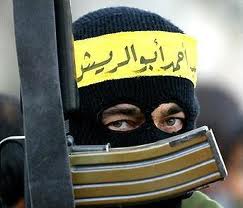
The Hezbollah terrorist group is funded by Iran

The attacks on Hezbollah this week using explosives planted inside electronics highlight the risks and vulnerabilities of technology supply chains. “Every board, every CEO, government, has now woken up today to the fact that products that we buy could be compromised,” said one CEO. “This is weaponizing of the supply chain.”

Many electronics manufacturers outsource production of relatively low-cost items such as pagers, which makes it difficult to track and verify the source of each piece within the final product. Companies often ship their designs for devices off to contract manufacturers who handle sourcing the components and assembly of the final goods.

“There’s multiple distributors, there’s multiple contract manufacturers, there’s multiple boards, there’s multiple locations. It’s just a really confusing array of people” in electronics supply chains, said a UNC prof in The Wall Street Journal (Sept 22, 2024). The complicated, multistep manufacturing process involving often far-flung suppliers introduces risk that parts inside finished products may be counterfeit or manipulated. The added tiers in outsourced manufacturing make it harder for buyers to know where the goods and their components are coming from.

Supply lines for everything from food and medicines to military material are perpetually targeted in armed conflicts, but this week’s attacks mark an audacious effort to embed itself within Hezbollah’s supply chain. Thousands of pagers carried by members of the terrorist group exploded. Then, the next day, walkie-talkies used by the group blew up  in terrorists’ hands across Lebanon. The attack not only damaged communications, but exposed to family and friends that the targeted individuals belonged to Hezbollah.

Western governments have also been cracking down on foreign-made equipment due to national security concerns about spying and cyberattacks. The U.S. just found Chinese cargo cranes used at seaports around the country had embedded technology that could allow Beijing to covertly gain access to the machines.

Classroom discussion questions:

  1. What can be done by the U.S. and other nations to prevent malware or other tools from damaging critical infrastructure?
  2. How was Israel able to manage this feat?
OM in the News: Terrorism and The Global Supply Chain

It’s not every day that The Wall Street Journal publishes an editorial by the US Secretary of Homeland Security, Janet Napolitano, entitled “How to Secure the Global Supply Chain” (Jan.6,2011).  In it, Napolitano writes, “The complex supply chain that consumers and businesses in the US rely on every day is a target for those who seek to disrupt global commerce”. This is certainly a topic we need to consider adding to our discussions of global OM issues in Ch.2 and Ch.11.

Regardless of where a terrorist event takes place, a significant disruption of our supply chain may follow.  An example was the Oct., 2010 plot to put explosives on a UPS cargo flight bound for the US from Yemen. Following that act, the Dept. of Homeland Security required all cargo on passenger planes within the US to be screened. It also screens all US-bound air cargo that is considered high risk (most likely from terror-sponsoring countries, I would surmise).

Napolitano names 3 elements to the US plan:

1. “Preventing terrorists from exploiting the supply chain to plan and execute attacks”. This means working with customs groups and shippers to keep chemicals out of the hands of terrorists.

2.”We must protect the most critical elements of the supply chain, like central transportation hubs, from attack or disruption”.

3.”We must make the global supply chain more resilient, so that in case of disruption it can recover quickly”.

Incidentally, 2 days after this article, the Journal reported that Secretary Napolitano received a small bomb in a package that exploded in her mailroom (WSJ, Jan.8-9,2011).

Discussion questions:

1. In what ways can a disruption of the global supply chain impact a business in the US, such as IBM, GE, or Boeing?

2. What other events, beside a terrorist strike, can effect the supply chain? How?

OM in the News: Terrorism Spurs New Product Development

One of the biggest generators of new product development (Ch.5) has been global terrorism. And one of the biggest exporters of domestic security technology has been Israel. The Orlando Sentinel just reported (Dec.5,2010) that more than 400 Israeli companies export $1.5 billion annually ( a number predicted to grow exponentially), with such products as biometric devices, anti-intrusion systems, airport screening machines, explosive detectors, and remote-controlled vehicles.

Israel is focusing on Brazil, which plans to spend $3 billion on security for the 2014 World Cup and 2016 Summer Olympics, and on India whose internal security budget tops $1 billion a year.

Here are just a few of the products you may not have heard of:

Magal Security Systems’ perimeter-intrusion systems at 11 airports in China.

Nice Systems’ data analysis and surveillance systems at the Eiffel Tower, Statue of Liberty, Bank of America, and NYC Police Dept.

MagShoe, a machine operated in airports in Europe and Australia to detect weapons in shoes without passengers having to remove their footware.

IntuView’s document-scanning software that not only translates Arabic text, but searches for key words, including names, dates and Quranic verses commonly cited by extremists. One customer is the US Army.

WeCU Technologies’ camera-monitored airport kiosks, which are designed to detect “malicious intent” of users by tracking facial expressions, stress levels, breath/heart rate, and sweating.

As I mentioned in my blog on Sept. 21st about the book A Start Up Nation, Israel cannot compete with mass-production countries such as the US and China, so Israeli firms need to be creative in new product development.

Discussion questions:

1. Why is new product development so important to every company?

2. Why does Israel have more  high-tech firms listed on Nasdaq than any other country?

3. How will terrorism continue to provide the need for OM solutions?