
 The U.S. trails China in manufacturing high-tech batteries, solar panels, and communications systems, and Beijing is also tightening its grip on the critical minerals behind them. China is estimated to refine 73% of the world’s cobalt, 68% of nickel, and 59% of lithium. For operations managers, that concentration is a textbook single-source supply risk, writes Industry Week (Nov. 13, 2026).
Exporting Our Own Feedstock Washington is working to expand domestic mining and processing, but a self-inflicted wound remains. Recovered materials and manufacturing scrap, including battery scrap known as “black mass,” are often exported and then re-imported as refined products. That practice deepens dependence on foreign processors instead of building domestic capacity.
The Antimony Warning In 2024, China restricted antimony exports. Global exports fell to 1/3 of prior levels, and prices rose to more than four times their historical average. Antimony is an alloy input with no ready substitute in high reliability uses, and it appears in many U.S. lead batteries, including those used in military vehicles and telecommunications.
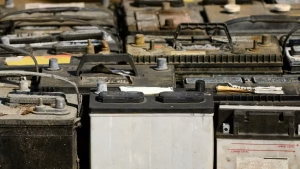
Recycling as Strategy Lead shows what is possible. Recycled lead supplied an estimated 70% of U.S. consumption in 2025, and recycling is now the country’s only domestic source of refined lead. Even so, net import reliance for refined lead rose from 27% in 2024 to roughly 33% in 2025. The source article argues that end-of-life batteries, magnets, and manufacturing scrap should be treated as strategic feedstock, not waste. It recommends making the Commerce Department’s black mass export restrictions permanent, closing circumvention gaps for lithium-ion materials, and extending controls to spent lead-acid batteries.
The Operations Takeaway Closed-loop supply chains, reverse logistics, and supplier diversification are more than sustainability talking points. They are resilience tools. Firms that secure access to recovered materials now will be better prepared when the next export restriction hits
Classroom Discussion Questions
- How does China’s dominance in refining cobalt, nickel, and lithium illustrate the risks of single-sourcing, and what supply chain strategies could a manufacturer use to reduce that exposure?
- Should battery scrap be treated as a strategic feedstock subject to export controls? Discuss the trade-offs for recyclers, manufacturers, and policymakers, including the role of reverse logistics.