OM in the News: As Ice Melts, Shippers Look to Arctic Route


An Sovcomflot icebreaking supply vessel moored in Murmansk, Russia.

As we note our discussion of Transportation Mode Analysis (Example S4) in Supplement 11 (Supply Chain Management Analytics), speed of transportation is critical.

So it is no surprise, writes The Wall Street Journal (June 6, 2019), that Arctic routes are drawing greater attention as the global climate warms and polar ice recedes, potentially opening new paths between Asia and Europe. The mostly frozen Northern Sea Route (NSR) seaway is considered a likely commercial lane because it already is used in warmer seasons to move part of Russia’s extensive energy exports.  Russia is promoting the lane as the shortest distance to ship containers from Asia to Europe, and a possible rival for routes that now take ships through the Suez Canal.

Russian shipping giant Sovcomflot tankers crossed the NSR more than 100 times last year, handling crude exports from Gazprom’s port oil facility in northern Russia. Crude tankers account for about 45% of ship traffic on the NSR. “The driver for transportation economy is basically distance, and the NSR cuts sailing time by around 20% compared to the route across the Suez,” says the CEO of Sovcomflot. “Cargo will always find the fastest way to move.”

Denmark’s A.P. Moller-Maersk, the world’s largest container ship operator, sent a small container vessel across the NSR last summer from Vladivostok to St. Petersburg. The Venta Maersk saved more than 10 days of sailing time compared with travel via the Suez.

Classroom discussion questions:

  1. What country will lose out if the NSR is successful more months?
  2. Is the time it takes to ship from China to the U.S. becoming an issue for suppliers?


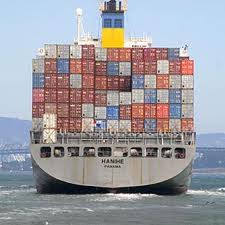
OM in the News: Ship by Air or by Sea From Asia?

One of our topics in Chapter 11, Supply Chain Management, is “Cost of Shipping Alternatives,”  in which we compare the cost of  shipping providers from Asia (see Example 3). The Wall Street Journal (Feb.28,2012) just provided a perfect example of this issue to share with your class. The article describes how retailers like Abercrombie & Fitch (A&F) are shifting away from air delivery in favor of bringing more goods to the US by slower, but cheaper, ocean freight.  A&F has slashed the percentage of its inventory flown into the US to 12%  from 60%, a level its supply chain VP says was “crazy.”

The choice involves a trade-off. It cuts shipping costs drastically. But it can take weeks, rather than days, to transport clothes or other goods from manufacturing centers in China and other Asian countries. That leaves retailers with less control of their inventory, making them more vulnerable to fashion changes. But while the switch  to ocean freight lowers average unit costs,  retailers typically take possession of finished goods when they leave the factory. That means the goods spend more time on a company’s balance sheet and tie up cash.

Partly to reduce those risks, US firms that outsource production to China are starting to move operations closer to home. Hampshire Group, for example, which manufactures for brands such as Geoffrey Beene and Levi Strauss, chose a site in Honduras. This means it can ship to distribution centers through the Panama canal in 6 days vs. 27 days from China. Although faster shipping can make sourcing to Central America competitive with Asia, many of these countries “don’t have the fabric mill infrastructure in volume like China,” says the A&F VP.

Discussion questions:

1. What will it take to make Central America more competitive with Asia for clothing manufacture?

2. What are the 2 main reasons why US firms choose air freight over ocean shipping?