OM in the News: Darden’s Lobster Supply Chain Heads to Asia

In a bold move towards vertical integration, restaurant giant Darden (Olive Garden, Red Lobster, Longhorn) has just opened up a $653 million lobster farm on the Malaysian island of Borneo, according to The Wall Street Journal Southeast Asia (Nov.16, 2012). The lobster farm serves two purposes: (1) for restaurants facing weak growth prospects in Western markets, the fast-growing economies of Asia are attractive as millions more people eat out and desire to try Western food; and (2) it guarantees an unlimited supply of the seafood for Darden’s 2,000 U.S. stores. A long-term investment, the 9,300-hectare aquaculture park will produce 40 million pounds of  lobsters and generate $1 billion in annual revenue when it reaches maximum capacity.

“We plan to establish our Asia-Pacific restaurant development hub in Kuala Lumpur,” says the CEO. “Asia is an attractive market and Malaysia represents a strategic and central location for us to begin to explore the possibilities in this part of the world.”

The Darden project dovetails with the Malaysian government’s program to lift that nation into developed nation status by 2020 by creating high-income jobs in agriculture and other areas. Two local firms will assist Darden in the project. These companies say they plan to hire more than 14,000 people to work on the project over the next decade, including scientists, engineers, aquaculture specialists and skilled technicians.

Production is set to begin by 2015 and reach full production in 2029. Globally, the market for lobsters is estimated to be worth over $4 billion a year, with the Asia Pacific region accounting for about 75% of the total market. Borneo was chosen because it has “suitable” geography and available sea space for an efficient operation; it is also free from catastrophic weather that could threaten the project’s long-term viability.

This is a story that dovetails nicely with our two video case studies on Darden supply chains in Chapter 11 and Supplement 11.

Discussion questions:

1. Why is Darden entering the seafood production business?

2. What are the plusses and minuses of this vertical integration?

Teaching Tip: Ethical Issues Facing Ikea and Darden

The Ethical Dilemmas in each chapter in our OM text are a popular teaching feature–perhaps driven by AACSB’s desire to integrate ethics into business courses. The Dilemmas range from Nike shoes made abroad by 10-year olds (Ch.1) to pigs locked in tiny stalls their whole lives (Ch.7) to selling ineffective ERP software (Ch.14). In these exercises, students are forced to address the unpleasant tradeoffs faced by operations managers every day. Here are two more current topics to consider.

The first involves Darden Restaurants’ (Olive Garden, Red Lobster, Longhorn brands) approach to Obamacare. Under the new health care law, companies with 50 or more workers could be hit with fines if they do not provide basic coverage for full-time workers and their dependents. Darden, which operates more than 2,000 restaurants in the U.S. and Canada, employs about 180,000 people. The Wall Street Journal (Sept.26,2012) reports that Darden is using the new health law to cut the hours of  full-time hourly workers to under 29.5 hours, thus redefining them as part-timers (while its CEO drew $11.5 million in compensation in 2011– equivalent to 585 workers’ salaries).

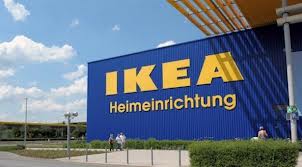
The second item for your class is the Swedish firm Ikea’s revelation that it manufactured furniture parts 25-30 years ago using forced prison laborers in the former East Germany. The Wall Street Journal (Nov.19,2012) writes: “Alexander Arnold, 51, claimed to have been forced to make office chair legs while detained in Naumburg during the early 1980s. He described how forced laborers who didn’t meet a stringent production quota were confined to a dark cellar. Those who refuse to work, he added, were bound by their feet and hands to a bed for days at a time.”  Ikea’s admission is expected to fuel demands by victims for compensation and a debate over which present-day Western companies may have also benefited from forced labor behind the Iron Curtain.

Discussion questions:

1. Ask your students to take positions justifying and opposed to Darden’s cost-saving measure.

2. What is Ikea’s responsibility at this point?

OM in the News: Red Lobster’s Vertical Integration Into Lobster Farming

In what could be an underwater gold mine, Orlando-based Darden Restaurants plans to create the world’s largest lobster farm in Malaysia, allowing it to sell the crustaceans in Asia and supply them to its chains such as Red Lobster, according to a story in the Orlando Sentinel (April 9, 2012). The lobster farm would partially shield  Darden from rising seafood prices, while creating a new revenue stream. Lobster farming, a field in its infancy because it has been notoriously difficult, could also keep prices lower for consumers but pose tougher competition for fishermen.

Darden plans to  build the 23,000-acre production facility, which will employ 12,000 workers and eventually churn out 40 million pounds of lobsters each year. That’s about $1 billion worth.

Darden says it will take a while to get to that point — at least 2029. It will take several years to start producing food and at least a decade before lobster sales have a big impact on the company’s bottom line. “There’s a growing world demand for lobster products of all types,” says Darden’s VP of Purchasing and Supply Chain Innovation. The project, which will take an investment of $650 million, will be Darden’s “crown jewel” of environmentally friendly seafood production.

But as we noted in this blog just a few days ago (with regard to Delta Air Lines’ plans to buy a jet fuel refinery), vertical integration (Ch.11) moves most companies outside their core competencies. And lobster farming is a tough business for any company to master. Lobsters take a long time to mature and consume a lot of food. They also cannot make the trip all the way from Malaysia to the US alive.

Discussion questions:

1. Why is Darden venturing outside its expertise in restaurants (its chains also include Longhorn Steak, Olive Garden, and Bahama Breeze)?

2. What other restaurant or fast-food chains have successfully vertically integrated? How and why?

Video Tip: Darden’s Global Supply Chains

Because supply chains (Ch.11) are such an important topic in OM, we have produced 3 video cases on the topic: Arnold Palmer Hospital’s Supply Chain, SCM at Regal Marine, and Darden’s Global Supply Chain. Since I am a regular at Olive Garden (one of Darden’s main brands), filming this 8-min. video was of personal interest.

How is it that I can order fresh fish–not frozen–here in Winter Park, FL, and be eating seafood that was caught off the coast of Thailand less than 48 hours ago? And the same for you at any of the 1,500 restaurants in the Darden family. That’s some supply chain!

Actually Darden has 4 independent supply chains it runs, of which its Seafood Network is one. There is also: the Central Distribution SC  for non-food items (housed in Orlando); its Independent SC  for locally purchased items such as produce and dairy products; and its Direct Distribution System, which uses 3rd party logistics, for other items.

Interviews with Darden’s Senior VP for Supply Management and Purchasing illustrate how critical this function is to every aspect of running a restaurant chain. It also raises the question about the complexity of maintaining 4 distinct supply chains. Should local managers be allowed to make their own purchases? How does a major chain deal with seafood shortages (“overfishing”) that occur more regularly?

More details about the seafood aspects of the supply chain are in our Supp.11 video case, “Outsourcing Offshore at Darden”.