OM Podcast #52: Renewable Natural Gas & Heavy-Duty Transportation

We hope you’re having a nice summer!

In our latest podcast, Barry and Misty interview Charles Love, renewable natural gas (RNG) expert for Love’s Alternative Energy. Together they discuss renewable natural gas, how it is produced, distributed, and used as a transportation fuel, as well as its growing role in the future of heavy-duty transportation.

During the conversation, Charles explains the difference between fossil methane and renewable natural gas, describing how RNG is created from organic sources such as food waste, animal manure, and wastewater.

Charles also discusses Love’s extensive operations, the company’s vertically integrated business model, and the important role farmers play in renewable natural gas production. Listeners will learn how renewable fuels create value throughout the supply chain while helping address environmental concerns.

Prof. Barry Render
Charles Love
Prof. Misty Blessley


Charles shares his perspective on where the industry is headed and why RNG is currently an attractive solution for heavy-duty trucking fleets seeking a combination of cost effectiveness and environmental benefits.


TRANSCRIPT LINK

A Word document of this podcast will download by clicking the word Transcript above.

Have you subscribed to this podcast on Apple Podcasts? Just go to your Apple Podcasts app, search “Heizer Render Munson OM Podcast,” and subscribe to get all our podcasts on your mobile device as soon as they come out!

OM in the News: Delta’s Vertical Integration Risk Pays Off

Vertical integration is an interesting topic in Chapter 11 of your Heizer/Render/Munson text. There are plusses and minuses, and we warn: “Most organizations are better served by concentrating on their own specialty and leveraging suppliers’ contributions.”

But Delta Air Lines, facing billions of dollars of pain at the fuel pump (because of Iran’s blockage of the Straits of Hormuz) along with all the other carriers, is unique. It happens to own its own gas station, writes The Wall Street Journal (April 10, 2026).

Jet-fuel prices have roughly doubled since late February, pushing up airlines’ costs.

Since 2012, Delta has been the owner of a Pennsylvania refinery that processes crude into fuel. Over the years, the investment has looked like either a stroke of genius or a boondoggle, generally depending on the price of oil. Since the U.S. and Israel began carrying out strikes on Iran, the refinery is set to pay off again for Delta. With it, Delta has an asset that can help it offset some of the recent surge in fuel prices.

Energy experts rolled their eyes when Delta plunked down $150 million for the refinery. If the plant was such a good investment, why was ConocoPhillips, its previous owner, shutting it down? Rival airline executives scoffed that they would benefit from increased jet-fuel output on the East Coast without the headaches of refinery ownership.

Now even United, one of Delta’s top rivals, has acknowledged that the refinery benefits Delta. Its CEO Scott Kirby states: “Right now the crack spread (the gap between the price of jet fuel and the price of crude oil) is much higher…and so they’ll get real benefit from the higher crack spread that will be unique to them.”

Delta has said that the refinery makes an operating profit most years. The airline has said owning the refinery insulates it from supply disruptions in the Northeast and helps mitigate risk from volatile prices—effectively lowering its jet-fuel costs, often by several cents a gallon. In 2022, when fuel prices surged after Russia began its invasion of Ukraine, the refinery helped it save $785 million.

But the airline has had to pour money into the plant, which is more than a century old, to keep it running smoothly, investing $1.6 billion in capital expenditures over the years.

Classroom discussion questions:

  1. Did the purchase make sense for Delta?
  2. Many economists think the refinery was a costly mistake. Why?

Guest Post: The Two Stories of Tesla’s Solar Panels

Temple U. Professor Misty Blessley provides interesting blog topics monthly.

In our 2023 OM blog, New York State Built Elon Musk a $1 Billion Factory, we learned that building a solar panel facility was “a bad deal” for NY. The state built a massive plant and provided solar-panel manufacturing equipment. Tesla’s end of the deal was to churn out enough solar-panel shingles by 2020 to cover 1,000 roofs on a weekly basis.

These solar panels are finally on the verge of materializing, and with this are two stories. One connects Tesla’s long game in vertical integration and the other is New York’s long-delayed economic vision.

Tesla’s Long Game in Vertical Integration
Tesla’s new residential solar panels fill the company’s missing piece. The firm was missing the energy generator (aka solar panel). Despite the solar factory in New York, Tesla spent years relying on third-party suppliers for its solar panels. Now, it can fully optimize performance across the entire home energy stack. Tesla can vertically integrate the full chain from generation (solar panels), to conversion (inverter), to storage (Powerwall), and to consumption (EV charging).

New York’s Long-Delayed Economic Vision
This pivot finally gives New York its payout. By bringing solar panel manufacturing in-house, Tesla is delivering the kind of industry and employment the state originally hoped for. The region, once defined by its industrial decline, gains a foothold in the clean energy manufacturing economy. The move aligns with federal and state incentives that reward U.S.-made components, strengthening the economic logic behind NY’s investment. Tesla’s shift toward a unified home energy ecosystem mirrors the vision that justified the state’s $1 billion bet. The factory, once criticized as a stranded asset, now becomes the manufacturing backbone of Tesla’s residential energy strategy.

Tesla didn’t just release new solar panels. It connected the car in the driveway to the sun, and in doing so may have finally delivered the manufacturing story NY was waiting for.

Classroom Discussion Questions:
1. How is vertical integration good for Tesla? For Tesla owners? To compare this to an internal combustion engine, it is somewhat like having petroleum, a refinery and a gas pump in the garage or driveway.

2.  Knowing that Tesla’s occupation of the Buffalo facility is long overdue, what stipulations should a city or state impose on a firm when incentivizing a location decision to the tune of $1 billion?

OM Podcast #46: Logistics, Circularity & Vertical Integration at East Penn Manufacturing

In our latest podcast episode Barry Render and Misty Blessley speak with Harry Ziff, VP of Corporate Logistics at East Penn Manufacturing, one of the world’s largest lead‑battery producers. Harry shares highlights from his 37‑year supply chain career and explains how East Penn’s unique structure allows it to excel in reliability, sustainability, and customer service.

Harry discusses East Penn’s deep vertical integration, including in‑house lead refining, plastic molding, and battery case manufacturing. He also describes the company’s closed‑loop recycling system, where nearly 100% of batteries are collected, processed, and reused.  The episode also dives into East Penn’s large private fleet, which enables direct‑store delivery, consistent service, and strong customer relationships.

TRANSCRIPT LINK
A Word document of this podcast will download by clicking the transcript link above.
Prof. Misty Blessley
Prof. Barry Render
Harry Ziff


Have you subscribed to this podcast on Apple Podcasts?
Go to your Apple Podcasts app, search “Heizer Render Munson OM Podcast,” and subscribe to get new episodes as soon as they’re released!


Guest Post: Building Resilient Supply Chains Through Sourcing Risk Management

Temple U. Prof. Misty Blessley shares her insights with our readers monthly.

In Ch 11 of your Heizer/Render/Munson textbook, the importance of buyer-supplier collaboration is discussed. In collaborative relationships, firms manage risk by working jointly to anticipate and address sourcing challenges, thereby fostering resilient supply chains. 

Hershey, the iconic American confectionary company, offers a compelling example of collaboration in action. Confronted with unprecedented cocoa market volatility, Hershey strengthened its partnerships with farmers, NGOs, and governments. Through its Cocoa For Good initiative, the company committed $500 million to improving sustainability and stability in the cocoa supply chain. This includes investments in farmer livelihoods, agronomic training, and expanded market access. Hershey’s desire to collaborate is rooted in the belief that a resilient supply chain starts with a resilient farming community.

Global coffeehouse chain, Starbucks, employs a similar collaborative model in the coffee industry. It’s Coffee and Farmer Equity practices enable direct engagement with producers across Latin America, Africa, and Asia to improve sustainability, productivity, and income generation. Starbucks operates regional farmer support centers, provides pre-harvest financing, and integrates ethical sourcing into its procurement decisions. These long-term collaborations help Starbucks secure a dependable supply while positively impacting over 400,000 farming families.

In contrast, Taylor Farms, a major North American producer of fresh-cut fruits and vegetables, exemplifies a different risk management strategy– backward vertical integration. Rather than relying on external suppliers, Taylor Farms owns and operates its farms in addition to its processing, packaging, and distribution facilities. By controlling the key upstream stages from seed selection to harvest, the company reduces dependency on independent growers. Its farm-to-shelf model demonstrates how owning the supply base can offer long-term resilience.

Transactional buyer–supplier relationships often reflect a zero-sum mindset, where one party’s gain comes at the other’s expense. In contrast, the strategies employed by Hershey, Starbucks, and Taylor Farms showcase the value of moving beyond transactional interactions in pursuit of win-win partnerships/ownership to manage sourcing risk and assure resilient supply chains.

Classroom discussion questions: 

  1. Hershey and Starbucks manage upstream risk through collaboration, while Taylor Farms does so through backward vertical integration. Both strategies aim to strengthen supply chain resilience. What unique challenges do the two approaches pose for supply chain managers?
  2. Transactional supplier relationships often focus on short-term cost savings rather than long-term stability. Based on the strategies used by Hershey, Starbucks, and Taylor Farms, what specific risks do transactional relationships present in building resilient supply chains?

OM in the News: Boeing’s Vertical Reintegration

Witchita-based Spirit AeroSystems builds the fuselages for Boeing planes

Spirit AeroSystems is going full circle, from part of Boeing to independent supplier and now back to part of Boeing, reports The Wall Street Journal (July 3, 2024). It is the perfect example of a realization dawning on corporate America: Outsourcing isn’t all it was once cracked up to be.

The deal’s logic of vertical reintegration makes sense in light of recent history, with air-travel safety likely benefiting from centralized supervision and a simpler workflow between plants. Yet it is also an indictment of what executives in most industries have been doing for three decades.  When Boeing sold its Spirit fuselage operations in 2005, consultants and business schools had made outsourcing fashionable. Before the late 1980s it was unusual: Even 7-Eleven was vertically integrated with its own milk-producing cows and candy manufacturing.

Then, in 1989, Eastman Kodak pointed the way by tasking IBM with managing its data center. In 1996, GE showed how offshoring support jobs to low-wage countries such as India could help cut costs. Supply chains spread across the world.

At the core of the outsourcing trend, however, was the idea that an “asset-light” firm focused on intellectual property and its “core” expertise would be better run. With this mindset, jettisoning fuselage operations seemed like a no-brainer. It is a capital-intensive, competitive business that faces a lot of production pressure. It wasn’t just fuselages as we note in Chapter 2’s Global Company Profile: In the 2000s, Boeing outsourced more than 70% of the 787 Dreamliner program. But the problems with becoming an assembler of planes, as opposed to a true manufacturer, gradually became apparent. The company lost control of supply, resulting in years of delays, quality problems, and cost overruns.

Aerospace isn’t the only industry to revive vertical integration. Intel is beefing up chip manufacturing in the U.S., GM is building battery plants and Sweden’s IKEA is acquiring containerships.

One general flaw of the asset-light model is that, over time, firms can lose their innovative edge because a lot of “learning by doing” happens when production processes interact. Another is that low-margin bits of the supply chain get worn down to just a few sources. These may not have the financial muscle to make big investments in times of turmoil, or they may be geopolitically sensitive.

Classroom discussion questions:

  1. Why did Boeing outsource fuselage production in 2005?
  2. Why is it vertically reintegrating Spirit in 2024?

OM in the News: Amazon Air’s Supply Chain Obsession

There is nothing like a pandemic and a European war to highlight the value of logistics, writes The Wall Street Journal (March 17, 2022).  Amazon’s growing fleet of planes shows that it is investing hard to deliver—probably at the expense of FedEx, UPS, and DHL.

Amazon’s cargo airline currently makes an average of 187 flights a day, compared with 85 in May 2020.

Since the Covid-19 crisis started, e-commerce purchases have skyrocketed and a lot of belly-hold space in planes has been removed. Many airfreight companies have seized the opportunity to grow. Amazon has taken the lead. It now has as many as 110 jets—less than DHL’s 202, UPS’ 289 and FedEx’s 474 but a lot more than the 50 it had at the start of 2020.

Having previously leased its planes, Amazon started buying some last year as a flood of parked jets entered the secondhand market and freighter conversions surged. This strategy of building extra flexibility and control may herald more encroachment on the territory of FedEx and UPS. Amazon already provides some “third party” services to companies, and could soon start competing head-to-head in business-to-consumer deliveries.

Even after spending heavily on its own vans, trucks and warehouses, Amazon still relies on traditional logistics firms to deliver a lot of packages, which makes for a strained partnership. But the company hasn’t used its planes much to compete directly with the likes of UPS. It typically flies inventory between warehouses on daytime flights, with a focus on two-day delivery. There are clues that this may be changing. Routes seem increasingly designed not just to align with warehouse needs but also to close geographical gaps.

A rule of thumb among OM professors is that companies have good reason to buy a supplier when sourcing a product is subject to a lot of uncertainty. (See our discussion of “vertical integration” on page 448). With uncertainty today pervading the entire global supply chain, Amazon’s logistics ambitions seem ready for takeoff.

Classroom discussion questions:

  1. What are the advantages and disadvantages of Amazon’s strategy?
  2. Provide other examples of vertical integration.

OM in the News: The Auto Industry Embraces Vertical Integration

The auto industry is once again embracing elements of vertical integration (see Chapter 11), a strategy that traces its roots to its early days when manufacturers owned or acquired much of the supply chain necessary for production. Ford, at one point, owned mines and a steel mill. In recent decades, car companies had largely shifted away from vertical integration, spinning off parts-making operations and relying more on outside suppliers to provide components. Vertical integration can be capital-intensive and risky, and in the past, auto manufacturers have struggled to bring new competencies like software development in house, leading to delays and dented sales.

But now, auto makers are trying to control more of the supply chain for electric vehicles, forging new partnerships with raw materials producers and investing in facilities that make chemicals for batteries, writes The Wall Street Journal (Jan. 4, 2022). GM, VW,  and other major car companies have already been spending heavily on joint-venture factories to ensure their own supplies of EV batteries. Now, they are also looking to expand further as they seek to lower costs, secure sought-after components and exert more control over battery quality and performance.

Tesla was among the first to insource more of its EV-battery making. The push by auto makers to control more of their supply chains also comes as a semiconductor shortage has hampered vehicle production. GM is investing in a new North American factory with a Korean firm to produce cathode materials, a critical component of the battery that accounts for a big chunk of its cost. VW has plans to build a similar cathode-material factory of its own with Belgian materials company Umicore. “Everybody wants to secure the supply chain and not repeat the very painful experience of the semiconductor shortage,” says Umicore’s CEO.

The change also comes as electrification threatens to disrupt the industry’s normal hierarchy between auto makers and their suppliers. Traditionally, auto makers have been able to improve profitability by pitting suppliers against one another. With just a handful of players making the highest-quality batteries and chemicals, auto makers have diminished pricing power. Relying solely on suppliers to develop their battery technology would be akin to not making their own engines.

Classroom discussion questions:

  1. Explain the concept of vertical integration.
  2. How has the move to EVs impacted supply chains?

OM in the News: Ford and GM Move into Chip Making with Vertical Integration

Detroit’s two biggest auto makers, writes The Wall Street Journal (Nov. 19, 2021)—Ford and GM—are looking to get into the semiconductor business, after a year of computer-chip shortages that snarled their global factory output. Ford just announced a strategic agreement with U.S.-based semiconductor manufacturer Global Foundries to develop chips, a pact that could lead to joint U.S. production. GM said it was forging ties with Qualcomm and NXP Semiconductors, to codevelop and manufacture computer chips.

The moves are the latest examples of how pandemic-related disruptions are prompting companies to exert greater control over their supply chains by moving production closer to home, or in some cases in-house. Multinational companies got an early shock in the health crisis when border closings, local restrictions and lockdowns caused chaos. Some have decided on permanent solutions.

Businesses have also continued to face shipping delays. In the auto industry, car companies are starting to unwind decisions made over decades to outsource key components to suppliers. Recent moves by auto makers to vertically integrate (a topic in Chapter 11) by getting into battery production and semiconductors are a modern day nod to when they owned huge parts divisions and operated steel mills.

The semiconductor shortage has scuttled output of millions of planned vehicles industrywide this year. Ford’s move would go a step further by eventually bringing some chip development inhouse. It said designing its own chips could improve some vehicle features—such as automated driving capabilities or battery systems for electric vehicles— and potentially help Ford sidestep future shortages.

GM and Ford exploring the chip business shows how car companies are selectively bringing key technologies in house to develop expertise in areas they see as critical to competitiveness. Better, faster chips, for example, will be needed for everything from multimedia touch screens to remote software updates to fix defects.

The auto industry’s pivot to electric vehicles is also accelerating a shift to vertical integration, with many car companies worried they won’t be able to secure enough battery supplies and raw materials to meet their growth targets. Ford, VW, GM and other major auto makers are teaming with battery companies to build new factories that they say will give them a technical advantage and more stable future supplies.

Classroom discussion questions:

  1. What are the advantages and disadvantages of bringing chip production inhouse?
  2. Explain what is meant by “vertical integration.”

Guest Post: Changing the Supply Chain

HowardWeiss2 Our Guest Post comes from Prof. Howard Weiss, who recently retired from Temple University.

Ghana, the second-largest producer of cocoa beans, currently ships the beans out of the county for production into chocolate. This means that Ghana receives less than 2% of the profits on chocolate. According to Financial Times (June 3, 2021), in order to reduce the poverty level in Ghana, the country’s president has set his country the challenge of producing chocolate bars on a commercial scale.

The Supply Chain Management chapter in your Heizer/Render/Munson textbook (Ch. 11) defines vertical integration as “developing the ability to produce goods or services previously purchased and cites an example of “Apple deciding to manufacture its own semi-conductors.” In the case of Ghana, the president is proposing the backwards integration for the entire industry, not just a single company. This would develop more income than a strategy of raising prices.

Chapter 11 also notes that “Backward integration may be particularly dangerous” and in the case of Ghana there are several challenges to producing its own chocolate bars. Ghana will need to import milk powder, develop packaging facilities and face issues related to energy because more energy will be required in Ghana than say, Switzerland, to keep the chocolate from melting and energy is more expensive and less reliable in Ghana. In addition, it is further away from markets so transportation costs will be high.

ghana

In spite of the challenges, the change has already begun with Fairafric, a German-Ghanian company, building a $10 million plant in Ghana. Fairafric demonstrates Corporate Social Responsibility, as defined in Supplement 5 of your textbook, “By not only sourcing the cocoa in Ghana but by producing the chocolate from bean to (wrapped) bar in Ghana”.


Classroom Discussion Questions

1. For what other resources in Africa might it be profitable and socially responsible to modify the supply chain?

2. What are the major benefits that will accrue to Ghanians from more profits staying in Ghana?

OM in the News: Vertical Integration Benefits Luke’s Lobster

The Luke’s Lobster restaurant in Tenants Harbor, Me. Fifty percent of its profits go to the fishermen’s co-op that operates at the adjacent wharf.
The Luke’s Lobster restaurant in Tenants Harbor, Me.

“It was a steamy summer day in New York in 2009 when Luke Holden, an investment banker, had a craving for a lobster roll,” writes The New York Times (Aug. 25, 2016). Not just any lobster roll, though. He longed for the “fresh off the docks” taste he enjoyed growing up in Maine. Dissatisfied and disappointed in his search, Holden decided to open an authentic Maine lobster shack in Manhattan. To replicate that fresh taste that he remembered, he would need to oversee, track and, where possible, own every step in the process.

Today, he owns 19 Luke’s Lobster restaurants, two food trucks and a lobster tail cart in the U.S., and five shacks in Japan. He holds an ownership stake in a co-op of Maine fishermen, which allows him to track where and how the lobsters are caught, and control the quality, freshness and pricing. He also owns the processing plant that packages and prepares the lobsters for his restaurants.

 This might seem obsessive. But in operations management (see Ch.11 in our text), we call it a vertical integration strategy. Oil companies have long practiced vertical integration to track and control the flow of petroleum from the oil field to the gas pump. Apple controls its flow from chip makers all the way to retail stores.

“Owning one or more levels of the supply chain is a highly effective way to maintain quality and obtain an advantage against competitors,” says an industry expert.

Classroom discussion questions:

  1. Provide other examples of companies that are vertically integrated.
  2. What are the potential disadvantages of vertical integration?

OM in the News: Elon Musk and Vertical Integration at Tesla

teslaTesla’s move to vertical integration (see Chapter 11) reminds us of Henry Ford’s approach in the 1920s. Ford’s massive Rouge complex in Michigan made most of the components, including engines, glass, and steel, used in its assembly plants and was supplied by Ford-owned iron mines and limestone quarries. Ford even owned and operated a rubber plantation in Brazil.

To secure the huge number of cells it needs and drive down the cost, Tesla is collapsing the supply chain and bringing battery-cell production in-house,” writes Businessweek (June 27-July 3, 2016). Musk’s vision now includes Tesla buying SolarCity, so his passionate customers can get rooftop solar panels, electricity storage units, electric cars, and charging units from Tesla.

Musk needs unprecedented quantities of the metals (ie., nickel, cobalt, lithium, aluminum) used to make lithium ion batteries to reach an ambitious goal: producing 500,000 electric vehicles a year by 2018. That’s no small task. When the factory was announced in 2014, Tesla said it would produce more lithium ion batteries annually by 2020 than were produced worldwide in 2013. The accelerated schedule to supply the Model 3, the automaker’s first mass-market car, doesn’t leave much time to create a complex supply chain that includes expanded mining and exploration operations.

It also pits Tesla against consumer-electronics companies, which use the batteries in everything from mobile phones to laptops, and carmakers in China, where the government wants 5 million electric and other new-energy models on the road by 2020.  Tesla knows that it’s going to have to source the raw materials themselves, and they are competing with China. (Tesla’s Model S sedan, which starts at $66,000, contains more than 7,000 battery cells).

Classroom discussion questions:

  1. Provide other examples of vertical integration (see Figure 11.2).
  2. What is the difference between backward and forward integration? How does this relate to Tesla?

OM in the News: GE’s Move to Insource Jet Engine Production

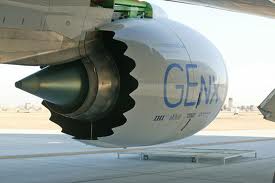
ge engineYesterday’s Wall Street Journal (Feb.7, 2013) brings news of yet another firm’s recovery from the U.S. outsourcing addiction: GE is busy bringing work on its jet engines back in-house. This year, GE plans to open a pair of parts factories in Mississippi and Alabama and soon will announce the location of a third. The firm also agreed to buy Italian parts supplier Avio for $4.4 billion, has acquired a 3-D printing company, and is in  joint-ventures with a component casting company in Montana and a high-tech ceramic parts firm.

The strategy, writes The Journal, ” is aimed at safeguarding a key source of the industrial conglomerate’s sales.” Aircraft engines account for about half of GE’s $211 billion order backlog, and the company can’t afford missteps (like the ones Boeing faced on its 787) as it gets ready to roll out new designs to power the next generation of commercial jetliners. “We want more under our control,” says the head of supply chain management for GE Aviation. “Rather than pay a supplier to do it, we would like to protect our intellectual property.”

By doing more of the work itself, GE expects to (1) protect its technology, (2) speed up development and (3) secure supplies of needed components. The move is a turnabout for the company that helped pioneer soup-to-nuts U.S. manufacturing and then switched gears to help pioneer industrial outsourcing. Further, GE now plans to replicate its new vertically integrated approach across its businesses from gas turbines to medical imaging devices to subsea oil wells. The trend shifted toward bringing work back in-house in recent years and gained steam after events like flooding in Thailand and the tsunami in Japan made clear that multinational companies’ supply lines had grown too long and fragile.

Discussion questions:

1. Describe GE’s move in the context the outsourcing risks in Table S11.2.

2. What are the causes for this change in operations strategy?

OM in the News: Red Lobster’s Vertical Integration Into Lobster Farming

In what could be an underwater gold mine, Orlando-based Darden Restaurants plans to create the world’s largest lobster farm in Malaysia, allowing it to sell the crustaceans in Asia and supply them to its chains such as Red Lobster, according to a story in the Orlando Sentinel (April 9, 2012). The lobster farm would partially shield  Darden from rising seafood prices, while creating a new revenue stream. Lobster farming, a field in its infancy because it has been notoriously difficult, could also keep prices lower for consumers but pose tougher competition for fishermen.

Darden plans to  build the 23,000-acre production facility, which will employ 12,000 workers and eventually churn out 40 million pounds of lobsters each year. That’s about $1 billion worth.

Darden says it will take a while to get to that point — at least 2029. It will take several years to start producing food and at least a decade before lobster sales have a big impact on the company’s bottom line. “There’s a growing world demand for lobster products of all types,” says Darden’s VP of Purchasing and Supply Chain Innovation. The project, which will take an investment of $650 million, will be Darden’s “crown jewel” of environmentally friendly seafood production.

But as we noted in this blog just a few days ago (with regard to Delta Air Lines’ plans to buy a jet fuel refinery), vertical integration (Ch.11) moves most companies outside their core competencies. And lobster farming is a tough business for any company to master. Lobsters take a long time to mature and consume a lot of food. They also cannot make the trip all the way from Malaysia to the US alive.

Discussion questions:

1. Why is Darden venturing outside its expertise in restaurants (its chains also include Longhorn Steak, Olive Garden, and Bahama Breeze)?

2. What other restaurant or fast-food chains have successfully vertically integrated? How and why?

OM in the News: Delta Wants to Pump Its Own Fuel

When we discuss vertical integration in Chapter 11 and core competencies in Supplement 11, we never considered an airline buying an oil refinery to slash its fuel bills. But as The Wall Street Journal (April 6, 2012) reports, that is exactly what Delta Air Lines is trying to do. Delta’s unconventional proposal to acquire a Pennsylvania refinery is a bet that world’s second-largest airline can save $20-$25 a barrel on jet fuel, a big advantage as industry costs now approach $140 a barrel, up 11% so far this year.

Delta’s plan is being dismissed by aviation and energy industry experts, who said owning a refinery is a risky and potentially costly undertaking for an airline. “We are a little uncomfortable about the company going outside its core expertise,” says an analyst who follows Delta. “I can’t recall any other airline buying a refinery.”

The estimated $100 million to $150 million price tag for the refinery is about the cost of a new, wide-bodied aircraft. Delta’s plan would involve using an energy company partner that would handle day-to-day operation of the midsize refinery.  Its deliberations are the boldest step yet in an airline industry struggling to mitigate rising fuel prices that are expected to continue long term. Delta, which paid more than $11 billion for fuel last year–about 36% of its operating cost– has ongoing cost-saving efforts and is investing heavily in more fuel-efficient planes.

Other carriers, of course, also work hard to control their largest cost. Air Canada scours the globe for vessel shipments of jet fuel that it brings to its home airports in an elaborate supply chain of fuel-storage depots, pipelines and docks, leased rail cars, barges, and trucks. Fuel costs are up about 25% over last year.

Discussion questions:

1. What is Delta’s core competency and what are the chances this approach will be successful?

2. What are some other examples of vertical integration in major businesses?