
In Chapter 10, we bring up the subjects of job design and job expansion. The theory is that variety makes a job “better”, yields a higher quality of life for the employee, and provides better flexibility that benefits both worker and company. Job rotation occurs when the employee is allowed to move from one specialized job to another.
I mention this because The Wall Street Journal (March 7, 2012) writes that General Electric is breaking up its old paradigm that for decades groomed jack-of-all-trades generalists as managers. GE’s commitment to “professional managers”, serving short stints in multiple business units, traces back to the firm’s 5th president, Ralph Cordiner, in 1956. The model moved promising managers every 2 years “to test their executive mettle.”
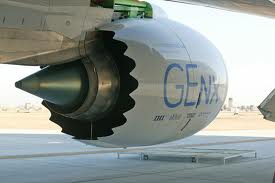 As a young computer analyst, designing jet engines at GE’s aerospace division in Cincinnati back in the 1970s, I often doubted this concept. My boss was a bright fellow who had worked in GE facilities all over the map–but didn’t know a thing about jet engines–and this often caused real problems in our staff meetings. Does a good manager at the locomotive factory, in the nuclear power division, in health care, finance, or in the light bulb plant, automatically succeed in the aerospace arena?
The answer might be “no”, as GE now leaves managers in business units longer–perhaps their whole career. The idea is that their understanding of products and customers will help in our complex world. “We need people who are pretty deep”, says GE’s exec development director. My old Cincinnati operation is now led by a manager who spent his whole career in GE Aviation, working on jet engines.
Discussion questions:
1. How does rotating managers compare to rotating blue-collar factory workers?
2. What are the advantages of moving managers every 2 years to a new business unit in a giant firm like GE?