OM in the News: Newest Workers at Lowe’s are Robots

Meet OSHbot, Lowe's newest sales associate
Meet OSHbot, Lowe’s newest sales associate

Lowe’s is introducing the OSHbot robotic shopping assistants next month, the first retail robot of its kind in the U.S., writes The Wall Street Journal (Oct. 28, 2014). The OSHbot will greet customers, ask if they need help and guide them through the store to the product. Besides natural-language-processing technology, the 5-foot tall white robot houses two large rectangular screens—front and back—for video conferences with a store expert and to display in-store specials. The head features a 3-D scanner to help customers identify items. OSHbot speaks English and Spanish, but other languages will be added. OSHbot is “solving a big problem,” says a Lowe’s executive. “It is a way to bring more shopping convenience and some of the benefits of e-commerce into a physical store.”

As customers follow OSHbot to the correct aisle, they will see ads for in-store specials on its back screen as they pass various departments, communicated through in-store beacons. Customers who need help with, say, a specific type of plumbing project can initiate a video conference on OSHbot’s front screen with available experts at any store. OSHbot also can help customers match a certain-size nail or hinge with a 3D-scanner and determine immediately if the part is in stock. In the future, OSHbot may be able to create the part with a 3-D printer.

To navigate the store, OSHbot uses lasers to sense its surroundings, the same light detection and ranging system (called Lidar) used by Google’s autonomous cars. OSHbot creates a map of its surroundings using technology called simultaneous localization and mapping that it can refer to later. By matching the map it creates to the store map of where products are located in the store, it can lead a customer to a specific hinge or hammer.

The bottom line: There haven’t been more robots in stores to date because the technology hadn’t matured enough, but that is changing.

Classroom discussion questions:

1. How feasible is the use of robots like OSHbot throughout  the retail sector?

2. Provide other examples of the use of service robots. (See our blog on room service robots).
OM in the News: Lowe’s Turns to Satellites to Forecast Customers

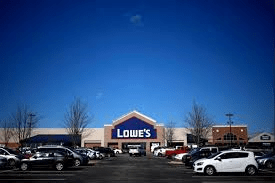
lowesForget Amazon’s package-toting drones—the future of retail may lie in satellites. That’s how Lowe’s is catching up to Home Depot in the hunt for customers. Lowe’s, writes BusinessWeek (Feb. 26, 2014), says that “it has been gauging traffic at its almost 1,900 stores from space, scanning satellite images of its parking lots to find out how many shoppers it can expect at every hour of every day.” It has also started syncing its parking lot observations with actual transaction counts to see how many people drove away without making a purchase.

The space snooping is a great way for Lowe’s to manage its workforce, scheduling surges in floor staff when parking spaces are about to become hard to come by. Evidence shows the satellites are helping move the needle for Lowe’s. The fourth-quarter close rate—the share of shoppers who bought something—improved by almost 1%, and total sales per hour of labor increased by 2%. The company’s profit in the recent quarter increased 6.3%, while sales ticked up 3.9%.

Anyone who has every wandered through a hardware superstore looking for an odd screwdriver or a particular kind of sandpaper understands how critical staffing is for Lowe’s. Cornering an aproned employee can seem more challenging than fulfilling the project. And there are few greater frustrations in retail than standing by with a simple question while another customer solicits a protracted product review.

Lowe’s and Home Depot more or less sell the same products at the same prices in the same places. Assuming their supply chains and marketing strategies are in sync, their market shares ride almost entirely on service. From that perspective, being able to have more employees around when more customers need help is success–and not paying them to sit around in the store when shoppers are sparse helps, too.

Classroom discussion questions:

1. What other technologies can chains like Lowe’s use to increase productivity and sales?

2. Why is service such an important factor at Home Depot and Lowe’s?