
Here at the Render household, we take our recycling very seriously. Each Tuesday, a garbage truck collects the contents of our bin. It contains lots of plastics—shampoo bottles, yogurt cups, milk jugs and more. But how much actually gets recycled?
Just 14% of waste plastic containers and packaging are sent to a recycling facility, according to the most recent EPA report. Another 17% gets incinerated. Nearly 70% goes to landfills. Waste paper and cardboard do better: 81% gets recycled. The rate for glass containers is about 31%. For aluminum, including cans and foil, 35%.
Recycling plastic is a challenge because of chemistry…and business, writes The Wall Street Journal (Oct. 22, 2024). The U.S. used to export recycling to China, but the country stopped taking most foreign waste in 2018. If American companies aren’t interested in making new products from recycled plastic, there’s no incentive to develop the infrastructure to collect, sort and reprocess old packaging.
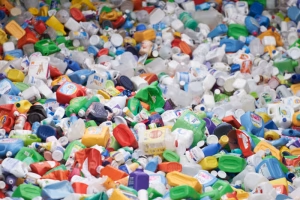
There are seven categories of plastic resins. Most types aren’t even considered for curbside recycling. Meanwhile, businesses have touted their containers as recyclable as they look to keep consumers and regulators happy. Yet for recycling to work, there has to be demand for all the used plastic that we toss. Today virgin plastic is both cheaper and better.
The numbers on plastic items range from 1 through 7. But having a number doesn’t make it recyclable. PET—polyethylene terephthalate, used for soda and other drink bottles—goes by number 1 and is the most highly recycled plastic in the U.S. at 29%. HDPE—high-density polyethylene, found in milk jugs and detergent containers—is number 2 at 27%. PP—polypropylene, which bears the number 5 and is commonly used in yogurt and butter containers—hasn’t been widely recycled in the U.S.
Most flexible supermarket bags are not accepted in curbside recycling bins. Rigid containers made from polyvinyl chloride (No. 3), polystyrene (No. 6) or multilayer plastics (No. 7) shouldn’t go in blue bins either. Sorting and cleaning a wide assortment of plastic containers is expensive, in part due to the many different pigments and other additives used. Throwing bags, six-pack rings and other flexible plastics into blue bins can mess up a recycling facility’s sorting machinery. And pieces smaller than a credit card won’t be sorted.
Classroom discussion questions:
- What is the recycling policy on your campus and is it effective?
- What is the solution to this problem?


