OM in the News: Why Rolls Royce Does Its Production in High-Wage Countries

While many American and European manufacturers have transplanted production  to low-wage countries like China, Vietnam, Bangladesh, and Mexico in the past two decades, one company, Rolls-Royce PLC, has taken a contrarian course. The Wall Street Journal(Oct.21,2011) reports that the jet engine producer (it no longer makes cars–that went to BMW in 1998), has factories in England, the US, and Germany–and is about to open a new titanium jet-engine fan blade factory in Singapore, where wages dwarf those of the surrounding region. Why a billion dollar investment in Singapore?
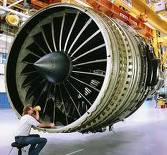
Executives chose Singapore for 3 reasons: (1) a highly educated workforce, with the government picking up the tab for training 500 new hires–people  capable of dealing with the advanced processes of manufacturing to tolerances smaller than a human hair; (2) booming Asian demand for its engines, which power such jets as the jumbo A380; and (3) a link to new network of local suppliers. Rolls is willing to pay lavishly  for the talented employees that will confirm its bet that brains can match the brawn of lower-cost competitors. On the other hand, GE, Rolls’ biggest competitor, has research centers in Brazil, China, and India. “We want to be a participant in China, not just sell products there”, says a  GE spokesman.

Rolls-Royce joins a handful of companies, including Whirlpool and Caterpillar, that are bringing jobs back home. Most of these producers emphasize know-how and manufacturing efficiency over labor cost. They also avoid  a problem for major corporations in China and other developing countries regarding protection of copyright laws. Execs from GE, Microsoft, Kawasaki, and Siemens have all criticized China for costing them billions of dollars, due to ineffective intellectual property rights.

Discussion questions:

1. Why does Rolls take the stategy of manufacturing in high-cost countries?

2. How does Rolls train its hundreds of apprentices every year?

OM in the News: Recycling Water–“From Toilets to Tap”

I have held off on blogging about USA Today’s cover story (March 3, 2011) for a week because of the yuk factor. Your students will moan you when you bring up the title “From Toilets to Tap”, but sustainability is an important OM topic (which we treat in Chapters 5 and 7). And as the article says: “Water is going to be the oil of the 21st century”.

Clearly something needs to be done. One-eighth of the world (884 million people) still lacks safe drinking water…and its not just in remote/poor regions. Singapore, dependant on Malaysia  for the strategic resource of water, has built recycled wastewater plants that now serve 1/3 of its people. Orange County, CA (which has to import water from the northern part of the state and Colorado), uses treated wastewater to serve 1/5 of its 2.4 million residents. The Northern Virginia suburbs of D.C. use purified sewage for 5% of  the area’s drinking water.

But other parts of the world, from San Diego to Australia, have had to back away from recycling plans amid public outcry. “The gross out factor is a big barrier”, admits a UC prof. Despite the nickname —“toilets to tap”–only about 10% of household wastewater comes from toilets, while the rest is from showers, sinks, and laundry. And the resulting water is often cleaner than what you would buy in a store, as the EPA’s standards are very strict.

Here is briefly how it works: first  microfiltration traps bacteria; then reverse osmosis blocks salt, drugs, and viruses; and finally, ultraviolet light and hydrogen peroxide kill organics. Besides alleviating drinking water shortages, the technology is used  for recycling in factories (see our video on Frito-Lay’s sustainability), for agriculture, and  it means less waste discharged into the ocean.

Discussion questions:

1. Why is recycling water an OM issue?

2. What are the advantages of this method of reclaiming wastewater?