OM in the News: Meet The Robot Butcher

Meatpacking jobs can be some of the toughest, bloodiest and most dangerous around, and companies such as Smithfield, Tyson Foods, and Cargill have long struggled to fully staff slaughterhouses and processing plants. Workers might have to stand for hours a day, often in cold temperatures, repeatedly slicing livestock carcasses on fast-moving processing lines or moving heavy boxes of frozen meat. The companies have sought for years to recruit enough workers and to run their plants at full strength.

A system at Cargill’s beef-processing plant scans meat for bones and other undesirable materials as it passes through the production line

So meatpackers are increasingly looking to robots for help, writes The Wall Street Journal (April 10, 2024). Smithfield, the largest U.S. pork processor, began rolling out automated rib pullers at its pork plants several years ago, which company officials said helps leave less wasted meat on the bone and relieves workers from some of the industry’s most physically demanding jobs—allowing workers to be reassigned from pulling loins or ribs to food-quality inspection jobs.

Taking hourly workers off the processing line and training them to work with robots that require more technical skills can be challenging for meat companies and employees. Tyson is working with a local community colleges to create a pipeline of potential workers.

Tyson has installed more computers and X-ray inspection technology throughout its facilities to detect bones and other undesirable materials in products. Cargill now operates automated rib-chine saws that cleave off the spine from the carcass, and machine hock-cutters that chop the front off shanks, the part of the leg between the knee and the beef carcass. (Automation has been an industry ambition for some time, especially among processors of chickens—which tend to be smaller, more uniform in size and easier for a machine to handle).

Classroom discussion questions:

  1. Why is staffing so difficult at meat packers?
  2. Identify other potential applications of technology in this industry.

OM in the News: Tyson Blames the Chickens

There’s simply not enough chicken to go around as US demand for the meat surges, reports the New York Post (May 12, 2021) Underperforming roosters that aren’t producing as many chicks as expected are partly to blame for the shortage, according to Tyson Foods. The Arkansas-based company, one of the world’s largest poultry producers, says that it’s struggling to ramp up chicken supply because the new roosters it’s been using for fertilizing eggs and breeding new chicks simply aren’t hitting expectations.

“We’re changing out one type of male that, quite frankly, we made a bad decision on,” says the company president. Breeding companies provide hens and roosters to chicken producers like Tyson, which then breed the birds and hatch their eggs to produce poultry. Tyson owns one of the major breeding companies in the US.

tyson-roosters-05

The company switched to the new kind of rooster because it improved the quality of meat. The hatching crisis hit Tyson in January, after it introduced the rooster that’s now getting the boot. (It has moved back to the roosters it previously used).

The company discovered that eggs fertilized by this specific type of rooster hatch less often, limiting the company’s supply just as nationwide demand for chicken is sky high. While working to replace the rooster by the fall, but there could be a lingering supply hit that carries over into next year. The breeding problem could be responsible for as much as half of Tyson’s problems meeting demand for its chicken.

There are other factors also holding back chicken supply. The winter storm that slammed Texas earlier this year as well as “worker absenteeism” and a surge in demand are also hurting supply. 

Classroom discussion questions:

  1. Why is this an OM issue?
  2. What mistakes did Tyson make?

OM in the News: How Tyson’s Chicken Plant Became a $320 Million Turkey

On Sept. 5, executives from Tyson Foods, the nation’s largest meat processor, traveled to the small Kansas town of Tonganoxie with what they figured would be welcome news for the locals. Joined by Governor Brownback and other politicians, Tyson unveiled plans to build a huge chicken complex outside of town. The $320 million project, Tyson’s first new plant in 20 years, would be home to a hatchery, feed mill, and processing plant—employing about 1,600 workers to package 1.25 million birds a week.

“To many small communities, that would have been cause for celebration,” writes Businessweek (Oct. 16, 2017). But for residents of Tonganoxie, the news—which they complain had been kept from them because of nondisclosure agreements that officials had signed during Tyson’s site search—drew a far different response. They objected to the stress on roads and waterways, the plant’s proximity to local schools, and the dozens of chicken barns (often odoriferous operations.)

White-and-red signs demanding “No Tyson in Tongie” sprouted up on lawns. A mid-September rally organized drew thousands of locals, many concerned about the lack of transparency leading up to the Tyson deal. Not long after, the county’s board of commissioners—which 5 days before Tyson’s announcement approved the intent to issue $500 million in industrial revenue bonds for facilities, without naming an operator—revoked its decision. Tyson then said it was putting its plans on hold while it investigates other plant locations.

The backlash serves as the latest example of grassroots opposition to industrialized food plants, which stoke concern among residents about everything from environmental impact to animal welfare issues and fears of a potential influx of new workers. This is a good example to use in class when covering location decisions in Chapter 8. Not every community is willing to offer huge incentives to attract new jobs. (The median wage of poultry workers is $11.77 an hour– $24,490 annually.)

Classroom discussion questions:

  1. What were the plusses and minuses of Tyson’s offer to this Kansas town?
  2. Describe the main incentive offered to Tyson.

Good OM Reading: Ethics and the Chickenizing of America

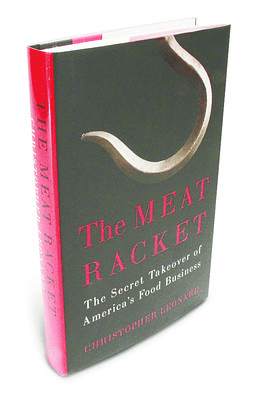
meat racketTyson Foods is now the largest meat-producing company in the world, the leading member of an “oligarchy” of companies whose hold on the American meat industry Christopher Leonard examines in his gripping The Meat Racket.  Mr. Leonard’s focus isn’t the treatment of animals in factory farms; nor is it taste or quality, although some unpleasant facts emerge.  He is primarily concerned, writes The New York Times (March 13, 2014), with how these corporations gained control of the business from farm to table. The 95% of Americans who eat chicken, he contends, support a system that “keeps farmers in a state of indebted servitude, living like modern-day sharecroppers on the ragged edge of bankruptcy.” Many chicken farmers don’t even own the chickens they raise.

As Tyson expanded, it would take over all the businesses that used to make up a small-town economy. “It owns the feed mill, the slaughterhouse, and the hatchery. It owns the trucking line and the food-processing plant where raw meat is packaged and cooked into ready-to-eat meals.” This system has “provided tremendous benefit to American consumers,” Leonard acknowledges. Chickens grow bigger faster, even while eating less feed, and meat has gotten much cheaper. Between 1955 and 1982, the time it took to raise a chicken dropped to 52 days from 73.

After pioneering their model in the poultry business—and, to their triumph, getting the chicken McNugget on the menu at McDonald’s, Tyson set out to “chickenize” first the hog and now the cattle business. It has faced fierce resistance in the latter, but its practices still help set the standard for the entire industry. Tyson was one of the first companies to use a growth hormone called Zilmax, which causes cattle to put on weight with astounding results. “The animals blow up like muscled balloons,” Leonard writes, adding that the hormone also makes the meat leaner and cheaper to produce—in other words “more like chicken.” Tyson stopped using Zilmax last year after critics raised concerns that cows were becoming paralyzed. (Chickens are bred to grow huge breasts so as adults they can barely breathe or stand).

The ethics involved in the industry makes for a good class discussion in a number of text chapters.