Guest Post: Quality, Marketing and Cross Contamination

Professor Howard Weiss shares his thoughts about a variety of unusual OM topics with us monthly.

People with food allergies typically check the ingredients of a food product very carefully to ensure that the product does not contain an ingredient to which they are allergic. The top 8 allergens in food production are soy, wheat, milk, peanuts, tree nuts, fish, and shellfish.

Bimbo Bakeries, headquartered in Mexico with bakeries in 35 countries including the U.S., has taken a unique approach to listing allergens on some of its products. U.S. inspectors reported that Bimbo Bakeries USA — which includes brands such as Sara Lee, Oroweat, Thomas, Entenmanns and Ball Park buns and rolls —”listed ingredients such as sesame or tree nuts on labels even when they weren’t in the foods.” (Bimbo claims to be the largest bakery in this country).

The reason a company might purposely list ingredients that are not in its products is that it may be concerned about cross-contamination in a bakery plant and wants to ensure it will not be legally responsible in the event of cross contamination. In other words, rather than trying to introduce quality control procedures to prevent cross-contamination in its plant, the company is willing to be untruthful when listing ingredients to minimize the chance and or cost of a law suit.

It may be very expensive or difficult to prevent cross-contamination from one part of plant to another or from one machine to another. So to stay within the letter of the law some companies have deliberately added small amounts of allergens to products that previously did not contain these allergens. This helps the company avoid liability and legal costs.

Cross contamination can occur in several different ways:
 primary food production — from plants and animals on farms
 during harvest or slaughter
 secondary food production — including food processing and manufacturing
 transportation of food
 storage of food
 distribution of food — grocery stores, farmer’s markets, and more
 food preparation and serving — at home, restaurants, and other foodservice operations

There are strategies available to minimize the chance of cross-contamination. The best way is for food manufacturers to process products that contain allergens in a separate facility. If this is not possible then scheduling the production of products that contain allergens at a different time than other products may help. Cleaning procedures can be used to minimize the chance of cross contamination.

OM in the News: U.S. Takes On Cobalt’s ‘Inconvenient Truth’

Each chapter of our text ends with an Ethical Dilemma, asking students to consider a difficult management decision. Such is the role of OM executives. And we see the issue arise again in the Congo. The Wall Street Journal (Aug. 25, 2023) writes: “The U.S. is turning to a much-criticized source as it races to secure supplies of battery metals to meet the growing demand for electric vehicles.

To do so, it is homing in on cobalt from the Democratic Republic of Congo’s informal mining sector (called “artisanal mines”), where miners, including children, often work with no safety equipment in dangerous, hand-dug mines. Congo supplies around 70% of the world’s cobalt, a key metal in the lithium-ion batteries used in EVs, with 1/3 of that coming from these mines.

Workers wash ore in an artisanal copper-cobalt mine in the Congo

The focus on artisanal mines, long shunned by the West, comes as governments and companies increase efforts to secure greater supplies of battery metals—an area China dominates. China just set export restrictions on two minerals the U.S. says are critical to the production of semiconductors, highlighting the risk of relying on Chinese supplies. Chinese companies have a tight grip on Congo’s cobalt mining industry, refining 3/4 of the world’s cobalt supply and producing about 70% of the world’s lithium-ion batteries.

Unlike metals from major mines, cobalt from artisanal mines isn’t contracted to any particular company. Instead, miners sell their ore to local traders who in turn sell it on to exporting companies and refineries in the global supply chain. As a result, Western companies have faced criticism from consumers disturbed by the link to workers toiling in dangerous conditions in one of the planet’s most impoverished countries.

Hundreds of thousands of people work in Congo’s artisanal-mining sector, far outnumbering jobs at established mines, where the use of heavy machinery means fewer workers are needed. Artisanal cobalt is an “inconvenient truth,” says a Swiss human rights director, since it is nearly impossible to separate artisanally mined cobalt from the larger supply of industrially mined cobalt.

Classroom discussion questions:

  1. State the “ethical dilemma” and propose a solution.
  2. What is the status of mining in the U.S. and other nations for cobalt and other “rare earths” and minerals needed for electric vehicles?

OM in the News: Monitoring Employees Who Work From Home

As we note in Chapter 10, labor is a costly component of most OM activities. So as we have moved to computer-oriented tasks, rather than manual tasks, new tools for evaluating productivity have been developed.  Now with millions of employees suddenly doing these tasks from home, more managers want to know how employees spend their time, writes The Wall Street Journal (April 20, 2020).

One new technology provides the ability to install a tool that takes computer screenshots of home-based employees every 10 minutes and records how much time they spend on certain activities. It gives managers productivity scores for remote workers or detailed reports on which tasks consume their days. Other tools are designed to catch employees who might be more tempted to download files from the company or violate security rules. At Teramind, whose technology can give employers a live look at employees’ computer screens or recordings of videos of their activities, inquiries have recently tripled, and 1/3 of the company’s 2,000 clients have requested additional licenses to track more users.

One S. Carolina manager states: “This is not a witch hunt to try and find the guy who spends 20 minutes a day on the news. The tool to track web browsing and time spent on work-related apps will pay longer-term dividends.We’re able to get a lot more granular insights into how much time they’re spending on individual tasks. Each staffer has access to their own data and can see how their own productivity levels fluctuate.”

Employers have wide legal latitude to use tracking tools, though the products can test employees’ threshold for privacy concerns “Frankly, employees already have an incentive to be productive, just by mere fact of wanting to keep their jobs,” says one Cornell prof.

Classroom discussion questions:

  1. Are there ethical and privacy issues that need to be addressed here?
  2. Why is such software now an important OM tool?

OM in the News: Amazon’s Bangladesh Problem

Clothing sellers formed safety-monitoring groups after the 2013 Rana Plaza collapse.

Ethical lines aren’t clear-cut in the global garment-supply chain, which remains a murky network in which clothes pass from factories through traders around the world. After a 2013 factory collapse killed more than 1,100 people in Bangladesh, most of the biggest U.S. apparel retailers joined safety-monitoring groups that required them to stop selling clothing from factories that violated certain safety standards.

Amazon didn’t join, reports The Wall Street Journal (Oct. 24, 2019). The site today offers a steady stream of clothing from dozens of Bangladeshi factories that most leading retailers have said are too dangerous to allow into their supply chains. Apparel appears on Amazon that is made in factories whose owners have refused to fix safety problems, such as crumbling buildings, broken alarms, and missing sprinklers and fire barriers. Walmart, Target, Costco, and Gap have agreed to have their supply chains inspected and to disclose to the groups the factories that supply them.

Clothing including pants, sweaters, and robes that originate from blacklisted factories have ended up on Amazon, which has become a major player in apparel. Other retailers must compete in this market, where customers often seek the lowest price. Amazon may have overtaken Walmart as America’s No. 1 clothing seller and dominates the online-retail market.

Amazon runs its platform without many of the constraints that other companies apply to their products and stores, sometimes in ways that can put customers and workers in danger. That is particularly true for Amazon’s third-party marketplace, made up of millions of individual sellers. Many are anonymous and aren’t subject to some of the oversight Amazon applies to its own brands and to items it sells directly. Thousands of products listed on Amazon are deemed unsafe by federal agencies, are deceptively labeled or are banned by regulators—items that many retailers’ policies bar. They include items such as unsafe children’s toys and recalled motorcycle helmets. Amazon doesn’t inspect factories making clothing that it buys from wholesalers or that comes from third-party sellers.

Classroom discussion questions:

  1.  Is this a significant supply chain issue? Why?
  2.  What is Amazon’s responsibility in selling products from Bangladesh–and elsewhere?

OM in the News: Audi’s Pollution Tricks

An Audi production line in Germany.

“After more than $30 billion in fines, numerous indicted executives and a guilty plea in the U.S, you wouldn’t think there was much more to learn about the Volkswagen emissions scandal,” writes The New York Times (July 26, 2019).

Wrong. Four years after VW confessed to systematically evading pollution rules for a decade, new documents show that VW’s Audi luxury-car unit was more deeply involved in developing the emissions cheating scheme than previously known, and continued to sell vehicles with illegal software even after the scandal became public. The documents show that Audi managers and engineers were just as willing as their VW counterparts to cheat in pursuit of the company’s goal of becoming the largest carmaker in the world.

Audi execs bluntly discussed what was in effect a criminal conspiracy, using terms like “defeat device” or “cycle beating” that clearly connote illegal attempts to defeat the testing procedures used by regulators. “We won’t make it without a few dirty tricks,” wrote an employee. Trapped between corporate aspirations and the laws of physics, Audi engineers devised an ingenious but illegal workaround. They installed software in the engine that could recognize the telltale signs of an official emissions test. If regulators were looking, the software would temporarily ramp up pollution controls to be compliant. In everyday use, the cars produced emissions far above legal limits, resulting in estimates of 1,000s of pollution-influenced deaths.

A 2008 Audi Powerpoint presentation noted that the approach was a form of cycle beating, the automotive equivalent of cheating on an exam. “Highly critical in the USA!” the document warned.
As VW later admitted in a plea agreement, Audi deployed illegal software anyway. So ingrained was the use of illegal software that Audi continued to use it even after the U.S. formally accused it of emissions cheating in 2015.

Classroom discussion questions:

  1. Why is this a sustainability issue?
  2. What exactly did VW do that was wrong?

OM in the News: Cobalt Mines, Supply Chains, and Ethics

Mine workers, move rocks containing cobalt in Kolwezi, Congo

Dozens of global manufacturers found themselves on the defense when Amnesty International reported that the cobalt in some of their batteries was dug up by Congolese miners and children under inhumane conditions, reports The Wall Street Journal (Sept. 13, 2018). Many of the companies said they would audit their suppliers and send teams to Congo to fix the problem. But at a Chemaf-owned cobalt mine in Kolwezi, Congolese workers could be seen descending underground without helmets, shoes or safety equipment. The mine’s owner is part of the global cobalt supply chain for companies including Apple and VW.

Miners there were using picks, shovels and bare hands to unearth rocks rich with the metal. Water sometimes rushes into holes and drowns miners, and an earth mover buried one alive last year. “Of course, people die,” said the mine’s owner’s CEO. “This is really shitty work.” He called the miners “barbarians” and said Chemaf had resisted giving them safety equipment because they would sell it. “I don’t care about supply-chain problems,” he added. “That’s a problem for Apple and Samsung.”

Global demand is soaring for cobalt, which is used to conduct heat in lithium-ion batteries in products from smartphones to electric vehicles. Cobalt prices have more than doubled since 2016, putting Congo in the spotlight. It isn’t easy for global manufacturers to trace cobalt’s source in Congo, because it passes through multiple companies and countries. Some mining operations mix industrially produced and hand-dug cobalt. Samsung says it is aware some of the cobalt it gets from Chemaf is produced by the miners. If companies stopped buying it, said Samsung, it would put people out of work.

Amnesty recently applauded Apple’s moves to weed out child labor from its supply chain, saying it is “the industry leader when it comes to responsible cobalt sourcing.” Amnesty said VW hadn’t addressed whether certain companies in its supply chain received cobalt from Congo. Its report added: “Some of the richest and most powerful companies are still making excuses for not investigating their supply chains.”

Classroom discussion questions:

  1. Why is this a complex OM issue?
  2. Why is cobalt so important to supply chains?

OM in the News: VW’s Strategy Switch

“As the world’s largest automaker, Volkswagen in some ways better resembles a country than a mere corporation,” writes Businessweek (April 2, 2018). At more than 100 factories worldwide, the company’s 12 brands make 355 models in millions of color and trim combinations, employing more than 600,000 people who generate $284 billion in revenue.

It’s hard to imagine that such a robust firm could ever be at risk of collapse, as it was less than 3 years ago, when VW was consumed by one of the largest scandals in automotive history. The systematic effort to cheat on emissions tests—employees wrote software that made diesel cars appear cleaner than they were—brought the company to its knees.

And yet today—$30 billion in compensation and repair costs and 11 million affected vehicles later—VW is comfortably defending its global sales crown from a challenge by Toyota. Consumers’ willingness to forgive VW is remarkable, given the enormity of its wrongdoing: Scientists at the MIT estimate the extra pollution generated  by its rigged cars will contribute to more than 1,200 premature deaths. (VW was also fortunate that the vast majority of the affected cars were sold in Europe, where emission rules are less stringent than in the U.S. Germany and the EU ruled that VW could simply modify the 8 million polluting vehicles.)

Emboldened by this unexpectedly rapid rehabilitation, VW late last year embarked on by far the largest program of electrification in the global car industry, pledging to spend $25 billion to develop battery-powered or hybrid variants of every one of its models by 2030. The goal is to make EVs cheap and commonplace, inspired by its 1960s Beetle. From next year, the company plans to release a new EV or hybrid model every month.

The diesel crisis may ironically prove to have been a good thing: a trauma that forced VW to ask hard questions about its operations and strategy and what a carmaker will need to look like to survive the 21st century.

Classroom discussion questions:

  1. What factors will impede the new VW strategy?
  2. Examine each of the 10 OM decisions. How they will be impacted by an EV strategy?


Good OM Reading: Faster, Higher, Farther–The Volkswagen Scandal

Two years ago, Volkswagen proudly reached its goal of surpassing Toyota as the world’s largest automaker. But in Fall 2015, the EPA disclosed that VW had installed software in 11 million cars that deceived emissions-testing mechanisms. By early 2017, VW had settled with U.S. regulators and car owners for $22 billion, with additional lawsuits still looming. In Faster, Higher, Farther, New York Times reporter Jack Ewing details the conspiracy. He describes VW’s rise from “the people’s car” during the Nazi era to one of Germany’s most prestigious and important global brands, touted for being “green.” The first half of the book is the story of VW, the legendary creation of the Beetle by the Nazis, and the car’s role as a counterculture icon during the 1960s.

Ewing then portrays VW chairman Ferdinand Piëch and CEO Martin Winterkorn. The author argues that the corporate culture they fostered drove employees, working feverishly in pursuit of impossible sales targets, to illegal methods. Within a year of taking over, Winterkorn had announced a plan for VW to attain “world domination.” His diesel fuel and a “clean diesel” marketing campaign became vital components of this strategy. Although diesel leads to fuel efficiency, it also leads to high toxic emissions. Unable to build cars that could meet emissions standards honestly, engineers were left with no choice but to cheat. VW then compounded the fraud by spending millions marketing this clean diesel.

In 2013, the lie was first exposed by a handful of student researchers on a shoestring budget at West Virginia University who tested the fuel emissions of a diesel Passat, a diesel Jetta and a diesel BMW. The vehicles passed EPA standards when tested in a controlled lab-setting. But when the cars were tested in a non-lab setting, the Passat and Jetta exhibited nitrogen oxide emissions that were off the charts. As we know, this led eventually to the guilty plea to criminal charges in a landmark Department of Justice case.

In dealing with ethics of OM, here is a global company whose deceit half destroyed it–and the story is not finished.

Good OM Reading: What Makes a Supply Chain Sustainable?

A growing number of companies are looking to build sustainability into their supply chains. This is due, in part, to mounting pressures to disclose supply chain information. The growing emphasis on supply chain sustainability is commendable, but there is a problem: Most sustainable supply chain initiatives do not actually address sustainability at all. This new article in MIT/Sloan Management Review (Nov. 15, 2016) proposes 4 broad and hierarchical strategies for supply chain management: legal, ethical, responsible, and sustainable.

A responsible supply chain, for example, must also be legal and ethical. However, a responsible supply chain is not necessarily sustainable. First, there are supply chains that operate within legal limits and comply with agreed-upon contractual requirements. All partners in these supply chains must follow, for example, established legal, building, and environmental standards.

Third, there are supply chains that operate responsibly. Partners in these supply chains are committed to continual improvement, considering stakeholder interests, and making positive contributions in their communities. Responsible supply chains focus on making things better.
Last are sustainable supply chains. These require that all partners behave legally, ethically, and responsibly. However, they must also consider how their actions are situated in the broader sustainability context. A supply chain is sustainable only if its activities can be supported by nature and society over the long term. This is what the other strategies miss.
What makes a supply chain sustainable? Sustainable SCM requires setting science-based targets, developing metrics that take sustainability context into account, and building relationships with players across the chain.

Good OM Reading: The Myth of the Ethical Supply Chain

Inside the Tazreen garment factory after the fire

The anti-sweatshop mania burst into the mainstream in the mid-90’s. Naked people chanted outside the opening of an Old Navy, Jennifer Love Hewitt led an anti-sweatshop protest, Kathie Lee Gifford cried in front of Congress. Nearly every major apparel brand was the target of a boycott campaign. In response, the companies adopted codes of conduct, banning workers under 16 and forced overtime—then expanding to health, safety, and environmental protection. Since 1998, Nike has followed U.S. clean air standards in all of its factories worldwide, while Levi’s gives financial literacy classes to some of its seamstresses. An entire ecosystem of independent inspectors sprung up.

However, it’s not the largest companies that are the issue. In the last 25 years, as the big brands were getting better at monitoring their supply chains, the entire global apparatus of manufacturing shifted. In the fast-fashion era, Western brands couldn’t afford the luxury of working with the same suppliers and ensuring that they meet the company’s standards. Most of them outsourced this coordination to megasuppliers: huge conglomerates that can take a design sketch, split the production between 1,000’s of factories, box up the goods and ship them to stores.

Recall that in 2012, as the fire alarm went off in a Tazreen garment factory in Bangladesh, over 1,200 workers were scrambling to complete orders for Western brands: Dickies, Wal-Mart, Disney. After 100 workers died, NGOs focused on how Wal-Mart was responsible for 60% of the clothing being produced there. But Wal-Mart never actually placed an order with Tazreen. A year before the fire, Wal-Mart inspected the factory and discovered that it was unsafe. By the time of the fire, it had banned its suppliers from using it. So how did its products end up at Tazreen anyway? Wal-Mart had hired a megasupplier called Success Apparel to fill an order. Success hired another company, Simco, to carry out the work. Simco—without telling Success, much less Wal-Mart—sub-contracted the order to Tazreen’s parent company, the Tuba Group, which then assigned it to Tazreen. Two other 4th and 5th tier contractors also placed Wal-Mart orders at Tazreen, again without telling the company.

This lengthy, but highly readable, article in The Huffington Post, is a perfect supplement to your discussion of SCM in Chapter 11.

OM in the News: Your Cat, Slavery, and the Seafood Supply Chain

Living quarters on the boats are hot and cramped, with crew sleeping just 2 hours between shifts

If your cat eats Meow Mix, Fancy Feast, or Iams, there is a good chance you are supporting “sea slaves”, men and boys put in forced labor in Thailand for cheap fish, reports The New York Times (July 27, 2015) in a front page expose.  The U.S. is the biggest customer of Thai fish, and pet food is among the fastest growing exports from Thailand. The average pet cat eats 30 pounds of fish per year, double that of a typical American.

Though there is growing pressure for more accountability in seafood companies’ supply chains, virtually no attention has focused on the labor that supplies the seafood that people and pets eat. Much of the catch is destined for canneries such as Thai Union Frozen Products, that country’s largest seafood company, which shipped 28 million pounds of pet food to the U.S. in 2014.

The misery endured by sea slaves is not uncommon in the maritime world. Labor abuse at sea can be so severe that its victims might as well be captives from a bygone era. Those who fled recounted horrific violence: the sick cast overboard, the defiant beheaded, the insubordinate sealed for days below deck in a dark, fetid fishing hold. The harsh practices have intensified in recent years because of lax maritime labor laws and an insatiable global demand for seafood.

Officials point to a greater reliance on long-haul fishing, in which vessels stay at sea, sometimes for years, far from the reach of authorities. Government intervention is rare. While the U.N. prohibits forced labor, Thailand does little to counter misconduct on the high seas. U.N. and rights organizations accuse Thai officials of taking bribes from traffickers, and migrants often report being rescued by Thai police from one smuggler only to be resold to another.

Classroom discussion questions:

1.Why can’t pet food makers like Purina eliminate this worker abuse?

2. Describe the pet seafood supply chain.

OM in the News: All Your Clothes Are Made With Exploited Labor

china workerYes, this is the somewhat shocking title of The Atlantic’s (June 3, 2015) article featuring Patagonia, which has become a symbol of well-heeled outdoor adventure. But the apparel and sporting company thinks of itself as more than just a retail company. Says Patagonia’s founder: “We aim to make the best product, cause no unnecessary harm, and perhaps most important, inspire solutions to the environmental crisis.” And yet, despite these aspirations, internal audits turned up multiple instances of human trafficking, forced labor, and exploitation in Patagonia’s supply chain.

The audits examined not Patagonia’s first-tier suppliers—the factories that cut, sew, and assemble Patagonia’s products—but the mills that take raw materials and produce the fabrics and other parts that later become jackets and backpacks. About 1/4 of those mills are based in Taiwan, and the majority were found to have instances of  trafficking and exploitation. Those mills didn’t hire workers themselves and instead turned to so-called labor brokers. These labor brokers charged migrants exorbitant, often illegally high fees in exchange for jobs.

Though it may seem shocking that a company so publicly committed to fair labor practices could have such violations in its production chain, the news is less surprising when taking into account how the apparel industry operates: with unwieldy, complicated supply chains that reach around the globe. So the findings of Patagonia’s audits show the near impossibility of treating workers well at every step in the production process.

Labor violations are more rampant at the mills and parts manufacturers, which are often subcontracted to provide the materials for the first-tier factories. Traditional factory audits by both brands and NGOs often miss instances of trafficking deeper down the supply chain. Auditors often don’t even have the proper language skills to communicate with the multi-national population of workers that make up the workforce. To complicate the situation further, supply chains are massive and far-flung; relationships among brands, factories, and employees are often informal; and corporate social-responsibility programs tend to be relatively unestablished and toothless.

Classroom discussion questions:

1. What is the solution?

2. If Patagonia is a global leader in ethical manufacturing, what is the status of the rest of the apparel industry?

OM in the News: Levi Strauss’s Push for More Ethical Factories

leviIn an attempt to bolster its ethical credentials and meet the demands of increasingly fussy millennial consumers, Levi Strauss is offering a new financial incentive to suppliers as far away as Bangladesh and China to meet environmental, labor and safety standards. The jeans maker is providing lower-cost working capital to those of its 550 suppliers who do best on those measures. The project sprang out of the 2013 Rana Plaza factory collapse in Bangladesh, which left more than 1,100 dead and prompted new scrutiny of international fashion brands’ supply chains.

“The move reflects two important trends in globalization,” writes The Financial Times (Nov. 4, 2014). As consumers fret about the conditions under which their clothes are made, fashion brands are facing greater pressure to ensure their suppliers in places like Bangladesh, Cambodia and Vietnam abide by higher standards. In some cases that issue, together with rising wages and costs in China and other production centers, is leading to brands “reshoring” production closer to home. But the combination of those pressures and the way global supply chains are becoming ever more intricate is also leading multinational companies to build tighter bonds with suppliers and to use new tools to manage them.

Levi Strauss’s VP of sustainability said the company now relies on “fewer, more capable” vendors and that its relationships go back an average of 10 years with top contractors. The firm claims to require its suppliers to abide by some of the strictest labor standards in the garment industry and employs full-time inspectors to visit factories around the world. It also is rare among fashion brands in publishing a full list of the factories and suppliers it uses around the world. It has, however, had dark chapters in its past. In the early 1990s Levi Strauss was accused of using Chinese prison labor to make clothes. It withdrew production from China on human rights grounds for five years, becoming an example of the potential pitfalls of doing business in China.

Classroom discussion questions:

1. Why is Levi Strauss making this move?

2. What are the advantages of having fewer vendors?

Good OM Reading: Rethinking Corporate Social Compliance in the Supply Chain

 third worldFollowing widely publicized human rights scandals in the early 1990s, corporations, dominated by those in the footwear and apparel industries, invested heavily in social compliance programs to enforce a minimum standard of human rights and employee safety throughout their supply chains. These standards, framed loosely on a U.N. declaration, typically sought to separate the worst human rights abuses from production processes where finished goods were manufactured. In the contract manufacturing sector, such abuses include child labor, forced labor, excessive overtime and unsafe conditions.

One might expect that given the pervasiveness of corporate social compliance programs and the volume of audits being performed that the evidence of abuses in corporate supply chains would be diminishing. If anything, the opposite may be true. The collapse of the Rana Plaza Garment Factory in Bangladesh in 2013 put a spotlight back on the issue of human rights in contract manufacturing. Social compliance programs have presented a dangerous illusion of progress while conditions, egregious even by 19th-century standards, have persisted unaddressed.

In the garment sector, countries such as Bangladesh, Haiti, Lesotho and Cambodia represent large and growing sources of production. The reason these countries have become major players has had little to do with a proximity to raw materials or a uniqueness of expertise, and much more to do with these countries possessing large volumes of impoverished labor.

What needs to change?  In this excellent (12 page) report, titled Human Right and Professional Wrongs, by Ernst & Young (2014),  several recommendations emerge:  (1) Companies need to use 3rd-party certifiers and auditors more strategically; (2)Procurement systems need to be tightened to prevent orders from being placed with factories that have not had their social compliance status assessed; (3) Agents need to be brought in line with the social compliance expectations of retailers; (4) Companies need to maintain longer relationships with a smaller number of suppliers; and (5) Companies need to incorporate human rights before they begin manufacturing.


Good OM Reading: Ethics and the Chickenizing of America

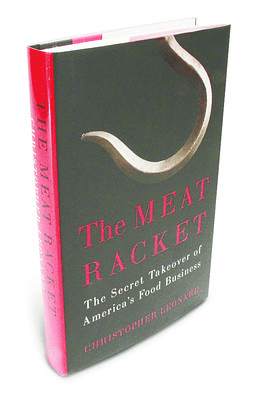
meat racketTyson Foods is now the largest meat-producing company in the world, the leading member of an “oligarchy” of companies whose hold on the American meat industry Christopher Leonard examines in his gripping The Meat Racket.  Mr. Leonard’s focus isn’t the treatment of animals in factory farms; nor is it taste or quality, although some unpleasant facts emerge.  He is primarily concerned, writes The New York Times (March 13, 2014), with how these corporations gained control of the business from farm to table. The 95% of Americans who eat chicken, he contends, support a system that “keeps farmers in a state of indebted servitude, living like modern-day sharecroppers on the ragged edge of bankruptcy.” Many chicken farmers don’t even own the chickens they raise.

As Tyson expanded, it would take over all the businesses that used to make up a small-town economy. “It owns the feed mill, the slaughterhouse, and the hatchery. It owns the trucking line and the food-processing plant where raw meat is packaged and cooked into ready-to-eat meals.” This system has “provided tremendous benefit to American consumers,” Leonard acknowledges. Chickens grow bigger faster, even while eating less feed, and meat has gotten much cheaper. Between 1955 and 1982, the time it took to raise a chicken dropped to 52 days from 73.

After pioneering their model in the poultry business—and, to their triumph, getting the chicken McNugget on the menu at McDonald’s, Tyson set out to “chickenize” first the hog and now the cattle business. It has faced fierce resistance in the latter, but its practices still help set the standard for the entire industry. Tyson was one of the first companies to use a growth hormone called Zilmax, which causes cattle to put on weight with astounding results. “The animals blow up like muscled balloons,” Leonard writes, adding that the hormone also makes the meat leaner and cheaper to produce—in other words “more like chicken.” Tyson stopped using Zilmax last year after critics raised concerns that cows were becoming paralyzed. (Chickens are bred to grow huge breasts so as adults they can barely breathe or stand).

The ethics involved in the industry makes for a good class discussion in a number of text chapters.