
It was 50 years ago when a company called Unimation rolled out the world’s first industrial robot—for use in a GM plant in NJ. The American firm’s product weighed in at 4 tons and did a good job at welding. But by 1991, a U.S. Commerce Dept. national security assessment warned: “The U.S. is nearly out of the industrial robot business”. To this day, Swiss-based ABB and Fanuc (of Japan) dominate the $12 billion global market for manufacturing robots.
What is a service robot? It’s a robotic machine for defense, space, health 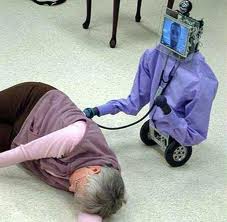 care, logistics, consumer products, and e-tailing, among other markets. For example, iRobot makes Roomba floor cleaning machines and PackBot, a robot that searches caves for bomb disposal. Boston Dynamics makes Cheetah, a cat-like robot that runs 40 mph to scout out enemy positions. Aethon’s product is TUG, which automates the movement of medications, equipment, and meals in over 100 hospitals. Intuitive Surgical makes the daVinci robotic surgical system whose arms make (supposedly) more precise incisions than the MDs running them. And Kiva makes mobile robots to move goods and fulfill orders at e-tailers (see our blog on Kiva).
Why the comeback? Government funding, particularly from DOD, has helped. Big defense budgets financed the development of 1,000s of robots for deployment to Iraq and Afghanistan this past decade. But open-software systems have helped as well. Free software from Microsoft and Willow Garage encourages researchers to develop new applications, while deep venture capital markets have provided the money.
Discussion questions:
1. What are the strengths and weaknesses facing this relatively new industry in the U.S.?
2. How does the use of service robots relate to the field of OM?