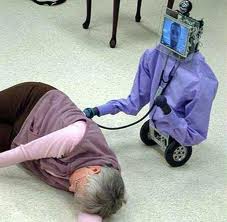
OM in the News: An Army of Robots is Coming

A new wave of robots is arriving—and, in a world short of workers, businesses are eager to welcome them. A combination of hard-pressed employers, technological leaps (like vision systems) and improved cost effectiveness has fueled this rapid global expansion. A half-million “industrial robots” were installed globally last year, an all-time high. There are now 3.5 million in use..

This amounts to a titanic shift in the way things are made, transported and even consumed, ushering in a “roboconomy,” states The Wall Street Journal (Oct. 15-16, 2022) In the future, says WSJ, we will depend on robots to grow our food, make our goods, care for our elderly and continue to grow the global economy.

Tesla just unveiled its humanoid robot called Optimus that it plans to sell for less than $20,000 and use in car production. “It will, I think, turn the whole notion of what’s an economy on its head, at the point at which you have no shortage of labor,” said Elon Musk.

The “service” robot industry, which basically encompasses every kind of robot that isn’t bolted to the floor, is also growing at a rapid pace. These service robots include everything from autonomous cleaning robots scouring the floors of your local grocery store—nearly all Sam’s Club and Walmart already has one—to delivery robots and mobile robots taking over jobs like unloading trucks.

An autonomous floor scrubber

“Starting in 2018, many workers could no longer be counted on to show up for their after-hours cleaning shifts, and even when they did, they often weren’t doing a very good job,” says the VP of Schnuck Markets, which operates 112 supermarkets. Labor shortages worsened during the pandemic, leading Schnuck to test autonomous floor-scrubbing robots. “We used a shine meter to see how much shine we got on the floor, and it was beating the quality from human-driven scrubbers,” he says.

The convergence of three forces is driving the robot renaissance: (1) demographic trends in rich countries mean there simply aren’t enough workers; (2) robots have become more capable, more quickly, than at any other point since their earliest adoption; and (3) surging human labor costs and more-capable robots mean the amount of time it takes a new robot to pay for itself is shrinking.

Classroom discussion questions:

  1. How else can robots be used in the service sector? (See Table 7.3 in your Heizer/Render/Munson text).
  2. Elon Musk once said: “humans are underrated” and excessive automation at Tesla was a mistake. Why the change?

OM in the News: Who Comes to the Rescue of Stranded Robots? Humans

A stuck robot in Berkeley.

Fannie Osran just had to help. The student at the UC, Berkeley, came upon a food-delivery robot, one of 120 deployed around campus, in front of a long flight of

stairs. The cooler-sized robot can’t navigate stairs, so it immediately backed up into a plant bed—where it got stuck in some mud. Ms. Osran told it, “You’re so pathetic.” She lifted the robot back onto the sidewalk, and it flashed heart eyes at her on its digital display as it rolled off.

Robotics companies are jumping into food delivery, testing out different models in limited areas, writes The Wall Street Journal (April 11, 2019). While people fear that robots will someday take over everyone’s jobs –for now, the prototypes can run into trouble just getting a burger and fries to a dorm. As the competition

Agility Robotics’s delivery robot.

among automated delivery services heats up, robot makers see winning over love from pedestrians—and local officials—as paramount to helping expand into communities and ease potential regulations.

Researchers also staged stuck robots in public, then hid in nearby restaurants and office buildings to see if anyone helped. They found people helped the robots more often when they emitted audible signals for help.

Oregon-based Agility Robotics builds walking robots that could be used for delivery. They resemble a headless person. “We don’t aspire to be cute. We’re definitely not going down that road,” said the CEO, noting that cute rolling robots can’t handle obstacles like stairs.

Classroom discussion questions:
1. Will these delivery robots be ubiquitous in 5 years?

2. Name other industries where “service robots” can make an impact.

OM in the News: Food Delivered by Robots at GMU

GMU’s robots deliver meals to students and faculty via an app

At most universities, meal plans allow college students to take advantage of on-campus cafeterias or chow down at local restaurants. Now, writes The Washington Post (Jan. 22, 2019), thousands of students at George Mason University will have another dining option at their disposal: on-demand food delivery via an autonomous robot on wheels. The school has a fleet of 25 Starship Technology delivery robots that can haul up to 20 pounds each as they roll across campus at 4 mph. Robots make deliveries in 15 minutes or less. GMU is the first campus in the country to incorporate robots into its student dining plan and has the country’s largest fleet of delivery robots.

The company’s app allows GMU students to order food from places such as Blaze Pizza, Starbucks and Dunkin,’ as well as a grocery store and other options. Once an order has been placed, users drop a pin where they want their delivery to be sent. The robot’s progress can be monitored using an interactive map. Once the machine arrives, users receive an alert, allowing them to unlock the robot using the app. The delivery cost–$1.99.

To navigate the campus, robots rely on A.I., ultrasonic sensors and 9 cameras. Two-way audio on board allows users to communicate with “human teleoperators” who monitor the robots from afar. The robots can cross streets, climb curbs, navigate around obstacles and operate in rain and snow.  Sodexo, which runs campus dining, says that “the delivery robots are at the forefront of changing trends.”

“Students and teachers have little free time as it is, so there is a convenience for them to have their food, groceries and packages delivered to them,” said Starship Technology’s VP. “Our goal is to make life easier, whether that means skipping the line, or finding the time to eat better when studying for exams. Commuters can even meet the robot on their way into class.”

Classroom discussion questions:

  1. Would this be popular and efficient on your campus?
  2. What concerns might you have regarding this new concept?


OM in the News: The Grocery Robot is Here


A Starship robot on its way to deliver groceries

The first time you encounter a fully self-driving commercial vehicle, odds are it will be delivering your groceries rather than ferrying you to your destination. There are a number of reasons things are trending this way, including laws, physics, the nature of existing infrastructure, and the size of the addressable markets. Autonomous delivery could transform all of retail, further accelerating the shift from stores to e-commerce. “With sufficiently inexpensive autonomous delivery services, we might stop going to the grocery store, or at least stop carrying our groceries home,” writes The Wall Street Journal (Jan. 5-6,2019).

In a demo that also took place in December, autonomous delivery company Nuro showed off a robot designed to drive on the street, at a maximum speed of 25 miles per hour. Half the width of a normal car, Nuro’s R1 robot is intended to sacrifice itself in the event of a crash with a cyclist, pedestrian or other vehicle. Making vehicles that don’t go too fast also allows these companies to make use of a regulatory loophole. A federal and state standard for “low-speed vehicles” has long allowed automakers to create vehicles that lack traditional safety features, as long as they move no faster than 25 mph.

Grocery delivery is especially ripe for disruption because at present it’s prohibitively expensive for most consumers. Between 2-4% of the $641 billion worth of groceries purchased every year in the U.S. are bought online. In 2017, Daimler invested in Starship, which makes a robot about the dimensions of a medium-size dog. The company’s robots are already making deliveries of both food and packages in the outskirts of London.

Classroom discussion questions:

  1. Why might delivery robots proliferate more quickly than driverless cars?
  2. What are some  of the disadvantages of autonomous delivery?

OM in the News: Meet Zora, The Robot Caregiver

This is Zora. It may not look like much — more cute toy than futuristic marvel — but this robot is at the center of an experiment in France to change care for elderly patients. When Zora arrived at this nursing facility near Paris, a strange thing began happening: Many patients developed an emotional attachment, treating it like a baby, holding and cooing, giving it kisses on the head. Zora offered companionship in a place where life can be lonely. Families can visit only so much, and staff members are stretched. Patients at the hospital have dementia and other conditions that require round-the-clock care.

Zora often leads exercises and plays games. It can have a conversation because the nurse (out of view) types words into a laptop for the robot to speak.

Zora doesn’t dispense medicine, take blood pressure or change bedsheets, but its Belgium-based provider has sold over 1,000 of the robots (at $18,000 each) to health care facilities around the world. In nearly every country, the population of older adults is rising. The number of people over 60 will more than double to 2.1 billion by 2050.

There simply won’t be enough people for the required health care jobs, so new technology must be created to help fill the void, writes The New York Times (Nov. 27, 2018). The challenge is particularly acute in France, where hospitals have been facing a national crisis, with health care professionals striking and protesting budget cuts and staff shortages. In Australia, a hospital using a Zora found that it improved the mood of some patients, and got them more involved in activities. And patients have told the robot things about their health they wouldn’t share with doctors.

Classroom discussion questions:

  1. What can and can’t Zora do?
  2. Where else can “service robots” make their mark?

OM in the News: What’s Next–A Robot That Folds Your Laundry?

Why am I not surprised that the Start Up Nation (title of a great book about Israel’s inventions), which brought us Mobileye, the Pill Cam, the Intel 8088, Waze, USB flash drives, Viber, drip irrigation, and the cherry tomato, now brings FoldiMate. After all, cars can now drive themselves. Cellphones talk to us. How long will it be until the dreams of every college student and overworked parent come true — and laundry can fold itself?

FoldiMate is about two-thirds the size of a washer or dryer. The user simply hangs or clips the shoulder area of the shirt on 2 hooks and steps back. The device pulls the shirt in. A series of rollers and arms that also move up-down-sideways straighten and fold the item of clothing. A typical laundry hamper of clothes can be folded in about 3 minutes. Laundry is deposited in a tray at the base of the machine.

 FoldiMate works by analyzing each garment it takes in, figuring out its ideal folding shape and delivering a drawer-ready stack of smoothly folded clothes. It look like a mash-up of a clothesline and a plastic oven, writes The New York Times (May 25, 2017).

“The whole idea is to have the experience of handing items over to a friend, who will do that hard labor for you,” says Gal Rozov, the inventor. “My wife claims I’m one of the worst laundry folders in the world, and she’s right. I hate it. We have 3 kids, and laundry folding is tedious, and I wanted some way to help out.”

Via a crowdfunding campaign on its website, FoldiMate has taken in about 8,000 deposits of $85. The company aims to start deliveries of the $850 product next year.

Classroom discussion questions:

  1. What other famous inventions have come out of Israel?
  2. Will this product eventually be like the bread machine–an off gifted but rarely used appliance?


OM in the News: The Pizza Technology War Wages in Asia

Pizza Hut's Pepper robot
Pizza Hut’s Pepper robot

“The next battle in the pizza technology wars has dawned as Pizza Hut Asia just announced that it will test an order-taking robot that uses artificial intelligence to interact with customers,” writes The Wall Street Journal (May 25, 2016). Rival Domino’s Pizza said that it is testing an autonomous vehicle for delivering pies to customers in Australia. Domino’s Robotic Unit interacts with customers through lights on a display and navigates around obstacles on footpaths and roads. The two pizza companies have long battled on the technology front, including promoting smart watches, connected cars and retinal scanning for order and delivery.

With Pizza Hut Asia, MasterCard announced Tuesday that it is has embedded its MasterPass mobile wallet into the robot, dubbed Pepper, that the pizza chain is testing in restaurants in Japan.  As customers approach and speak to Pepper, the robot can read facial expressions and understand natural language. Pepper, for example, can judge a customer’s mood and perhaps offer add-on products, trying to capitalize on how the customer is feeling. MasterCard plans to study the Pizza Hut transactions to see if there is an increase in order size for customers who interact with the robot.
Internet connected machines, including wearable devices and robots, can help companies personalize service in retail stores and other venues by accessing data about customers and applying algorithms to make tailored offers on the spot. By experimenting with robots, MasterCard hopes to learn how customers react to the technology and whether they begin to conduct financial transactions with the machines. The number of Internet of Things devices is expected to jump to 21 billion by 2020, from about 6.4 billion today.


Classroom discussion questions:

  1. What is the “Internet of Things” (IOT)?
  2. Why are restaurant chains exploring these new technologies?

OM in the News: Japanese Hotel Lets Robots do the Heavy Lifting

A receptionist robot, accompanied by two other robots, greets a hotel guest demonstrating how to check in the new hotel
A receptionist robot, accompanied by two other robots, greets a  guest checking in at the new hotel

The English-speaking receptionist is a vicious-looking dinosaur, and the one speaking Japanese is a female humanoid, writes The Guardian (July 15, 2015). “If you want to check in, push one,” the dinosaur says. The visitor punches a button on the desk, and types in information on a touch panel screen. From the front desk to the porter that’s an automated trolley taking luggage up to the room, the Henn na Hotel in southwestern Japan, is manned almost totally by robots to save labor costs. The hotel uses facial recognition technology, instead of the standard electronic keys, to register the digital image of the guest’s face during check-in. The reason? Robots aren’t good at finding keys if people happen to lose them.

A giant robotic arm, usually seen in manufacturing, is encased in glass quarters in the corner of the lobby. It lifts one of the boxes stacked into the wall and puts it out through a space in the glass, where a guest can place an item in it to use as a locker. The arm will put the box back into the wall until the guest wants it again. The system is called “robot cloak room.” The concierge is a robot with voice recognition that prattles breakfast and event information.

Japan is a world leader in robotics technology, and the government is trumpeting robotics as a pillar of its growth strategy. Robots have long been used here in manufacturing. But interest is also high in exploring the potential of robots in human interaction, including helping care for the elderly. Robotics is also key in the decommissioning of the three reactors in Fukushima.

Classroom discussion questions:

1. What are the advantages and disadvantages of this robot-driven approach?

2. What can’t the robots do at the hotel?

OM in the News: The Rise of the Robot Work Force Stokes Human Fears

Robotic bellhop delivers fresh towels to a Silicon Valley hotel

A machine that administers sedatives recently began treating patients at a Seattle hospital. At a Silicon Valley hotel, a bellhop robot delivers items to people’s rooms. Last spring, a software algorithm wrote a breaking news article about an earthquake that the Los Angeles Times published. “Although fears that technology will displace jobs are at least as old as the Luddites, there are signs,” writes The New York Times (Dec.16, 2014), “that this time may really be different.” The technological breakthroughs of recent years — allowing machines to mimic the human mind — are enabling machines to do knowledge jobs and service jobs, in addition to factory and clerical work.

Economists long argued that just as buggy-makers gave way to car factories, technology would create as many jobs as it destroyed. Now many are not so sure. Artificial intelligence has become vastly more sophisticated in a short time. Self-driving vehicles are an example of the crosscurrents. They could put truck and taxi drivers out of work — or they could enable drivers to be more productive during the time they used to spend driving, which could earn them more money.

The challenge is evident for white-collar jobs, too. Ad sales agents and pilots are two jobs that the Bureau of Labor Statistics projects will decline in number over the next decade. Flying a plane is largely automated today and will become more so. (Boeing, by the way, announced last week that it is preparing for 1-pilot commercial jets). And at Google, the biggest seller of online ads, software does much of the selling and placing of search ads, meaning there is much less need for salespeople. Telemarketers are among those most at risk, adds The NY Times.

Classroom discussion questions:

1. Is artificial intelligence having as great an impact as the article suggests?

2. What other service applications can robots help perform?

OM in the News: The Bellhop Robot


A touch screen on Botlr allows guests to give the robot a review

“Think of it as the Terminator’s human-friendly sibling,” writes The New York Times (Aug.12, 2014). In the Aloft  hotel lobby in Cupertino CA, a desk clerk places a razor in the bin of a 3-foot-high robot and taps in a room number on a display. The robot, “Botlr,” chirps an R2-D2-style acknowledgment and rolls off to an elevator and its final destination. On the move, it can reach speeds of up to 4 miles per hour, adequate for Botlr to hustle razors, toothbrushes, smartphone chargers, snacks and the morning paper to any of the hotel’s 150 rooms in 2-3 minutes.

When the robot reaches the guest’s door, the system calls the room, alerting the guest to the delivery. The robot, which has a camera and other sensors, can recognize that the room door has been opened and then lift the lid on the storage bin that holds the delivery. A flat panel display at the top of the robot is used for the guest to enter a “review” rather than giving a tip. In return for a positive review, the robot will do a small dance before it departs.

Perhaps the most impressive capability of the new robot is its ability to independently make its way to upper floors. When it reaches the elevator, it wirelessly sends a command for the door to open and then maneuvers into the elevator car, taking care to stay out of the way of any human passengers. When it returns to the lobby, Botlr can plug itself into a recharging station while it awaits its next errand. As a hotel application, the robot can free up the hotel desk clerk from having to run up to the room, giving the staff more time with the guests.

Classroom discussion questions:

1. How else can service robots be used in hotels?

2. What are the advantages and disadvantages of Botlr, from an OM perspective?

OM in the News: The Rise of the American Service Robot

It was 50 years ago when a company called Unimation rolled out the world’s first industrial robot—for use in a GM plant in NJ. The American firm’s product weighed in at 4 tons and did a good job at welding. But by 1991, a U.S. Commerce Dept. national security assessment warned: “The U.S. is nearly out of the industrial robot business”. To this day, Swiss-based ABB and Fanuc (of Japan) dominate the $12 billion global market for manufacturing robots.

The U.S. is back, however, in a new, and even larger, service robot market, with 70 of the top 200 firms globally here–twice as many as in Japan or France, according to the latest Businessweek (March 7,2011).

What is a service robot? It’s a robotic machine for defense, space, health care, logistics, consumer products, and e-tailing, among other markets. For example, iRobot makes Roomba floor cleaning machines and PackBot, a robot that searches caves for bomb disposal. Boston Dynamics makes Cheetah, a cat-like robot that runs 40 mph to scout out enemy positions. Aethon’s product is TUG, which automates the movement of medications, equipment, and meals in over 100 hospitals. Intuitive Surgical makes the daVinci robotic surgical system whose arms make (supposedly) more precise incisions than the MDs running them. And Kiva makes mobile robots to move goods and fulfill orders at e-tailers (see our blog on Kiva).

Why the comeback? Government funding, particularly from DOD, has helped. Big defense budgets financed the development of 1,000s of robots for deployment to Iraq and Afghanistan this past decade. But open-software systems have helped as well.  Free software from Microsoft and Willow Garage encourages researchers to develop new applications, while deep venture capital markets have provided the money.

Discussion questions:

1. What are the strengths and weaknesses facing this relatively new industry in the U.S.?

2. How does the use of service robots relate to the field of OM?