
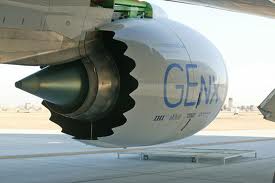
 Yesterday’s Wall Street Journal (Feb.7, 2013) brings news of yet another firm’s recovery from the U.S. outsourcing addiction: GE is busy bringing work on its jet engines back in-house. This year, GE plans to open a pair of parts factories in Mississippi and Alabama and soon will announce the location of a third. The firm also agreed to buy Italian parts supplier Avio for $4.4 billion, has acquired a 3-D printing company, and is in joint-ventures with a component casting company in Montana and a high-tech ceramic parts firm.
The strategy, writes The Journal, ” is aimed at safeguarding a key source of the industrial conglomerate’s sales.” Aircraft engines account for about half of GE’s $211 billion order backlog, and the company can’t afford missteps (like the ones Boeing faced on its 787) as it gets ready to roll out new designs to power the next generation of commercial jetliners. “We want more under our control,” says the head of supply chain management for GE Aviation. “Rather than pay a supplier to do it, we would like to protect our intellectual property.”
By doing more of the work itself, GE expects to (1) protect its technology, (2) speed up development and (3) secure supplies of needed components. The move is a turnabout for the company that helped pioneer soup-to-nuts U.S. manufacturing and then switched gears to help pioneer industrial outsourcing. Further, GE now plans to replicate its new vertically integrated approach across its businesses from gas turbines to medical imaging devices to subsea oil wells. The trend shifted toward bringing work back in-house in recent years and gained steam after events like flooding in Thailand and the tsunami in Japan made clear that multinational companies’ supply lines had grown too long and fragile.
Discussion questions:
1. Describe GE’s move in the context the outsourcing risks in Table S11.2.
2. What are the causes for this change in operations strategy?