For most of the aviation industry, the Airbus A380 is remembered as an engineering marvel that never made commercial sense. Airbus expected to sell more than 1,200 aircraft when it launched the program in 2000 but ultimately delivered just 251 before ending production in 2021, reports Arabian Gulf Business Insight (July 13, 2026). This was a direct result of a lack of orders, resulting in production capacity outpacing demand

Airbus launched the A380 for a future dominated by congested mega-hubs, while airlines increasingly favored smaller, more efficient long-haul aircraft such as the Boeing 787 and Airbus A350. Those jets made it easier to fly nonstop between more city pairs, leaving the A380 exposed to high operating costs, limited route flexibility, and dependence on consistently full flights.
For airline planners, a carrier did not need 500 or more passengers to make a route viable. A 787 or A350 could carry 250 to 330 passengers over long distances while using two engines instead of four. That made it easier to match capacity to demand, add seasonal routes, increase frequency, or serve thinner markets. More frequent flights on smaller aircraft also appealed to business travelers, who often value schedule choice more than the prestige of flying on the largest aircraft.
The A380 was not discontinued because it was a technical failure. It was discontinued because its economics became difficult for most airlines to make work consistently. A fully loaded A380 could move a huge number of passengers efficiently between major hubs, but the aircraft’s advantage depended heavily on high seat occupancy, strong premium demand, and routes large enough to support hundreds of seats year-round.
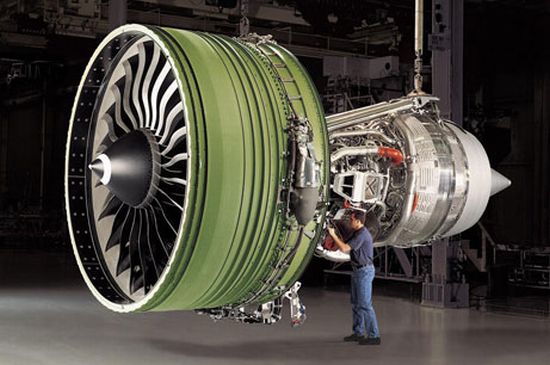
Four engines were one of the biggest cost disadvantages. By the time the A380 entered service, long-range twin-engine aircraft were becoming increasingly capable, and the 787 and A350 could fly many long routes with far less fuel burn and lower maintenance complexity. The A380 required expensive maintenance and specialized operational support. Its size meant larger landing gear, more tires, more brakes, bigger systems, and extensive cabin areas to inspect and maintain. Even routine cleaning, catering, and boarding involved more time and labor.
In the end, its operational advantages became harder to unlock.
Classroom discussion questions:
- What airplane had a shorter life cycle?
- What plane has a longer life cycle?
.