
Supply-chain flexibility has been an overarching goal for companies in the wake of the pandemic, with manufacturers looking to build more resilience in their operations. Toy makers like Mattel face a broader challenge as kids’ attention moves toward videogames and smartphone apps, reports The Wall Street Journal (Oct. 14, 2024).
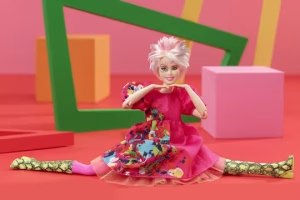
When “Weird Barbie” became an unexpected breakout hit of the “Barbie” movie, Mattel kicked its new supply chain strategy into action. It accelerated the doll’s design and manufacturing process to tap in to the attention to the character, rapidly bringing the doll to store shelves. It was one example of how Mattel has revamped its supply chain, shuttering some factories, outsourcing production at others and fine-tuning work at some sites.
The idea has been to reset a supply chain long focused on relatively predictable seasonal patterns in the children’s toy market to make it more flexible to respond to rapid shifts in consumer demand.
To align its supply chain more closely with event-driven sales, Mattel has closed or sold five factories and invested in its sites in Mexico and Asia. It has cut the number of products it makes by 45% to get rid of less popular items.
Trimming the variety of toys it sells has helped better forecast shopper demand, reduce inventory and improve in-stock levels. Inventories fell to $777 million from $972 million a year earlier. Cutting items that don’t sell as quickly means “there’s less complexity overall in your supply chain, and you’re not having to try to manage so many different inventory items,” said an Auburn U. prof.
The company also moved to outsource more manufacturing. Although using contract manufacturers costs more than making the toys at its own factories, it can help keep Mattel from getting stuck with unused capacity when demand drops off.
Mattel has also adjusted its supply chain to react quickly to unexpected demand when toys go viral online, as it did with “Weird Barbie.” When the company needs to quickly get goods to shelves, it makes some items at its factory in Mexico, close to U.S. customers, and absorbs the higher manufacturing costs, or it airfreights products to the U.S. from Asia.
Classroom discussion questions:
- What is Mattel doing to revamp its supply chains?
- How has “Weird Barbie” impacted decisions at the firm?