OM in the News: Innovation is a Messy Business

Grounded Japanese 787s

In Chapter 5, Design of Goods and Services, we talk about how new products are the heart of a great company. 3M, for example, introduces a new product every day! But The Wall Street Journal (Jan. 24, 2013) headline warns: Innovation is a Messy Business. Writes the Journal, “Aviation innovation is especially risky because the stakes are so high. A crashed laptop might lose data, but a crashed plane kills people.” Unlike 3M products, entirely new jetliners get developed only about once a decade, costing billions of dollars.

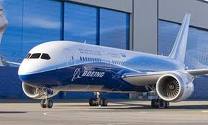
Nine years ago, Boeing  decided to take the biggest leap in airliner technology in a generation and develop the 787 Dreamliner. Boeing promised it would burn less fuel while flying farther and offering more passenger comfort than existing models. The 787 also showed Boeing’s “commitment to innovation.” Airlines, eager to save money and woo fliers, ordered a record numbers of Dreamliners.

We in academia have made “innovation” a buzzword for competing in the global economy. Boeing’s experience offers a reminder that innovation—for all its value—doesn’t come as easily as a catchphrase. It can get messy. Boeing, an icon of  ingenuity, has reshaped travel over the past half-century with bold technological leaps such as the 747 jumbo jet. But the 747 first nearly bankrupted the company due to technical problems. Boeing’s backers say the Dreamliner will prove just as revolutionary.

The 787’s problems again show the traumas that innovation can bring. Boeing said the plane would leapfrog advanced technologies at Airbus. It would rely more on electricity to run its systems than existing planes, which used hydraulic and pneumatic power. To convince wary airline executives that carbon-fiber body material was strong, Boeing sales teams carried samples and hammers, letting airline executives whack the composite with all their might. Airlines signed on, knowing the risk.

Discussion questions:

1. What are the main operations problems facing the 787?

2. Why did Boeing risk introducing such a radically different plane?

OM in the News: 3-D Printers–The Next Frontier in OM

When the dishwasher in a Boeing cafeteria in St. Louis broke down recently, the  company’s plumber didn’t want to wait for a plastic replacement part to be shipped to the site. He asked an engineer to replicate the part on a computer screen and “print it out”. That took about 30 minutes. Hence we witness the start of another major OM advancement –the 3-D printer revolution (as reported in The Wall Street Journal, July 14-15, 2012).

Pratt & Whitney’s aircraft-engine unit is using the 3-D process to make blades and vanes in compressors inside jet engines. Honeywell’s aerospace unit employs it to build heat exchangers and metal brackets but expects to find far more applications. Boeing already makes about 300 different smaller aircraft parts using 3-D printing, including ducts that carry cool air to electronic equipment. Some of these ducts have complicated shapes and formerly had to be assembled from numerous pieces, boosting labor costs.

Abe Reichental, CEO of 3-D Systems, a printer manufacturer, says the technology also will “re-localize” manufacturing of many items. He notes that printers, costing from $500 up to $1.2 million, can be set up almost anywhere, which will allow for production of items when and where they are needed and eliminate the costs of shipping and warehousing. The Defense Department is enthusiastic about the technology, which could at some point allow it to make parts in the field rather than waiting for them to be shipped from another continent.

3-D printing also is “an enabler” for entrepreneurs who want to make products but can’t afford elaborate factories and don’t want to entrust their manufacturing to faraway firms, says Reichental. They wouldn’t need to create expensive tools or molds. Some makers of 3-D printing equipment believe that car-part stores eventually will keep their inventories in digital form—as software containing the instructions for making each item—and print out items on demand.

Discussion questions:

1. How can new start-up businesses benefit from this tool?

2. What are the disadvantages of 3-D printers?

OM in the News: Outsourcing Leads to Delays For The Airbus 350

Just as aggressive outsourcing  a decade ago on its 787 Dreamliner caused Boeing to stumble, Airbus now faces exactly the same issues as it prepares its direct competitor, the A350. The Wall Street Journal (July 11, 2012)  writes that both companies have lurched through a string of expensive and embarrassing crises while developing their new airplanes. To recover, the competitors are rethinking how they build jetliners. What is emerging is a middle path between outsourcing, which has reshaped the aeronautical industry over recent years, and the highly centralized production systems that preceded it.  In a major retreat, Boeing  has since bought up suppliers, brought work back in-house and integrated more closely with its remaining contractors. Manufacturing problems on the 787 have left Boeing with more than 40 almost-completed Dreamliners awaiting fixes. Customers are getting their planes 4 years late.  For a second, larger version of the Dreamliner, Boeing opted to design many outsourced components itself.

Airbus found internal coordination was equally daunting. The A350 team pressed  plants  to agree on common standards and buy identical equipment. Some  “partners”  balked at spending hundreds of thousands of dollars for the digital “tool set” of software to access A350 blueprints. By 2010, A350 blueprints were running late and the project was delayed 6 months. Last spring, bad news again surfaced. Lower-tier contractors were struggling to deliver parts on time.  Preparations to manufacture composite parts took longer than the setup for metal parts had. As parts arrived late, delays rippled upstream. Large sections of the first test airplanes weren’t ready for assembly. Airbus could rush the unfinished fuselage parts together and appear on schedule (as Boeing had done), even though it would be harder to complete tasks later, out of sequence. It chose to delay yet another 6 months.

Airbus now monitors 450 suppliers  world-wide. “We don’t know everything, but we know all about the risky ones,” says the A350 VP.

Discussion questions:

1. What are the advantages and disadvantages of outsourcing in this industry?

2. What is the impact of a plane delayed by 2-3 years?

OM in the News: Boeing’s Self-Directed Work Teams Speed Up 737 Output

The Wall Street Journal (Feb.7, 2012) provides a great example of the self-directed work teams we discuss in Chapter 10 (Human Resources, Job Design, and Work Measurement). Boeing started emphasizing such employee groups in the late 1990’s, when its 737 plant in Renton, WA, began adopting lean manufacturing techniques from Japan’s auto industry.  Now Boeing is forming more of the teams as it attempts to make big gains in production (there is a backlog of 2,300 of the 737 model), while holding down costs. There are currently 1,300 teams in its commercial jet programs.

Employee teams meet once a week and are composed of 7-10 workers with varying backgrounds (mechanics to engineers)–and they tend to focus on a particular part of the jet (like bathrooms). A big issue at the plant is how to produce more aircraft without expanding the building.

Here are some of the worker-led improvements: (1) canvas covers for landing gear tires as  the planes come down the assembly line (stray metal fasteners on the factory floor used to puncture the $10,000 tires)–saving $250,000/year; (2) rearranging work cells to prep 4 engines at a time (instead of 3) for attachment to the planes; (3) revamping the paint shop work routines to cut 10-15 minutes off each job; and (4) taking the 650 tubes going into a wheel-well and have easier-to-install subassemblies prepared in advance at another plant instead.

The result: workers recently boosted output from 31.5 Boeing 737s a month to 35/month, with an aim to make 42/ month by 2014–all in the same sized plant. The company now takes  11 days for final assembly, down from 22 days a decade ago.

Discussion questions:

1. Why doesn’t every company use such teams?

2. Why is Boeing trying to increase throughput so quickly?

OM in the News: Boeing Wants Production Faster, Faster, Faster

There are not many businesses in which the next 6 years’ worth of customers form an orderly queue, put down fat deposits, and make futher installments as they wait for delivery. But Boeing, reports The Economist (Jan.28,2012), has such a backlog (and 2011 profits of $4 billion). The key to continued success, though, is ramping up production to meet the soaring demand–an operations issue if there ever was one.

At its Renton factory (near Seattle), 737s are being churned out at a record rate of 35/month after a recent speeding up of the 2 assembly lines. The plan is to increase to 42/month by 2014, squeezing a 3rd line into the giant hangar. Likewise, at Boeing’s nearby Everett  factory and at a 2nd plant in South Carolina, plans are to turn out 10 giant 787 Dreamliners/month by the end of 2013.

These assembly plants are the final stage in a long and hugely complex global supply chain that we describe in the Global Company Profile in Chapter 2. Boeing has about 1,200 tier one suppliers, providing parts coming in from 5,400 factories in 40 countries. These in turn are fed by thousnads more tier 2 suppliers, which themselves receive parts from countless others.

Boeing is the first to admit that it outsourced too much work on the 787, leading to 2 years of delays and 40 unfinished jets parked on runways in several states awaiting final parts. Some work has been brought back in-house, and a “war room” has been set up to constantly monitor the world’s supply of parts and raw materials. Boeing just signed a long term contract with the Russians to ensure a steady stream of titanium. It has also hired 100’s of “examiners” to visit suppliers to check that they are building production to meet Boeing’s rush to expansion.

Discussion questions:

1. Why is Boeing working more closely with suppliers now?

2.What is the danger in ramping up production dramatically?

OM in the News: Boeing Checks Out its Supply Chain for Weak Links

Boeing’s production problems with its 787 Dreamliner have taught it to stress-test  suppliers as it tackles a mountain of orders for its best-selling 737 jets. In the past, “We had much more of an attitude of: We’ll set the requirements and you have to go do your job”, says Boeing’s VP for the 737  in The Wall Street Journal (Dec.30,2011). Now, it is using “a fundamentally different approach”, by regularly verifying that suppliers have the right skills.

This is part of a critical effort to boost production by about 60% (or 300 jets a year) to work down a backlog of 3,500 orders worth $270 billion. To do so, Boeing has added 200 supply chain specialists in the last 18 months. They visit vendors frequently as part of the strategy to remove bottlenecks and delays that have hobbled previous ramp-ups. Take Vaupell Holdings, for example– one of 1,000 suppliers subject to exhaustive reviews of production tools, materials and schedules. A Boeing employee visits almost daily now, as compared to once a week in the past.

Airplanes are one of the most complex industrial products. Jets at Boeing contain several million parts, coming from 1,200 direct suppliers and many more 2nd and 3rd tier suppliers. Problems down the supply chain, such as shortages of machines used to mold certain components, can cause delays that ripple not just across Boeing, but through the whole commercial airplane industry. Boeing execs say their heightened sensitivity to the supply chain stems from the troubles it had in producing the first 787s, which depend heavily on parts made  outside Boeing.

Discussion questions:

1. Why is Boeing so concerned about its suppliers?

2. What happens when the supply chain suffers severe disruptions?

OM in the News: America’s Hottest Export is Weapons

If we worry about America’s loss of manufacturing, the Fortune (Feb.28,2011) cover story today will bring some comfort. The magazine cover pictures a US-made missile for sale –and the article begins thus: “This time last year, Boeing’s F-15 production line, which is housed in a beige, dreary building on the outskirts of Lambert- St. Louis Int’l Airport, was on the verge of shutting down”.

This really caught my attention as I had earlier worked in that very same dreary building on the F-4 design team!  The really good engineers were in a locked room I could never enter, as they were working on the F-15 in total secrecy. The F-15 was a true power in its heyday. But the US stopped buying the plane a decade ago and production was down to one F-15 a month and due to close. This would have cost 100’s of manufacturing  jobs during an already bad economy.

Then up stepped Saudi Arabia, with a $60 billion arms package a few months ago that included 84 F-15s. The deal means the production line stays open til at least 2018. DOD’s plan to sell $103 billion in weapons overseas this year is a staggering rise from an average of $13 billion between 1995 and 2005….and is rescuing American manufacturing and exports in a big way.

Also in the news: a $4 billion plane deal with India in 2011 (in addition to $2.1 billion in 2009) and a shot at a $10 billion sale of 126 jet fighters. Egypt bought $2 billion in weapons in 2009 and Jordan $431 million. (You might be wondering what happens to those arms when regimes are overthrown–the State Dept. certainly does). WikiLeaks just confirmed what most already know: American diplomats are pitchmen for the US-made arms industry, a major source of  high-paying, highly skilled manufacturing jobs.

Discussion questions:

1. Why is the arms industry so important  and who are our major competitors?

2. What do companies typically have to do to get major contracts abroad?

3. Is it fair to say,”As Boeing goes, so goes the country”?

OM in the News: Making the 737 a Better Product

The hottest fashion sensation on the runway this spring  is a new design from the house of aluminum couture, Boeing. Rather than a major redesign of its all-time best-seller, the 737, Boeing has chosen the route of product enhancement (which we discuss in Ch.5). The Wall Street Journal (Feb.24,2011) reports that airlines have been pushing for an update on the plane, which has been around since 1967.

But what makes Boeing’s action to redesign the jet more interesting is that for the first time, it went directly to passengers, not the airline buyers, for direct feedback. Focus groups around the world were put in different mockups of cabin interiors to get their reactions. (This reminds me of how Arnold Palmer Hospital mocked up  rooms in a warehouse to see what future patients thought would be a good layout...see our video case in Ch.9). In the past Boeing’s primary design goal was function, not passenger psychology.

In the new design/layout, which does not impact the 737’s exterior or performance, or even interior seat width or leg room, overhead bins have been reshaped to fit into the ceiling at an angle. This dramatically opens up headroom so tall passengers can stand up straight under the bins.  Because the bins are flat before takeoff, then angle up when loaded, they also have a power motor to make the flight attendant’s job easier. Boeing also redesigned the window shades and side walls to make the cabin look roomier. Fancy lighting systems also make the ceiling appear to be higher. All these changes, by the way, were developed for the long-delayed 787, and intended to make flying more comfortable.

Sixty airlines have opted for this new interior and 1,700 of the 2,200 737s slated for production have been ordered with this more expensive option.

Discussion questions:

1. Why did Boeing choose product enhancement of the 737 over product migration (making a new plane)?

2. Why are the vast majority of customers opting for the new layout?

OM in the News: GE’s Dangerous Game in China

It was just 2 months ago that our blog  Planes, Trains, and Drones–China’s Reverse Engineering Controversy  pointed out the costs and dangers of  sharing technology and trade secrets with China.  American, European, and Israeli firms have all learned that the short-term profits from chasing the lucrative markets in China have longer-term negative implications when Chinese companies beat them at their own game by making the same products cheaper, if not better. But as one who has served on the board of a publicly- traded (NASDAQ) manufacturer, I am well aware of the quarterly and annual pressures from shareholders who want immediate returns and profits. What US firm takes a 20- or 50-year view of  global strategy?

With the Chinese President touring the US this week, the risk and reward strategy has no better example than GEs decision to share its  airplane electronics and engines with a state-owned Chinese partner, Avic, for the new C919 jetliner. (See Ch.5’s discussion of  joint ventures and alliances).  The New York Times (Jan.18,2011) reports, “As China strives for leadership in the world’s most advanced technologies, it sees commercial jetliners…as a top prize. The Times adds, “GE will be sharing its most sophisticated airplane electronics, including some of the same technology  used in Boeing’s new state-of-the-art 787 Dreamliner”.

Neither Boeing nor Airbus are thrilled to see GE, one of their major suppliers, helping the Chinese so much. But both firms have already opened their own joint plane and parts factories in China. “Boeing has opted to accept the reality of both partnering and competing with China”, says the firm’s CEO.

 The VP of another aviation firm, Rockwell Collins, adds, “his employees often ask whether the company is trading its future for immediate sales in China… It comes down to who can innovate faster”.

Discussion questions:

1.What are the benefits and dangers of joint technology ventures with Chinese firms?

2. Where does China view itself  in 20 years in terms of manufacturing?

Teaching Tip: Product Development Needs Revolution As Well As Evolution

Which is better?  To create dramatic new products that wow the market–or to incrementally improve an existing product that performs well. Boeing, of course,  has done both. It took its 737 and has gradually upgraded it dozens of times over the past 3 decades, making it the best selling plane of all times. But the firm also decided to bet the farm on its all new 787, the 1st large jet to have a structure made of high-tech lightweight composites. The headline in Tribune newspapers around the country yesterday pretty much sums up how that company’s operations managers feel these days: “Dreamliner Still in a Tailspin: Delay Plagued 787 a Huge Headache for Boeing and Suppliers”. Now 3 years late, about 100 orders have been cancelled by frustrated customers, and Boeing has spent close to $10 billion in cost overruns and penalties.

So when you teach this topic in Ch.5, I have two examples to share, both from recent TED talks. These short lectures, often by famous  people, present some pretty amazing ideas. Let me start with the evolutionary example . My friend Allen Kupetz just gave a TED talk on how the pencil has changed over the past 445 years.  He makes a good case for why small, incremental changes in product design are as important as revolutionary new products. (Allen traces from the start of the pencil in 1565, to the change to 6-sided in 1839, to the addition of an eraser in 1858, and so on). Try to show the last 5 minutes to your class.

How about revolutionary change? Perhaps the most inspiring talk you will ever hear is from Frank Reynolds, paralyzed with a permanent spinal cord injury while in grad school at St. Josephs U. Frank layed in bed for 5 years and taught himself everything he could about medicine. In the end, this amazing man has developed a cure for such injuries and has started a firm called InVivo Technologies. I was so impressed that I invested in his company!  This video is worth your time.

OM in the News: Boeing’s Supply Chain Nightmare

You may have read 2 weeks ago about the latest setback for Boeing’s long-awaited 787 Dreamliner (I may start to call it the “Nightmareliner”) when a fire forced a test plane to land in Texas. But the problems with the biggest advance sales (over 850 on order) plane in history started with its supply chain two years ago. The delays have cost the firm billions in penalties for breaking contract obligations to airlines.

The 787, promised for delivery in 2008, illustrates the complexity of a global supply chain—one that has broken many times on the most complex new plane in decades. The New York Times (Nov.30,2010) now reports “Boeing has had to rebuild crucial parts from foreign suppliers….Boeing executives have acknowledged that they outsourced too much of the design work, and production of the first 20 or 30 planes has been slowed by the need to rework many parts”. Not only did the company face flawed components being delivered, but plane sections made in Japan did not always fit together on the final assembly line in Everett, Washington.

At one point, Boeing was even forced to buy one its its suppliers who simply could not deliver a quality part on time. Over 70% of the plane is built by other companies, including 20 international suppliers in 12 countries. The risk sharing plan originally envisioned is detailed in the Global Company Profile highlighting Boeing at the opening of Chapter 2.

The effect of the delays will cascade for years and make it hard for Boeing to reach its planned production rate of 20 planes a month by late 2013. The latest delay appears to set the 1st delivery back another 6 months.

Discussion questions:

1. What are the advantages and disadvantages of Boeing’s global outsourcing program for the 787?

2. Did Airbus face any similar problems with its A380 superjumbo?

3. What is the impact on customers?