OM in the News: Retail Haves and Have-Nots

Whole Foods gears up

The coronavirus pandemic has led many retailers to close stores temporarily and millions of Americans to do nearly all their shopping online, writes The Wall Street Journal (March 25, 2020). Particularly crippled have been retailers that haven’t embraced e-commerce or sell nonessential items such as fashion. Online sales for apparel and footwear retailers plunged this month.

By contrast, online sales at general-merchandise retailers have soared, jumping 50% in one day, March 13, compared with a year ago. Giant sellers such as Amazon and Walmart have struggled to keep up with the surge in demand, and those 2 companies are among a dozen large retailers looking to hire roughly 500,000 people in coming weeks.

The reliance on e-commerce is poised to grow as efforts to stem the virus have darkened stores and limited travel. Foot traffic to U.S. stores fell 58% in March. Roughly 1/3 of U.S. households now say they have used online grocery pickup or delivery. More than 40% tried it for the first time this month (including myself today with a grocery order to Whole Foods. It arrived in perfect shape in one hour!) Some retailers, though, that appear to have well-oiled e-commerce machines have been overwhelmed by rising demand. Grocery delivery time slots are hard to find at Walmart and Amazon in many markets.

“Impulse purchases will be lost,” said an industry exec. “Walmart and Target will do well as people stock up on supplies. But fashion retailers will be hurt.” One exception: lounge wear. As more people work from home, they are stocking up on comfy clothes including sweatpants and robes! (The number of sold-out tracksuits rose 36% this year). But for now, most shoppers are staying away from stores unless they are buying groceries or other essential items.

Classroom discussion questions:

  1. Which of the 8 techniques for improving service productivity in Table 7.3 in your Heizer/Render/Munson text are being implemented by the on-line shopping changes?
  2.  Table 1.2 summarizes the 10 OM decisions around which your text is based. How is each impacted by the current operations environment?

OM in the News: As Country Shuts Down, Amazon Hires Up

Amazon plans to hire an additional 100,000 employees in the U.S. as millions of people turn to online deliveries at an unprecedented pace and Americans continue to reorient their lives to limit the spread of coronavirus. It will deploy the new workers to fuel its e-commerce machine and is raising pay for all employees in fulfillment centers, transportation, stores and deliveries in the U.S. and Canada by $2 an hour. (Amazon now pays $15-per-hour as a starting wage and has 800,000 employees). Amazon also expanded its sick-leave policy to include part-time warehouse workers and set up a relief fund, with an initial $25 million for delivery partners such as drivers affected by the outbreak.

The tech giant’s decision to go on a hiring spree and boost worker pay shows the dual challenge companies such as Amazon face as they seek to meet surging demand for food and key household items and also take care of employees at the front lines of the pandemic. Large, well-capitalized companies such as Amazon are moving to meet an extraordinary uptick in orders, writes The Wall Street Journal (March 17, 2020). “Amazon is big enough and powerful enough and decisive enough to take up a significant amount of the slack being caused by all of the shutdowns,” said the former CEO of Sears-Canada. Amazon accounts for 39% of all online orders in the U.S.

The 100,000 new Amazon jobs come at a time when broader retail is contracting and retailers rethink operating physical stores during a pandemic. Apple, Nike. and Lululemon, among others, have announced store closures. With people trying to limit their exposure, customers will rely on companies with e-commerce arms and the ability to rapidly replenish inventory more than ever. Execution so far has been spotty. Struggling with demand, many retailers have had to cancel portions of online orders or significantly delay shipping dates of some items.. The delivery-time windows of online grocers has surged to more than a week in many cities where customers were accustomed to next-day delivery.

Classroom discussion questions:

  1. Referring to Ch. 2 of your Heizer/Render/Munson text, how is Amazon achieving competitive advantage?
  2. What are Amazon’s key success factors and core competencies?


OM in the News: Domino’s and the Driverless Car

“In the race to develop self-driving cars, much of the attention has focused on ferrying people,” writes The New York Times (Aug. 30, 2017). But delivering goods – from groceries to packages to books and more – may offer a considerable opportunity as well. The Domino’s pizza chain this week plans to start testing deliveries using a self-driving Ford Fusion sedan outfitted with enough sensors, electronics and software to find its way to customers in Ann Arbor, home of the U. of Michigan. The possibilities of pizza delivery are not hard to imagine. Americans already take delivery of billions of dollars’ worth of products sold by Amazon and other online retailers. In the future, a retailer like Home Depot could deliver building materials directly to job sites.

The Domino’s experiment offers Ford a chance to showcase its technology. As far as using such cars as a mode of delivery, Ford expects to begin producing a fully autonomous vehicle that will have no steering wheel and no pedals in 2021. Driverless vehicles are not a rare sight in Ann Arbor. The university is operating a vast pilot project to develop connected-car technologies, and self-driving Fords or Lexuses can often be seen navigating downtown streets.

Because there is no delivery person to bring pizzas to the door, customers will have to walk outside to retrieve their order. They will be alerted by text when the car is nearing their home and when it arrives. A red arrow on the car’s rear window tells customers to “start here” and directs them to a touch screen. Keying in the last four digits of the customer’s phone number causes the window to open, revealing an insulated compartment large enough to hold 5 pizzas and 4 side orders. One customer advantage of taking delivery from a self-driving car: If there’s no driver, there’s no tip.

Classroom discussion questions:

  1. What are the implications from an OM perspective of the proposed system?
  2. Do your students view this concept favorably?


OM in the News: UPS’s Holiday Capacity Struggles

UPS's "white glove" delivery market is one of the fastest growing areas of e-commerce, in which drivers are required not only to deliver but unpack and install bulky items in customers' homes.
UPS’s “white glove” delivery market is one of the fastest growing areas of e-commerce, in which drivers are required not only to deliver but unpack and install bulky items in customers’ homes.

Capacity decisions, our main topic in Supplement 7, have quality, human resource, and maintenance implications which are evident at shipping companies this holiday season. On-time delivery rates for UPS ground packages last week fell to 91%, from UPS’s usual 97% average, reports The Wall Street Journal (Dec. 11, 2015). The giant firm has been slammed with unexpectedly high volumes, extra pickups and not enough staff and equipment to handle all of the packages. UPS this week assigned managers from corporate headquarters in Atlanta and elsewhere to work at delivery centers to handle the additional packages.

The reason: Online sales surged more than expected over the Thanksgiving holiday weekend and into last week. Consumers spent an estimated $4.45 billion online on Thanksgiving and Black Friday, with Black Friday sales rising 14% from a year ago. UPS and FedEx are trying to a avoid a repeat of 2013, when their systems were so overloaded at the last minute that they couldn’t deliver everything on time. But they also are wary of overdoing it like UPS did last year when it overspent and over-hired commensurate to the volume.

Both years, UPS ran over cost estimates by $200 million. This year it has increased capacity by 6% by modernizing its hubs among other things, and it has planned to keep seasonal hiring to the same levels as last year and bring on extra workers as needed.

Classroom discussion questions:

  1. What tactics are available to help match capacity to demand (see page 302)?
  2. What has UPS done to tackle the problem?

OM in the News: Amazon Skates To Where The Puck Is Going To Be

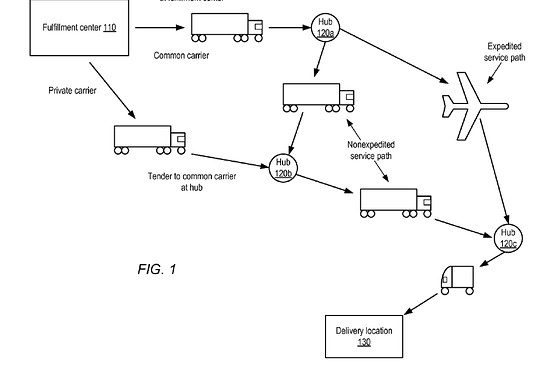
Evidently,  Amazon.com has read hockey great Wayne Gretzsky’s famous quote: “I skate to where the puck is going to be, not where it has been.” Amazon thinks it knows you so well it wants to ship your next package before you order it. The Wall Street Journal (Jan. 17, 2014) writes: “The Seattle retailer gained a patent for what it calls anticipatory shipping, a method to start delivering packages even before customers click buy.”

The technique could cut delivery time and discourage consumers from visiting physical stores. Amazon says it may box and ship products it expects customers in a specific area will want – based on previous orders and other factors — but haven’t yet ordered. The packages could wait at the shippers’ hubs or on trucks until an order arrives. In deciding what to ship, Amazon said it may consider previous orders, product searches, wish lists, shopping-cart contents, returns and even how long an Internet user’s cursor hovers over an item.

Today, Amazon receives an order, then labels packages with addresses at its warehouses and loads them onto waiting UPS, USPS or other trucks, which may take them directly to customers’ homes or load them onto other trucks for final delivery. It has been working to cut delivery times, expanding its warehouse network to begin overnight and same-day deliveries. The patent demonstrates one way Amazon hopes to leverage its vast trove of customer data to edge out rivals.

A possible Amazon logistics trail

Discussion questions:

1. What are the dangers in this concept?

2. Is this more realistic than using drones to ship packages?