
In dozens of thinly populated regions across the country, Amazon is building new delivery hubs to deliver packages in around 2 days. That might not seem especially rapid at a time when the e-commerce giant is introducing one-hour delivery in some areas, but residents of some far-flung Montana hamlets were used to waiting up to a week for their orders. It is part of a $4 billion investment by Amazon to push its signature speedy delivery further into the rural recesses of the U.S., writes The Wall Street Journal (March 22, 2026)
The effort helps Amazon reduce its reliance on the U.S. Postal Service, a relationship that has become rocky following a dispute over contract terms. Amazon says it aims ultimately to have 200 rural delivery hubs serving around 13,000 ZIP Codes covering around 1.2 million square miles of America—an area the size of Texas, California and Alaska combined.
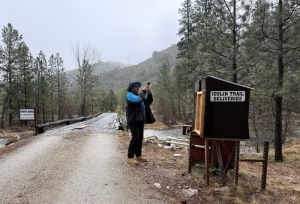
Delivering packages within Amazon’s signature 2-day frame means drivers contend with backcountry challenges such as bighorn sheep on the road, dangerously high winds in mountain passes and roads that are impassable during parts of the year.
Over the past decade, Amazon has expanded from major cities to regional urban centers by drawing ever larger circles of coverage. That is now allowing the company to lean on those urban hubs to speed up deliveries in ranch country. There are signs that Amazon customers in remote areas are just as likely to get hooked on speedy delivery as city slickers.
Amazon is experimenting with speedier delivery across its network as it competes with longtime rival Walmart and delivery upstarts such as Uber and DoorDash. In urban areas, the company has started offering 1-hour and 3-hour delivery as premium options. Amazon recently acquired a Swiss startup called Rivr, which is building 4-legged robots that could drop packages off on doorsteps. The e-commerce giant is also dipping its toe in the big-box retail business, with plans for a 230,000-square-foot megastore outside Chicago.
Classroom discussion questions:
- What are the complications in trying to serve remote locations with 2-day delivery?
- Why does the firm think the extra expenses will pay off?