
In our last blog about China and its solar industry, we noted that vast economies of scale and government subsidies were sending solar panel 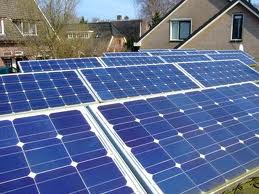 prices down sharply. China was also grabbing market share not only in the US, but controlled the bulk of the European market. With global demand up, Chinese firms like Yingli Green Energy, Suntech, and LDK Solar were ramping up production capacity–doubling it and running factories 24/7, 365 days a year in some cases. According to today’s Businessweek (Feb. 9, 2011), “all of the major Chinese producers are engaged in massive, very aggressive capacity-expansion programs.”
But their timing may be off. As the Chinese ramp up, austerity-minded European governments are scaling down their solar subsidies. Germany, France, Spain, the Czech Republic, and others, are reducing support for solar power producers dramatically as they face record-high deficits. This leaves China with capacity way ahead of what the market can take.
It’s not just subsidy cuts, though. The French Environmental Minister says most new solar panels “were made in China with a highly questionable carbon footprint”. She adds: the policy must “create jobs in France, not subsidize Chinese industry”. Since Yingli made 60% of its income off of Germany last year, and Suntech’s European sales were 74% of total revenue in 2009, the Chinese are learning a painful lesson in capacity management. Their internal market is one alternative, but total Chinese demand is only one-twentieth of what Germany spends on solar in one year. This article ties in well with the discussion of capacity planning in Supp.7.
Discussion questions:
1. Do politics play a role in the solar industries in China? In the US? In Europe?
2. How can overcapacity be avoided?