OM in the News: Biggest Supply Chain Threats for 2026

 IndustryWeek (Jan. 12, 2026) outlines four critical events poised to significantly impact the supply chain this year based on a research study by Evergreen Analytics:

  • Geopolitical fragmentation and the strategic use of trade regulations.
  • Extreme weather intensification.
  • Critical infrastructure aging and failure.
  • Cyberattacks on logistics.

Geopolitical fragmentation and the strategic use of trade regulations, ranked as the most notable risk for 2026 supply chains, giving it a “threat level” score of 97%. Abrupt geopolitical shifts have the potential to upend political alliances, alter trade relationships, create regional uncertainties and disrupt logistics networks.

In addition, rapid tariff and policy adjustments have become the new normal for supply chain management. From 2023 to 2025, export controls that caused severe disruptions doubled, and other trade restrictions increased 167%.

The next risk, extreme weather intensification, was given a “threat level” score of 93%. As the frequency and severity of these weather events continues to climb, firms are encouraged to  advance climate modeling for procurement, supply chain and logistics operations. They should also prioritize geographic diversification, increased inventory buffers and flexible logistics networks that can rapidly reroute around weather-impacted areas..

Third, critical infrastructure aging and failure, received a “threat level” score of 81%. Compromised infrastructure and transportation networks, combined with the previous risk of extreme weather, pose a real threat to supply chain operations. The Infrastructure Moment report by McKinsey & Company estimates that $106 trillion in investments, including $36 trillion for transport and logistics, will be needed to meet the need for updated infrastructure through 2040.

It is predicted that at least one multibillion dollar disruption because of failing infrastructure will occur this year. This implies that supply chain managers must develop comprehensive infrastructure risk assessments that go beyond their immediate suppliers to include the broader transportation and utility networks their operations depend on.

Lastly, cyberattacks on logistics sits at a “threat level” of 70%. Between 2021 and 2025, there was a 965% increase in attacks on logistics operations. It is  projected that cyberattacks on logistics operations will double this year. The five industries that experienced the most cyberattacks last year are: Manufacturing, Electronics,  Automotive,  Food & Beverage, and Logistics.

Classroom discussion questions:

  1. Compare these threats to supply chains to the ten discussed in Table 11.4 (page 474) in your Heizer/Render/Munson text. Which match?
  2.  Why do you think geopolitical issues is ranked first in this study?


Good OM Reading: Successful Strategies to Deal with Supply Chain Disruption

In today’s volatile global environment, geopolitical upheaval has emerged as a defining threat to supply chain resilience — on par with natural disasters and the lasting effects of the COVID-19 pandemic. From shifting trade policies and tariffs to rising political tensions and regulatory unpredictability, these forces are disrupting global operations, raising costs, and reshaping supplier networks.

A new study conducted by Supply Chain Dive (July, 2025) reveals the
true cost of this disruption — and what leading companies are doing to manage it. The clear consensus: geopolitical risk is rising fast, and most organizations are not fully prepared. Seventy-eight percent of companies studied expect that the risk of geopolitical events will increase in the next two years, with the median revenue loss from supply chain disruption at 5%.

The findings challenge conventional thinking. The most widely used mitigation strategies aren’t necessarily the most effective. In fact, some of the highest-performing tactics are the least adopted — despite being relatively simple to implement.

The report explores the gap between strategy and success, offering a detailed look at how forward thinking companies are building geopolitical agility through smarter partnerships, more proactive policy engagement, and better use of data and technology.

Key takeaways include:
1. Geopolitical disruption is a major, growing threat to supply chains.
2. Financial and operational costs are substantial, as disruptions lead to higher shipping costs, material price volatility, and reduced supply chain efficiency.
3. Many organizations are underprepared for changes like tariffs and other trade policy shifts.
4. Top-performing strategies are often underutilized, these include relocating operations for geopolitical advantage, board-level compliance elevation, and policy-influencing activities.
5. Supply chain adjustments are underway, with half of the companies actively adjusting their supply chains to avoid countries impacted by tariffs, and 79% re-evaluating nearshoring strategies in response to geopolitical shifts.

Guest Post: The Orange Juice Supply Chain

Prof. Howard Weiss, creator of our free software packages, Excel OM and POM, shares his concerns as a part-time Floridian.

In simplest form, the OJ supply chain is very straightforward. It begins with planting orange trees, harvesting the oranges, preparing the oranges for processing, juicing the oranges, packing the orange juice, shipping the orange juice to distribution centers, storing the orange juice and then shipping the juice to retail outlets. The figure below is very similar to the supply chain illustrated in Figure 1.2 of your textbook.

There are, of course, additional aspects to the supply chain. For example, planting and maintaining trees involves supplying fertilizer and water. Packing the OJ requires the manufacturing of containers and, of course, shipping requires trucks, trains, ships and planes.

Supply Chain Risks: It is well-known that orange trees need to be protected from freezing temperatures and that Florida hurricanes can damage crops. There are other difficult problems facing OJ providers. One is the citrus greening disease. This disease causes the fruits to become inedible and eventually the tree dies. In addition, since many farmers have sold their farms to developers, production of oranges in Florida have dropped to just 8% of what production was 20 years ago! Tropicana now uses oranges grown in Brazil, which is the largest producer of oranges.

Your textbook (see Ch.11) notes that environment and natural catastrophes, such as the disease, can affect supply chain risk and suggests using multiple suppliers or alternative sourcing to offset the risk. This is precisely what OJ producers have done by using oranges from other countries, most notably Brazil and Mexico, which crops have not suffered as much damage due to disease as in Florida. In addition, OJ producers have created new products that mix oranges with other fruits such as apples and pears to offset the loss of oranges.

Declining Demand: OJ manufacturers are also facing a decline in demand due to increased prices to consumers, and consumers questioning the nutritional value of orange juice especially considering the large amount of sugar in OJ. Orange juice demand has dropped while sales of teas, coffees, seltzers, energy drinks and bottled water have increased. Consumption is expected to continue to decrease over the next 5 years.

Classroom discussion questions:
1. Over the past 10 years OJ consumption in thousands of metric tons has been 733, 700, 663, 631, 581, 572, 530, 556, 542, 527. Forecast consumption for the next 5 years.
2. At what stage of its life cycle (see Figure 2.5) is orange juice?

OM in the News: Top Five Global Supply Chain Risks

The supply chain landscape continues to evolve at an unprecedented pace. A new report in Material Handling & Logistics (Jan. 15, 2025), identifies the top five most likely supply chain events that could impact companies in 2025. 

Climate Change — 90% Risk Score Driven by shifting climate patterns and record-high temperatures, extreme weather events are a dominant risk to the supply chain. Volatile flooding has the potential for deep disruption. Indications point to the state of ocean temperatures being elevated in 2025 and beyond, with the potential for record-breaking highs.

Geopolitical Instability with Increased Tariff Risk – 80% Risk Score

The following major geopolitical events are likely to impact global trade in 2025:

• Ongoing Houthi attacks on cargo and container ships in the Red Sea continue to lead to longer transit times and equipment imbalance.

• Continued conflict in Ukraine could destabilize manufacturing and trade activities, putting European economies at further risk.

Increased Chinese military drills near Taiwan could hinder trade through major sea routes, affecting global container shipping flows.

*The automotive, semiconductor, and manufacturing industries are possibly at risk due to proposed tariffs by the U.S.

Cybercrime – 75% Risk Score. Escalating cybersecurity risks in 2025, driven by the growing reliance on AI, IoT devices and interconnected systems include:

• Growing reliance on AI and cloud computing within supply chains is creating new “back door” opportunities for bad actors.

•Cyberattacks via sub-tier supply chains where criminals can more easily exploit common programming errors and vulnerabilities, allowing them into organizations via phishing and software connection links.

Rare Metals and Minerals– 65% Risk Score

• Within a politically charged atmosphere between the West and the major commodity producers – China and Russia – companies will face new tariffs and sanctions on critical metals.

• China could impose broader export restrictions, highlighting the need to diversify sourcing strategies. Lack of supplier diversity complicates procurement, leads to supply shortages and makes the price of affected commodities particularly vulnerable to trade tensions and eventual tariffs or sanctions.

 Forced Labor – 60% Risk Score A growing crackdown on forced labor across industries will increase pressure on companies who are facing scrutiny to manage and eliminate suppliers violating human rights. Anticipated risks in 2025 include: Labor conditions in China, a cascade of legislation to address lax forced labor issues, the global concentration of commodities (like palm oil and vanilla) that originate in countries cited for modern slavery.

Classroom discussion questions:

  1. What can an OM team at a manufacturer do to mitigate these risks?
  2. Do you agree with these rankings? Would you add other risk factors?


Good OM Reading: Creating More Resilient Supply Chains

The Japanese earthquake and tsunami created one of the biggest supply chain disruptions in modern history

Many more companies now find themselves at increasing risk of supply chain disruption,” write Professors Maria Saenz and Elana Revilla in the  MIT Sloan Management Review (Summer 2014). They note a recent study by AON Risk Solutions which found that, on average, the percentage of global companies reporting a loss of income due to a supply chain disruption increased from 28% in 2011 to 42% in 2013. At many companies, the resiliency of the supply chain has not kept pace with the continually rising level of logistical complexity. Most supply chain managers have yet to do much about this problem.

A recent MIT study found that even many large companies are unable to create contingency rules and procedures for operations during a complex, high-risk event. In fact, about 60% of the surveyed managers either do not actively work on supply chain risk management or do not consider their company’s risk management practices effective. These managers lack a framework to guide them in the deployment of their risk management practices. Many understand so little about their risks that they don’t even know what kind of framework would fit the particular supply chain dynamics they face.

The example of some companies that have more advanced risk management systems suggests that it doesn’t have to be this way, report the authors. Cisco Systems Inc. is one of a handful of companies — others include Coca-Cola, Whirlpool and Procter & Gamble — that have tried to understand and measure the operational and financial vulnerabilities that could threaten the smooth operation of their supply chains. Supply chain managers at Cisco have learned to integrate supply chain design and supply chain risk management, balancing proactive mitigation capabilities with reactive capabilities in order to keep the company’s supply chain as resilient, efficient and profitable as possible. As John Chambers, CEO of Cisco Systems, comments, “In an increasingly networked world, supply chain risk management is top of mind in global organizations as well as a key differentiator for leading value-chain organizations.”

OM in the News: Boeing’s Latest Supply Chain Challenge

boeing in riverIt’s not every day that we see Boeing  737 fuselages partially submerged in a river, but as the photo shows, the aircraft were severely damaged when a freight train derailed in Montana on the way to the company’s plants in Washington state. “The derailment threatened to throw a wrench in the tightly choreographed, far-flung aerospace supply chain, which depends on just-in-time deliveries of giant parts by train, plane and boat to meet record demand for jetliners,” writes The Wall Street Journal (July 7, 2014).

The train, which derailed near Rivulet, Mont., was carrying components including complete fuselages of 6 single-aisle 737s, fuselage panels for a long-range 777 and wing parts for a 747 jumbo jet. Most of the damaged parts were manufactured by Spirit Aerospace, in Wichita, Kan., where the shipment originated. They were destined for Boeing’s Renton and Everett assembly lines, which piece together the majority of the company’s commercial aircraft.

Three 737 fuselages tumbled down an embankment, two of which were partly submerged in the Clark Fork River below the tracks. A fourth 737 fuselage was torn apart during the derailment and was resting next to the tracks. Boeing’s jetliner supply chain has been disrupted before. Two years ago a tornado struck Spirit’s Wichita factory, shutting down operations for a week. In 2011, a BNSF train traveling through Nebraska derailed when a tornado knocked cars from the track, damaging a 737 fuselage on board.

Major aircraft makers such as Boeing and Airbus spread their jetliner factories across regions and countries, requiring a finely tuned logistics network to move aircraft components around the world. Both also use cargo ships and specially modified cargo jets to speed the delivery of body, wing and tail sections to assembly lines in sites as far flung as China and Charleston, S.C.

Classroom discussion questions:

1. Why is Boeing shipping fuselages across the country by train?

2. Why doesn’t Boeing make the fuselages itself?

Good OM Reading: Superstorm Sandy and Supply Chains, One Year Later

flooded carsA month or 2 into dreaded hurricane season, and the US has so far dodged the bullet. Still, with 7 hurricanes expected to hit, what can be learned from Superstorm Sandy is a topic for discussion among supply chain managers. Though Sandy hit shore last year as “only” a tropical storm, it was one the most devastating weather events since Hurricane Katrina, in part because many supply chains were caught off guard.

In the aftermath of Sandy, the Securities and Exchange Commission led a just-released study of mid-Atlantic companies to understand how this event affected them and how they recovered. Here is a quick summary of the results:

  1. Consider all the possibilities of widespread disruption: Business continuity plans should take into account all possible sources for electricity, fuel, water and telecommunications in an effected area. Consideration should be given to multiple, redundant services and the proximity of vendors to the potential disaster area. Companies also should consider solutions that allow employees to work remotely.
  2. Consider alternative locations: Companies should consider diverse alternative locations with adequate resources to stay up and running and how they will get enough employees there.
  3. Examine critical vendor relationships: Companies should take a look at vendors that provide critical services or products, from fuel to banking and finance, and line up Plan B vendors (including pre-arranged contracts) if they should be knocked off-line.
  4. Telecommunications and technology: Contract with multiple carriers rather than relying on a single provider.
  5. Communications plans: In addition to staying in close touch with customers and trading partners, firms should consider establishing relationships with multiple broker-dealers to facilitate alternative market entry points.
  6. Take into account time-sensitive regulatory requirements: A crisis can happen at any time, potentially interrupting month-end data for regulatory computations and financial reporting. This is a good reason to dump paper solutions.
  7. Review and test the plan: Business continuity plans, including vendor and customer lists and other critical data, should be updated continually and tested at least annually.

The recommendations in this short SEC report may have been drafted with financial firms in mind, but the advice applies to all businesses and their supply chains.

Guest Post: Supply Chain Resilience–a Visualized Introduction

Ben Benjabutr, at http://www.SCM-Operations.com, in Thailand, provides an interesting guest post in his Powerpoint explanation of supply chain resilience.
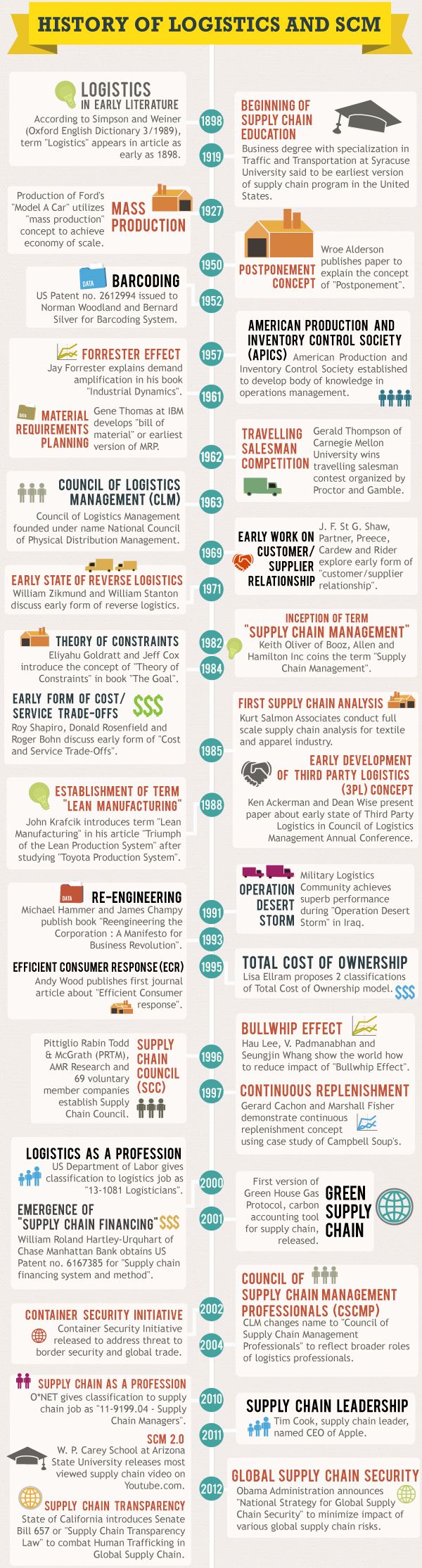
Supply chain resilience is a relatively new subject in supply chain management. During the 1970s, corporate decision making used traditional risk management techniques which have strong roots in financial models. Risks are usually quantified using assumptions based on historical data. In 1982, the term “Supply Chain Management” was coined by  a management consultant in the UK. The  primary goal of supply chain management was to reduce lead-time in distribution channel.

Risks in supply chains come in different terms– like variation, uncertainty, non-conformance, vulnerability and disruption. In the late 1990s, supply chain risk management emerged in academic literature. In 2000, research on the subject was conducted in the UK after transportation disruptions from fuel protests. Another research stream about resilience came in the United States after the 9-11 attacks in 2001. Then, in 2004, Martin Christopher and Helen Peck published their paper  “Building the Resilient Supply Chain.”  They defined resilience as “the ability of a system to return to its original state or move to a new, more desirable state after being disturbed“.

The most interesting year turned out to be 2011, with the tsunami in Japan followed by massive flooding in Thailand. The automotive and electronic industries were hit very hard by the disruptions. Since then, supply chain resilience has gain extraordinary attention from both academia and business professionals. The purpose of the Powerpoints I have created (click below) is to familiarize readers with the concept of supply chain resilience.  I hope this is something useful for instructors teaching from the Heizer-Render OM text.

[gigya id=”preziEmbed_n5tqhy_p-nhm” name=”preziEmbed_n5tqhy_p-nhm” src=”http://prezi.com/bin/preziloader.swf” type=”application/x-shockwave-flash” allowfullscreen=”true” allowFullScreenInteractive=”true” allowscriptaccess=”always” width=”550″ height=”400″ bgcolor=”#ffffff” flashvars=”prezi_id=n5tqhy_p-nhm&lock_to_path=0&color=ffffff&autoplay=no&autohide_ctrls=0″]
Source: SCM-Operations.com