Teaching Tip: Soothing the Sting of Cruel Student Evaluations

prof2Reading students’ comments on end-of-term evaluations, or at sites like RateMyProfessors, can be depressing– even demoralizing. I would always wonder how after teaching 2 virtually identical sections of OM, one class of 35 students thought I was the best thing since sliced bread, while the second section thought I was toast! So I think it is understandable that some of us look only at the quantitative ratings; others skim the written section; and others have vowed to never again read the comments.  Here are a few  suggestions for soothing the sting from even the most hurtful student comments, from Faculty Focus (Dec. 8, 2014).

1. Dwell on the positive ones. Devote as much time to students’ positive comments as their negative ones. Remembering your teaching strengths can motivate you to continue presenting your course in the best way. These positive sentiments, often heart-warming and gratifying, will also help you maintain a positive outlook toward students. Resist the lure of the negative.

2. Read them with a friend. A more objective party can help you make sense of the comments because they’re not as personally invested in them.

3. Analyze the data. First, look for negative view outliers. In research, we would exclude them from our analyses. Categorize remarks to help identify themes will help you determine whether they warrant a response.

4. Let your critics be your gurus. We brood over negative comments because we suspect they may contain an element of truth. Treat them as an opportunity. “It’s easy to feel emotionally attacked,” says a Harvard lecturer, “but that doesn’t mean your critics don’t have a point.”

5. Be proactive, especially if these comments will be data used in P&T decisions. Take the time to provide explanations about any off-the-wall student complaints, so that your reviewers don’t draw their own conclusions.

Ultimately, we should all remember that, important as they are, student evaluations offer only one perspective on teaching. Thorough analysis of teaching effectiveness requires that each of us reflect on our classroom practices, assignments, syllabi, and look closely at what our students can do upon completion of our courses. The proof is in the pudding.

Guest Post: Using MyOMLab at Canisius College Increases Learning

lynn fishOur Guest Post today comes from Dr. Lynn A. Fish, who is Professor of Management at Canisius College

About a year ago, I ran a study for graduate student performance, using MyOMLab using the Heizer/Render text. The study reviewed the student’s performance using MyOMLab versus in-class. In the study, students completed their online homework, and then completed similar questions in-class on quizzes and tests. I recently ran the same study using undergraduate students. Again, the results indicated that students really learn using MyOMLab! In fact, the correlations were even higher for the undergraduates than the graduates.

Undergraduates and graduates exhibited moderate learning when the MyOMLab to in-class questions are ‘scaffolded’. (Scaffolded questions give the logical questioning and development of the problem by the questions asked. That is, one question result is used in the next question analysis, and so on. Partially-open questions may include some scaffolding and some open-ended portion. Open questions are large, complex problems students develop without being given the logical questioning, essentially a ‘blank sheet of paper’). As the in-class questions become ‘more open,’ students do not perform as well in-class testing. (Open, computer-graded questions are not available in MyOMLab at this time.)

These studies were done before additional features – vignettes, stories and videos, were added last summer to MyOMLab. The new features may encourage deeper thinking not currently shown in the studies that I’ve conducted. Regardless, both studies indicate that using MyOMLab encourages students to try the problems and learn.

The study, which I recently presented at the DSI meeting in Tampa, shows MyOMLab works. In recent course offerings, I added additional questions to the dataset that mirror my philosophy and methods. In the future, I’ll be reviewing the student’s correlation between online and in-class for the newer MyOMLab features. For example, short readings and videos, which may offer a different level of learning, and testing in the online environment, are features – that to my knowledge – are not in other textbook’s software.

Teaching Tip: Taking an Inventory of Your OM Teaching Practices

teaching2Here’s a great resource I discovered in Faculty Focus (Nov. 19, 2014): the Teaching Practices Inventory. It’s an inventory that lists and scores the extent to which research-based teaching practices are being used. The inventory takes about 10 minutes to complete and is designed for use by individual faculty. It is a self-report inventory, with the power to promote a comprehensive review of and reflection on your personal teaching practices. Inventory items are organized into 8 categories: 1) course information provided to students; 2) supporting materials provided to students; 3) in-class features and activities; 4) assignments; 5) feedback and testing; 6) other (such as pre-post testing); 7) training and guidance of TAs; and 8) collaboration or sharing in teaching.

Of course, the insights provided by the inventory are a function of the truthfulness with which it’s completed, but if you’re using it on your own, there is no reason to be less than candid. The inventory comes with a scoring rubric that gives points for practices to improve student learning. It would be best to first take the inventory (a clean copy is available here), score it using the rubric in Appendix 1 of the original research article, and then read the article, which explains and justifies the point values. The article also contains the scoring results from 179 inventories, which offer something against which individual scores can be benchmarked. Although the practices are listed individually on the inventory, many are related and mutually reinforcing. If some of the practices are not being used, they can be implemented incrementally.

How strongly can I suggest that you take this inventory? At the very least, spend time looking at it. The data it provides is such a contrast to the judgmental, summary feedback provided by end-of-course student ratings. The inventory is predictive only in the sense that it identifies practices that research has shown help students learn—and who among us wouldn’t want to use those kinds of practices?

Teaching Tip: Using Guest Lecturers in Your OM Class

potato chipsWhen I was teaching at Rollins College, one of my favorite classroom experiences was bringing in guest lecturers. Philip Crosby, the famous quality guy, lived in Winter Park and showed up every semester for 15 years. Alan Nagle, former CEO of Tupperware, was a regular, as were a number of VPs from Darden, Frito Lay, and Wheeled Coach. Now that I am semi-retired, I give 3-4 guest lectures per semester in other profs’ classes, at schools all over Florida and as far away as Mexico. It is really fun, and I remember the key points in having successful guest speakers: (1) Keep it interesting; (2) Keep it short; (3) Keep it interactive; and (4) Feed them! I will never forget the visits from Tom Rao, at Frito-Lay, who always brought a case of chips to each class. Students would just munch away, totally mesmerized with the free snacks.

So as you face the perpetual challenge of keeping each class session fresh and interactive, I suggest you consider this old idea. Guest lecturers have benefits for your learners and for you. Seeing a new face in front of the room can liven up the class; but there are also deeper pedagogical reasons for using guest lecturers, notes Faculty Focus (Nov.3, 2014). Here are a few to consider. None of us is an expert on everything, so bringing in speakers with proven expertise in a topic provides added credibility to our content. Research has shown that in a course with profound practical applications, such as OM, voices from the field carry as much credibility as we profs provide. Having a guest lecturer also opens your lesson design to new options. For example, you and your guest can work together to field questions or even debate issues. Let students apply their critical thinking to compare points of view.

Guest lecturers, of course, should be treated very well, especially if you want their help in future courses. Provide as much lead-time as possible so they can prepare and so you can share their materials with your students.  Be very clear with guests about the content you want covered, the time (no more than 45 minutes!) and technology available, and the class size and composition. Letters of thanks are always a good idea (with a copy to your Dean or Department Chair).

Teaching Tip: To Lecture or Not to Lecture in Your OM Class

 prof lecturing“There are purists among us who would say that we should never lecture,” writes Prof. Maryellen Weimer in Faculty Focus (Oct. 1, 2014). But as faculty, we bring expertise to learners–and having an expert around when you don’t know something can be very helpful. Do most teachers still talk too much? “They do,” says Weimer.  Are lectures fraught with well-established impediments to learning? “They are,” she adds.

Are some kinds of content better explained by the instructor than discovered by the students? Is it complex content, like computing an X-bar chart or an R-squared value, that you know from previous experience often causes students to struggle? Can your explanation lay the foundation and set the parameters so that students can start dealing with content from a place that expedites understanding? Is a lecture the best way to clarify what students find confusing?

Should we use lectures when students don’t seem to care about the content, don’t think it’s interesting, or don’t think there’s any need to know it? A lecture where you imbue the content with spicy facts, intriguing questions, colorful business anecdotes, and relevant details can cultivate student interest. Teachers talking about how they connect to and with operations management, why they love it, and why they think everyone else ought to also can be very motivational.

Many faculty now agree that we shouldn’t use lecture as the default instructional method. But we need to decide when lecturing makes sense so that it’s a conscious, purposeful choice. Then there’s the matter of length for any given segment of your talk: perhaps mini-lectures, not lengthy expositions that take all or most of a class session. I have found that a 10-minute video, a short class exercise, or a breakout to analyze a one-page case makes the lecture portion of the class easier on both prof and student. Your thoughts?

Teaching Tip: Dealing with Cheating in Your OM Class

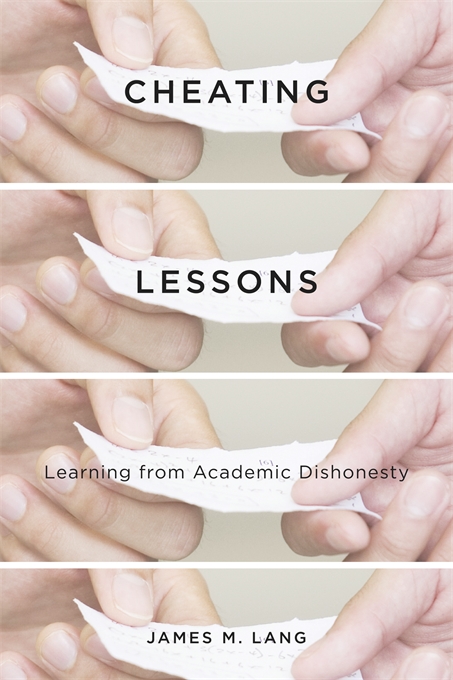
cheating lessons bookHow do you deal with the sensitive issue of cheating in your operations management classes? Statistics show that nearly 3/4 of college students cheat during their undergraduate careers, a startling number attributed variously to the laziness of today’s students, their lack of a moral compass, or the demands of a hypercompetitive society. For James Lang, author of Cheating Lessons: Learning From Academic Dishonesty (Harvard University Press, 2013), cultural or sociological explanations like these are red herrings. The provocative research in his book indicates that students often cheat because their learning environments give them ample incentives to try–and that strategies which make cheating less worthwhile also improve student learning.

Drawing on an array of findings from cognitive theory, Lang analyzes the specific, often hidden features of course design and daily classroom practice that create opportunities for cheating. Courses that set the stakes of performance very high, that rely on single assessment mechanisms like multiple-choice tests, that have arbitrary grading criteria: these are the kinds of conditions that breed cheating. Promoting mastery and instilling the sense of self-efficacy that students need for deep learning is why Jay and I have worked so hard to develop MyOMLab. With this assessment software, your students can work on mastering the tools of OM, with instant feedback. You can assign homework, quizzes, exams with “algorithmic” problems, meaning that each student operates from a unique data set. Students can also be given multiple chances to improve homework scores. If you would like more information, visit http://www.myomlab.com/.

Although cheating is a persistent problem, the prognosis is not dire. The good news is that strategies which reduce cheating also improve student performance overall. Instructors who learn to curb academic dishonesty will have done more than solve a course management problem–they will have become better educators all around.

Guest Post: Different Approaches for Engaging Students in a Study Abroad Class Setting

flammOur Guest Post comes from Phillip Flamm, who teaches OM in the ISQS Department at Texas Tech University.

Students in the Texas Tech University Study Abroad program face a few difficult challenges in their Operations Management course every summer. In addition to enduring a 3 hour class period daily, they must stay focused on course work despite the following distractions: (1) Adjusting to different food, culture, etc.; (2) The attractive “night life”; and (3) Side trips 3 times a week that include lots of walking. In short, students who don’t maintain their focus will be dragging to class and struggling to stay awake. This setting is a recipe for disaster for the average 20-year-old.

In a previous Guest Post, I described one potential answer to this challenge: Total Team Collaborative Learning. The course guidelines:

  • Teams of 3,
  • Following each lecture, students review lecture notes to make sure all team members understand the material,
  • In addition, the teams go over all lecture material from each prior lecture. This means that they will go over specific lecture material several times prior to the exam,
  • Team members have a peer review grade,
  • Each team will prepare a short lecture on a particular quantitative method and “teach” the class this method,
  • Teams will take a quiz daily (as a team) from the previous day’s material,
  • All exams are taken as a team (these exams are the same as what I give during the regular semester where average grades are 63 to 65….the lowest team grade was 88/100).

Based a survey given at the end of the course this past summer, students indicated that they retained more in a shorter period of time and understood the material. In short, they loved the Total Team Collaborative environment and sharpened their team building skills in preparation for the time when they will be asked to work on a team with their new employer.

Teaching Tip: The Question of Crib Sheets

cheat sheetMost of us are familiar with the strategy: students are allowed to bring into the exam a card or sheet of paper that they’ve prepared beforehand and that contains information they think might help them answer exam questions. I loved the strategy when I was a student. I could spend hours deciding what I should put on the 4 x 6 note card I was allowed to take into a statistics exam. I thought I was just figuring out what went on the card, but in fact, I was sorting out, prioritizing, and integrating the content of the course. Of course, being a quant person, I often decided on what I needed and then reduced the size so that when I got it on the card I almost needed a magnifying glass to read it. I recall that my renowned professor, Al Simone, was really impressed by my ingenuity (but I still got a B on the exam).

And yet, in decades of teaching, I never permitted students to use these “cheat sheets”. Now, teaching expert Dr. Maryellen Weimer writes, in Faculty Focus (Feb. 27,2013), “How often in your professional life do you have a limited time window and no access to resources or expertise? There are occasions, but they aren’t all that frequent. In this age of technology, we need to be purposefully teaching students how to access, organize, and apply information.” Students respond positively to the crib sheet strategy, she adds. ‘They don’t talk about how preparing the sheet helps them prioritize and organize content. They see the cards as stress relievers”, able to retrieve 3-4 important points they don’t have to worry about forgetting.

One faculty member told Dr. Weimer that he has students attach their crib sheets to the exam when they turn it in. He finds on the cards information students needed to answer a question but they didn’t or couldn’t apply it to a particular problem– a great discussion topic for the exam debrief session. After showing some examples, it’s pretty easy to make the point that a student can memorize material, or in this case have it right there, but if he doesn’t know how to use it, the information is pretty much worthless.

Guest Post: Tying Scheduling Back to Operations Strategy in Your Course

steve harrodDr. Steven Harrod is Assistant Professor of Operations Management at the University of Dayton and can be reached at steven.harrod@udayton.edu.

For those of you including Chapter 15, Short-Term Scheduling, in your syllabus, here is a great way to tie that topic back to the beginning of your course and to Chapter 2, Operations Strategy in a Global Environment. A significant topic in Chapter 15 is “Sequencing Jobs”, which is a logical extension to Module D– Waiting-Line Models.

In class, I work out three fundamental queue disciplines: first come first serve (FCFS), shortest processing time (SPT), and earliest due date (EDD). Following Example 5 from Chapter 15 of the Heizer/Render text, I walk my class through the solution of these three sequences using a custom worksheet that you may obtain online by clicking here.

I ask the students to recall the three competitive advantages of Chapter 2 (low-cost, differentiation, and response), and how sometimes it is unclear which competitive advantage applies. For example, does McDonald’s pursue a low-cost or differentiation strategy?

I then ask the students to label each sequencing rule by the competitive advantage it best aligns with. Clearly, EDD best supports response, because it most respects the timeliness of delivery. Then I impress upon the students how SPT leads to low-cost competitive advantage (WIP, flowtime). Finally, I assert that FCFS is a differentiation strategy, because it enforces social justice in the service pattern, and thus seeks to make each customer feel valued and unique. Viewed from the way in which they queue their customers, it then becomes obvious that McDonald’s pursues a low-cost strategy, Wendy’s pursues a differentiation strategy, and Domino’s pursues a response strategy.

I close this lecture by impressing on students how choices in Operations Management effectively dictate the strategic competitive advantage of the firm. Firms must align their stated strategy and their operating rules to each other, or else be perpetually in a mode of crisis and confusion.

Guest Post: Incorporating Student Blogs into the OM Class at DePaul U.

lori cookDr. Lori Cook is Associate Professor of Management at DePaul University’s School of Business. Here Lori describes how she incorporates student blogging into to her Operations Management classes. You can see her syllabus by clicking here.


Looking for a new dimension to enhance your OM course?  Consider incorporating a class blogging activity.  Since OM is typically quantitative, students assume assignments will not be focused on writing.  Yet the current business environment demands effective communication, especially in a written manner. For my OM classes, I came to several conclusions regarding the feasibility and benefits of incorporating the blog as a “manageable” written assignment into my classes.  First, the blog would enlighten students to a facet of social media.  Secondly, it could help students actively engage with each other outside the classroom.  Third, the students could discuss the new learning and communicating experience during an interview.  Finally, students could improve their ability to communicate succinctly and professionally.

Since Fall, 2011, I have used a blogging activity in 13 classes (undergrad and MBA), and have read over 800 posts and 3,500 comments.  Based on my experience, the following are some important issues to consider prior to creating a class blog.

1.  Which blogging provider will you use for the blog site?

2.  Will the blog site be private or open to the public?

3.  Is the structure of the site a shared site, or individual student sites?

4.  Does the student or instructor create the content for the site?

5.  Is the nature of the content structured, semi-structured or unstructured?

6.  What are the contribution requirements for post & comments?

7.  What is the schedule and frequency for posts & comments?

8.  Who will approve content for posts & comments?

9.  How will the work, posts & comments be assessed?

10.  How will you assess the overall effectiveness of the blog?

In my experience, if students perceive the blog to be “busy work” they will be disgruntled.  While if you effectively integrate the blog into your course, it can be a rewarding experience for everyone! Check out my current blog site at http://opsmgt.edublogs.org/

Guest Post: Teaching OM Online at FSU

Jeff-SmithDr. Jeff Smith provides today’s Guest Post. Jeff is Associate Professor of Operations Management at Florida State University

While moving to an online format enables colleges to reach a whole new segment of students, it also presents new challenges, especially true for those who teach courses such as OM.  The good news, however, is that we are getting much closer to the ability to simulate the actual classroom experience given the different technological platforms that are now available.  In contrast, the challenges of the virtual environment are still daunting and require a new perspective.  I view the challenges along 3 broad dimensions.

The 1st is comprehensiveness and contingency planning.  You simply have to think a little more outside the box on this front.  Specifically, you need to think of every possible way that something can fail and try to put in controls to account for that.  As an example, I teach students in locations that span the globe so you need to be crystal clear on all dates and times as this will establish the baseline for all course activities.  Beyond that, there are always technological issues that cause problems.

The 2nd component is time commitment and information processing.  When teaching on campus, you know exactly what days/times you will meet so you can plan your work load around that.  In the online environment, this is simply not the case since you will often have students working around the clock–and they expect you to be doing the same. Online classes also often are larger, so the total amount of individual communication you have to process is exponentially larger.  The overall time commitment can be 2-3  times more intense in this setting.  I have found that the best way to handle the added information is to ‘batch’ all the requests and select 2 distinct times per day to sit and respond to all the requests.

The final challenge is that you have to be much more creative in getting information to your students.  A live class enables you to explain something via an inter-personal exchange. The online environment does not allow for this.  For example, for a given topic, I try to supply a power point lecture to accompany each chapter in the Heizer-Render text.  I will also find videos, popular press mentions, and websites to add more support to what I am covering.  Finally, I pre-record lecture snippets aimed at adding clarification to the more difficult topics or for working through specific example problems. (I use Tegrity and record these as 15-20 minute clips that can be downloaded to different devices by each student).

Guest Post: Four Tips for Teaching Large (and Small) OM Classes

 Our Guest post today comes from two experts in the science of teaching. Wilbert McKeachie,  Professor Emeritus at University of Michigan, has served as President of both the American Psychological Assoc. and the American Assoc. for Higher Education. Marilla Svinicki is a Professor at University of Texas-Austin.

Many of us who teach today are being tasked with doing more with less. This can reach to the classroom and result in larger sections as more students are allowed to enroll in each. Large classes are also nothing new for many first- or second-year survey or pre-major courses in business schools. No matter the reason for the larger class size, students may exhibit a tendency to hold back their responses — or their attention — in a large lecture hall. Thus, to combat a tendency towards passivity among students, it’s vital to have a strategy for keeping them actively engaged during each class session.

In our book McKeachie’s Teaching Tips (2011), we offer a number of suggestions for maintaining student interest, involvement, and attention:

Invite faculty members or student teams to debate relevant topics during class. This interchange of ideas offers students an opportunity to practice their listening and critical-thinking skills in a lively setting.
Conduct an interview with another colleague or outside expert who can present a different perspective on the material you’re addressing.
Assign a student presentation. In addition to encouraging independent thinking and individual motivation, the activity can also enable students to learn from one another and gain valuable experience working as part of a team.
If time is too tight for each individual student to present, consider a “poster session.” Working in groups, students conduct research on a given topic, and then present their findings . Students stand by the posters in shifts, ready to answer questions about their work, while also taking time to circulate and review their peers’ posters.

Though you probably won’t substitute all your lectures for these activities, they can certainly serve to break up a sense of routine — and keep students on their toes!

Guest Post: Student Assessment with a Twist At Texas Tech…EIP (Effort Impact Points)

Our Guest Post today comes from Phillip Flamm, who teaches OM in the ISQS Department in the  Rawls College  of Business at Texas Tech University. This is his 7th Guest Post. Phillip can be reached at pflamm@ttu.edu.

I’ve often wondered exactly how learning and effort are connected. I know that good student effort usually leads to better grades, but up to this point I have only utilized personal response system “clickers” in my Operations Management class as a reward for effort. During the first summer session of 2012 I attempted to expand the boundaries of effort measurement by combining several factors as a reward system that would be based on student effort. Those factors are:

  1. Total number of lectures attended (measured by PRS responses)
  2. % improvement from Exam 1 to Exam 2
  3. Number of focus groups attended (a student led collaborative learning session held the day of each lecture)
  4. Seeking writing help from the campus Writing Center for the written version of the team project.

With the help of Jason Triche, a PhD student who is team teaching with me, we developed a 5 tiered reward scale based on an accumulation of effort points (EIP) earned for each activity. The reward system looks like this (800 total points for the course):

  • Tier 1: Range – 15 to 20 (EIP) receives a 3% addition to semester total (24 points)
  • Tier 2: Range – 12 to 14 (EIP) receives a 2%  ……………(16 points)
  • Tier 3: Range – 9 to 11 (EIP) receives a 1% ………………(8 points)
  • Tier 4: Range – 5 to 8 (EIP) receives a .50% …………… (4 points)
  • Tier 5: Range – 0 to 4 (EIP) receives 0%.

We have just begun to analyze the data but it appears that approximately 20% of the students receiving EIP actually moved up a letter grade as a result. So, it appears that their effort was rewarded with extra credit and higher exam scores.

Teaching Tip: Why Students Cheat–And What You Can Do About It

The Wall Street Journal (May 26-27, 2012) reviews a fascinating new book by Duke U. Professor Dan Ariely called “The  (Honest) Truth About Dishonesty“. The essence is why normal everyday people (and, of course,  students) cheat and lie. It turns out that everybody has the capacity to be dishonest, and almost everybody cheats—just by a little. The purpose of locks, says one  locksmith,” is to protect you from the 98% of mostly honest people who might be tempted to try your door if it had no lock.”

Ariely found many reasons why students might cheat. A common one was having another student in the room who was clearly cheating. Watching a mini-Madoff  cheat on a test encouraged the remaining students to also do so. Cheating, it seems, is infectious.

Does the prospect of flunking or other punishment make a student less likely to cheat ? “It may have a small effect on our behavior,” says Ariely,  “but it is probably going to be of little consequence when it comes up against the brute psychological force of ‘I’m only fudging a little’ or ‘Everyone does it’ .”

So what can we as instructors do? Here are Ariely’s suggestions: (1) Just before a quiz or assignment, tell students to recall the Ten Commandments. In his experiment doing so, Ariely found  cheating dropped to zero! The same happened when he reran the experiment, reminding students of their schools’ honor codes instead of the Ten Commandments. (2) Having students sign a vow not to cheat at the top of the exam, rather than the bottom, likewise decreased cheating. While ethics lectures and training seem to have little to no effect on students, reminders of morality—right at the point where people are making a decision—appear to have an outsize effect on behavior.

(Note: My own prosaic advise: (1) Don’t leave the room during a quiz or exam and (2) Use MyOMLab with algorithmic assignments so each student works with a different data set.)

Guest Post: Reinforcing Key Concepts in Your OM Course with Discussion Boards

Dr. Wende Huehn-Brown, at  St. Petersburg College, provides her Guest Post today on the interesting subject of discussion boards.

With students retaining less than 20% of what we may say in a physical class, figuring out a communication system to reinforce key concepts can be vital to learning.  In MyOMlab there are tools for real-time communications such as Chat and ClassLive, as well as traditional email communication tools.  This guest blog will focus on how a Discussion Board may be used.

Two years ago, I read “Weblog Technology for Instruction, Learning, and Information Delivery” ( by J.P. Shim and C. Guo, Decision Sciences Journal of Innovative Education, Jan., 2009).   The authors showed how discussion boards can be used in a Learning Management System (LMS).  This was kind of a light bulb moment for me and led to rethinking how I create discussion boards.  According to B.W. Dearstyne’s article “Blogs, The New Information Revolution?” ( Information Management Journal, 2005), boards are a “… means of collecting and organizing fresh insights and opinions … fostering knowledge and information sharing as a way of enhancing productivity”.  Doing a blog outside the LMS can further enhance connectivity to other people, organizations, other classes, etc.

I originally started with further discussion of key concepts and case questions in the lesson.  This often extended into service management and integrating other disciplines (such as  marketing and  finance) through adaptive learning concepts, and to providing further tips on completing submissions (i.e., additional tutorials, as I have quite a few students that struggle with math).  There is further peer-to-peer learning that provides a perception of personalized learning and interaction with the profession.  My discussion boards have evolved to include Frequently Asked Questions on assignments to help students in an open format–especially those students that seem to fear asking questions.  Additionally, I  share events going on; either local ones they can attend (i.e. competitions, scholarships, professional organization networking, etc.) or news stories relative to the lessons (thanks, Jay and Barry … I often use your OM blog).

Students frequently comment positively on the way discussion boards work in this class.  What are your creative ways to use discussion boards?