Guest Blog: Effects of Technology Use on Collaborative Learning Results

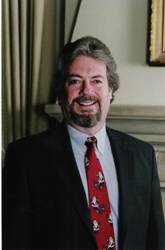
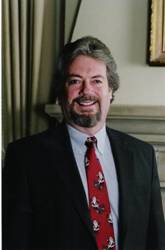
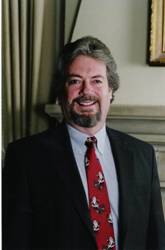
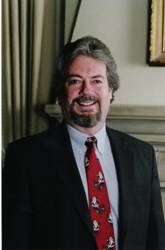
Our Guest Post comes from Phillip Flamm, who teaches Operations Management in the ISQS department at Texas Tech University. This is his 9th posting on our OM blog.

The Rawls College of Business here at Texas Tech U. has recently added a “technology room.” This room has 9 rectangular tables and will seat teams of 5. Each table has a large monitor at the head of the table. At the front of the room is a podium with a large screen monitor behind it. Having plugged in their laptops to the room’s web site, team members have several options:

  • View the master podium screen on the table’s large monitor
  • View the laptop screen of one of the team members
  • View specific documents

Team members interact as follows:

  • Team members take very comprehensive notes in class (lecture is structured with accompanying power point slides)
  • Team posts one member’s notes from the most recent lecture on the table monitor
  • Members go around the table in order discussing the notes they have for each power point slide
  • Extended discussion may result if there are questions about the content (each member offers their individual understanding of the concepts)
  • Member with their notes on the monitor makes changes or additions based on a clearer understanding of the material (all members can see changes as they are made)
  • After reviewing the most recent lecture they move on to the next most recent, etc., until all lectures (for the next exam) are covered
  • Every lecture is covered every time the team meets (past lecture notes generally go faster than the most recent)
  • The posting member distributes a copy of the updated, more descriptive notes at the conclusion of the meeting

Team members experience faster learning rates, increased retention, and better understanding of quantitative material. To exhibit these advantages the team members’ average exam was 15 points higher than the other 380 course students on exams this semester.
Guest Post: Total Team Collaborative Learning in OM at Texas Tech U.

flamm

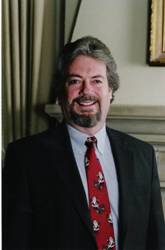
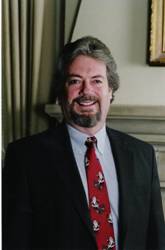
Our Guest Post comes from Phillip Flamm, who teaches Operations Management in the ISQS Department at Texas Tech University

I have taught Operations Management, using the Heizer/Render/Munson text, for four summers now, with the following course guidelines:

  • Using power point pages with 3 slides per page and lines for notes to the right, teams reviewed notes together following lectures to clean up any questions. Lecture review is compounded daily by adding the new lecture material and begins again after an exam
  • Worked daily quizzes together for a team grade
  • Prepared quantitative teaching sessions during the summer class
  • Calculated quantitative problems together for a team grade

Exam grades for these summer teams were considerably higher than scores in my regular Fall and Spring semester classes (average 89% compared to 64% regular class average).  This Total Team Collaborative Learning (TTCL) improved student performance in the summer setting.

So, what does this mean? It appears that TTCL tends to improve learning, retention, and analytical abilities. I would really like to find a certain format that would help all students learn more, learn faster, and perform better. I think that selecting and training section leaders to be more proactive when it comes to individual performance and integration into the team environment are the keys.

In the Fall, the business school has a new classroom with video equipment at each table. This could be used to train leaders and focus group members and I will continue to experiment with TTCL.


Guest Post: Total Team Collaborative Learning of OM in Spain

flammOur Guest Post comes from Phillip Flamm, who teaches OM in the ISQS Department at Texas Tech University

I have recently returned from teaching operations management this past summer in Texas Tech’s Study Abroad Program in Spain. I divided my 24 students into 8 teams of 3 each with these provisos:

  • Each member of the team will get the same final grade for 80% of the class so they will be forced to help each other
  • Grades will be based on 2 exams (taken as a team), 2 or 3 team presentations, and a peer grade (from team members plus an attitude grade from me)
  • One presentation will be a tutorial of quantitative material
  • The second presentation will be the team solution of an OM case scenario

As part of the class, I also arranged tours of 2 manufacturing plants.

Students studying abroad normally want to talk about what they did and saw while traveling. The teams involved in Total Team Collaborative Learning only wanted to talk about how much they learned and how much they retained. The students truly enjoyed the OM class and the lowest group exam grade was 88/100. (I give the exact same tests during Fall and Spring back in Texas and the average is 64.) This seems to suggest that the teams learned faster, and retained more.

In the Summer Study Abroad 2014, we increased from 15 to 24 students over the prior year, with the final grades staying the same. We:

  • Utilized special power point pages with 3 slides per page, with lines for notes; teams reviewed notes together following lectures to clean up any questions they might have
  • Worked daily quizzes together for a team grade
  • Prepared quantitative teaching sessions 3 times during the month long class
  • Worked homework problems together for a team grade

Guest Post: Different Approaches for Engaging Students in a Study Abroad Class Setting

flammOur Guest Post comes from Phillip Flamm, who teaches OM in the ISQS Department at Texas Tech University.

Students in the Texas Tech University Study Abroad program face a few difficult challenges in their Operations Management course every summer. In addition to enduring a 3 hour class period daily, they must stay focused on course work despite the following distractions: (1) Adjusting to different food, culture, etc.; (2) The attractive “night life”; and (3) Side trips 3 times a week that include lots of walking. In short, students who don’t maintain their focus will be dragging to class and struggling to stay awake. This setting is a recipe for disaster for the average 20-year-old.

In a previous Guest Post, I described one potential answer to this challenge: Total Team Collaborative Learning. The course guidelines:

  • Teams of 3,
  • Following each lecture, students review lecture notes to make sure all team members understand the material,
  • In addition, the teams go over all lecture material from each prior lecture. This means that they will go over specific lecture material several times prior to the exam,
  • Team members have a peer review grade,
  • Each team will prepare a short lecture on a particular quantitative method and “teach” the class this method,
  • Teams will take a quiz daily (as a team) from the previous day’s material,
  • All exams are taken as a team (these exams are the same as what I give during the regular semester where average grades are 63 to 65….the lowest team grade was 88/100).

Based a survey given at the end of the course this past summer, students indicated that they retained more in a shorter period of time and understood the material. In short, they loved the Total Team Collaborative environment and sharpened their team building skills in preparation for the time when they will be asked to work on a team with their new employer.

Guest Post: Approaches for Engaging OM Students in a Study Abroad Class

flammOur Guest Post (his 8th) comes from Phillip Flamm, who teaches OM in the ISQS Department at Texas Tech University.

I have been selected to teach operations management this summer in the Texas Tech University Rawls College of Business Study Abroad Program in Spain. After recovering from the initial shock of logistical planning I began to think about what it would take to keep fifteen 20 year olds engaged for a month while they are facing the distraction of “things to do in a foreign country.” It occurred to me that the key to making this work is “keeping the students consistently engaged.” I came up with several ideas that might help to keep the students awake and productive in a small class setting:

  • Divide the students into teams of 3
  • Each member of the team will get the same final grade for 80% of the class so they will be forced to help each other
  • Grades will be based on 2 exams (taken as a team), 2 or 3 team presentations, and a peer grade (from team members plus an attitude grade from me)
  • One presentation will be a tutorial of quantitative material (basically teaching the class quantitative material)
  • The second presentation will be the team solution of an operations management case scenario

This seems to be an opportunity to create an atmosphere very nearly like the day-to-day business world. Every day workers create designs, solve problems, make decisions, prepare presentations, and receive rewards as teams. I am curious to see how the students will respond to dealing with problems that teams normally encounter when their grade depends upon how they handle themselves. The first day of class I will cover interpersonal skills topics to include conflict resolution and team building. Upon completion of this program I will enter an “after Spain” blog covering results. As part of the class, I have also arranged tours of 2 manufacturing plants.

Guest Post: Student Assessment with a Twist At Texas Tech…EIP (Effort Impact Points)

Our Guest Post today comes from Phillip Flamm, who teaches OM in the ISQS Department in the  Rawls College  of Business at Texas Tech University. This is his 7th Guest Post. Phillip can be reached at pflamm@ttu.edu.

I’ve often wondered exactly how learning and effort are connected. I know that good student effort usually leads to better grades, but up to this point I have only utilized personal response system “clickers” in my Operations Management class as a reward for effort. During the first summer session of 2012 I attempted to expand the boundaries of effort measurement by combining several factors as a reward system that would be based on student effort. Those factors are:

  1. Total number of lectures attended (measured by PRS responses)
  2. % improvement from Exam 1 to Exam 2
  3. Number of focus groups attended (a student led collaborative learning session held the day of each lecture)
  4. Seeking writing help from the campus Writing Center for the written version of the team project.

With the help of Jason Triche, a PhD student who is team teaching with me, we developed a 5 tiered reward scale based on an accumulation of effort points (EIP) earned for each activity. The reward system looks like this (800 total points for the course):

  • Tier 1: Range – 15 to 20 (EIP) receives a 3% addition to semester total (24 points)
  • Tier 2: Range – 12 to 14 (EIP) receives a 2%  ……………(16 points)
  • Tier 3: Range – 9 to 11 (EIP) receives a 1% ………………(8 points)
  • Tier 4: Range – 5 to 8 (EIP) receives a .50% …………… (4 points)
  • Tier 5: Range – 0 to 4 (EIP) receives 0%.

We have just begun to analyze the data but it appears that approximately 20% of the students receiving EIP actually moved up a letter grade as a result. So, it appears that their effort was rewarded with extra credit and higher exam scores.

Guest Post: Using a Lab/Project Component in Our Texas Tech Summer OM Class

Phillip Flamm, who is the Core Course Coordinator for OM at Texas Tech U., provides today’s Guest Post–his 5th for us.  Phillip teaches in the ISQS Department at the Rawls College of Business. He can be reached at p.flamm@ttu.edu.

We have used a lab/lecture component successfully for our undergraduate  Introduction to Operations Management course at Texas Tech for several years. During the summer sessions we changed to a strictly lecture/exam format due to the brevity of the session (30 calendar days per session). There have been two negative consequences of the summer session approach: first, the students miss out on the lab portion (preparing a business plan for a start up manufacturing business) and secondly, some students have scheduled the class in the summer to avoid the lab component (enrollment had swelled to 200 total students each summer). This summer we attempted to rectify that situation with a little creative scheduling:

  • Combined 100 students into two sections, one for each summer session
  • Class met Monday-Friday for 1 hour and 50 minutes
  • I handled the lectures for 1 hour and 20 minutes daily
  • For the other 30 minutes I enlisted the help of a very talented PhD student (who had taught the lab portion before) to break the group into two 50 person sections (roughly 16 teams each)
  • During the lab portion teams prepared a slightly shorter version of the manufacturing start up business plan (presented in verbal and written form)
  • Projects were presented and graded the last four days of each session (I graded half the teams and the PhD student graded the other half during the same time slot)

The hybrid approach seemed to be a huge success. Summer school students received the great learning experience of preparing a business plan from an operations perspective and the students attempting to dodge the lab component got a difficult, but necessary life lesson. In addition, the PhD student was able to get a little wider range of teaching experiences (lecturing large sections, organizing/advising student teams, and grading presentations) than is normally available. It was a win/win for all!

OM Syllabi: Temple U., Washington State U., Texas Tech U. and Rollins College

Jay and I never cease to be impressed by the variety of ways our colleagues teach OM at their schools.  Some profs spend 2 weeks on LP, others focus on quality and process strategy, while others actually cover all 17 chapters in sequence! We thought you might be interested in how different schools using our text face that challenge. So today we share 4 OM syllabi with you from a wide variety of  schools. Here they are:

Temple University, taught by Howard Weiss, as an undergrad course. MSOM 3101 syllabus. You might note Howard’s use of Excel OM, POM, and MyOMLab in homework assignments.

Texas Tech University, taught by Phillip Flamm, as a large section undergrad course.  ISQS 3344 syllabus. Phillip makes extensive use of “clickers” in his classes, as he noted in his Guest Blog last week.

Washington State University, taught by Chuck Munson, as an undergrad course. Mgt Op 340 syllabus. Note how Chuck integrates The Goal and MyOMLab into his course.

Rollins College, taught by Barry Render, as an MBA core course. POM 503 syllabus. You will notice that I have a lot of guest speakers. I use MyOMLab  for pre-class quizzes, homework, and tests. Because it is a graduate class, there are cases assigned every week.

We invite you to share your OM syllabus with us as well. Just send  it as a Word file or as an internet link to brender@cfl.rr.com.

Guest Post: Using Personal Response System “Clickers” at Texas Tech U.

Our Guest Post today is from Phillip Flamm, who is an Instructor in the ISQS Dept. of the Rawls College of Business at Texas Tech University. His earlier Guest Post talked about teaching large  OM sections.

I began my affair with personal response system clickers in 2004. I teach large sections (300- 400 students) of Intro to OM. The most serious problems I faced were getting the students to come to class and once they were there, keeping them engaged. At that time “clickers” were just starting to be noticed in higher education. I had what I thought at the time was a great idea: require the students to have clickers for answering questions in class. This was what I call the “Ugly” period. The first devices used microwave signals. Students complained about the prices ($40) and when 300 students all sent answers in at the same time about half of them weren’t recorded.  As a result, I decided to use the system for extra credit only.

The next 3 years ushered in what I call the “bad” period . Microwave signals were replaced with radio frequency signals. Now all signals were received, but the new devices were still expensive and were very easily damaged. Batteries lasted about two weeks. I was swamped with complaints.

In 2010 the “good” era began. Clickers were dependable, albeit  pricey. Fortunately, Texas Tech  had adopted Turning Point  as a campus-wide vendor and used clickers became available at every book store.  But  tracking results required downloading an Excel spreadsheet after class on a memory stick and transferring it to my office computer for totaling semester extra credit results.

Will 2011 be the beginning of the “great” era?  Software is now available that allows students to use a clicker, a cell phone, or a laptop to answer questions. This should be an improvement depending upon whether it is actually easier to collect and summarize data. I’m switching to Turning Point Response Ware . From my experience I can tell you that use of clickers does provide the following advantages:

  • Refocuses the students’ attention (4 to 5 questions per lecture)
  • Allows for collaborative learning
  • Reinforces key points that may be exam questions (if students don’t get the correct answer I back track to bolster understanding).
  • Can be an excellent method of substantiating assessment for accreditation purposes.

Happy clicking!