Guest Post: Teaching OM in Both Online and Blended Courses

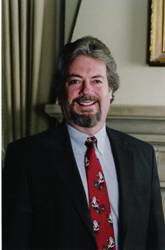
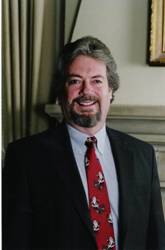
Dr. Wende Huehn-Brown is Professor of Business at St. Petersburg College. She has 17 years of engineering and management experience and holds a Ph.D. from the U. of Missouri-Rolla. She can be reached at huehnbrown.wende@spcollege.edu.

Five years ago I began teaching Operations Management using the Heizer-Render text entirely online.  I quickly saw how online students struggled with learning the lessons compared to my blended students.  So I spent many hours creating screen capture tutorials that worked through similar homework problems, as well as a lecture series to help students integrate the concepts and evaluate how they are applied in organizations.  I have used this technology in my classes for the past four and a half years. 

Currently, there is quite a bit of discussion about the evolving focus in online courses, but I want to emphasize we cannot overlook the impact on student learning.  In the blended classes I am able to add to this online format with active learning activities, simulations, and games at physical class meetings.  In January, 2012 I started using the New Design MyOMLab (I began the prior version in Fall, 2010).  I have always seen how blended student grades were significantly better than the grades of entirely online students.   (In the New Design instructor tools you can now view student performance by AASCB standards).  At this point my sample size is small, but blended students showed a 14% improvement in analytical skills and reflective thinking skills over online students.  These are vital skills our organizations need to be more competitive in today’s global marketplace.

Considering that all other course resources were the same, except for the blended physical class meeting, it left me pondering that modality value to student learning.  I acknowledge the integration of active learning activities, simulations, and games in our OM discipline.  Obviously, I have more data to collect, but I wanted to share the major impact on vital learning standards and encourage colleagues in this field to share their results.  What are your results?

Guest Post: Teaching Operations at the University of Tennessee

Dr. Bogdan C. Bichescu is Assistant Professor of Management Science in the College of Business Administration at the University of Tennessee. He teaches OM in very large classes and shares his experiences with us. Click here to see his syllabus.

The introductory Operations class at the University of  Tennessee often exceeds 600 students a semester. It  meets as a single section and is required for all business majors. Therefore, the topics included aim to be relevant to a wide audience of majors. The class features concepts (such as Theory of Constraints,  lean manufacturing, and waiting line management) that  demonstrate  principles useful in the streamlining of processes in different services environments. Additional topics, such as decision analysis and project management, seek to develop students’ organizational skills and decision-making abilities. Students report finding these topics interesting and practical. 

An early format for the class included a lab component, in addition to the weekly lecture. The labs offered the opportunity to cover several different HBR cases (e.g., Manzana Insurance, National Cranberry Cooperative) and experiential simulations (e.g., variations of the Dice Game, Project Simulation) to  illustrate the concepts discussed in the lecture. Student teams were assigned various case questions and had to deliver an oral presentation of their findings. TAs were responsible for teaching the labs and grading student presentations. Overall, students enjoyed working on cases and welcomed the opportunity for interaction in the labs. 

The current format removes the labs from the structure of the class. The lecture-only format eliminates the challenge of coordinating 6-7 teaching assistants and allows for more consistent grading. However, this format makes the inclusion of cases and simulations more difficult and revives the challenge of engaging the students. To address these limitations, I made The Goal, by Eli Goldratt, a required class reading (the book never fails to generate a lively class discussion) and I created an online discussion board where students ask questions and discuss class material. Bonus points are awarded to the most active board participants. MyOMLab also helps engage students through weekly assignments which comprise a combination of quantitative problems, readings, and cases.

Guest Post: How I Deal With the 1st Day of Class Syndrome at Texas Tech

Phillip Flamm, who is the Core Course Coordinator for OM at Texas Tech U., provides today’s Guest Post–his 6th for us.  Phillip teaches in the ISQS Department at the Rawls College of Business. He can be reached at p.flamm@ttu.edu.

It seems that large classes (>150) tend to have certain challenging characteristics no matter what the course. One of the most maddening issues is the impact of the student syndrome. In short, students feel less engaged in large classes and therefore sometimes start very slowly. I have incorporated several tactics that help motivate students to start course work immediately:

  • I pick a good student from past classes to speak briefly the first day. I leave the room so the class will expect an honest appraisal from the ex-student. They detail exactly what it takes to make a good grade in the course with an emphasis on getting started (purchasing the book, joining a focus group, time management calendar, etc.) immediately.
  • My course, Operations Management, is half lecture and half lab (semester long project requirement). I teach all the lectures and I have 7 or 8 lab instructors who teach 14 labs. The first day, lab instructors show recorded video descriptions of lab project requirements so each student will get the same idea of what is required. 
  • Also in the first day’s lecture I detail exactly what it takes to make a good grade:
    • Join a focus group (7 different times available) to verify their notes.
    • Utilize PRS clickers to answer extra credit questions.
    • Utilize custom notes pages in the back of the text book to record their personal lecture notes.
    • Point out poor grade statistics of students with no text book.
    • And what’s in it for them:
      • Develop skills that recruiters want (work well in teams, verbal and written presentations, developing a business plan)
      • Evidence that students have used their projects as successful talking points in interview situations to get a job.

It is impossible to motivate everyone to start fast, but hitting the students from several angles initially seems to help.

Guest Post: Using a Lab/Project Component in Our Texas Tech Summer OM Class

Phillip Flamm, who is the Core Course Coordinator for OM at Texas Tech U., provides today’s Guest Post–his 5th for us.  Phillip teaches in the ISQS Department at the Rawls College of Business. He can be reached at p.flamm@ttu.edu.

We have used a lab/lecture component successfully for our undergraduate  Introduction to Operations Management course at Texas Tech for several years. During the summer sessions we changed to a strictly lecture/exam format due to the brevity of the session (30 calendar days per session). There have been two negative consequences of the summer session approach: first, the students miss out on the lab portion (preparing a business plan for a start up manufacturing business) and secondly, some students have scheduled the class in the summer to avoid the lab component (enrollment had swelled to 200 total students each summer). This summer we attempted to rectify that situation with a little creative scheduling:

  • Combined 100 students into two sections, one for each summer session
  • Class met Monday-Friday for 1 hour and 50 minutes
  • I handled the lectures for 1 hour and 20 minutes daily
  • For the other 30 minutes I enlisted the help of a very talented PhD student (who had taught the lab portion before) to break the group into two 50 person sections (roughly 16 teams each)
  • During the lab portion teams prepared a slightly shorter version of the manufacturing start up business plan (presented in verbal and written form)
  • Projects were presented and graded the last four days of each session (I graded half the teams and the PhD student graded the other half during the same time slot)

The hybrid approach seemed to be a huge success. Summer school students received the great learning experience of preparing a business plan from an operations perspective and the students attempting to dodge the lab component got a difficult, but necessary life lesson. In addition, the PhD student was able to get a little wider range of teaching experiences (lecturing large sections, organizing/advising student teams, and grading presentations) than is normally available. It was a win/win for all!

Teaching Tip: Students Tell About Their Favorite Day in OM Class

Our publisher, Pearson/Prentice Hall, sends Jay and me a constant stream of feedback to help keep our OM texts current. We get reviews from profs teaching from the books, usage rates on MyOMLab homework problems, and even a report on what students using the books think the book and their class. I just reviewed the comments provided by the students and wanted to share some with you. Here was the question (one of many): Do you recall what you did the BEST day in your OM class? Maybe some of these answers will spark an idea you can use in your own class.

“We worked in small groups, went over homework, and then gave feedback to each other”.

“We played the Beer Game and the winning team got gift cards”.

“The day before each exam he gave everyone a chance to ask questions so the test would be easier to study for”.

“We had a fun group project that was worth extra credit on our grade”.

“We had a guest speaker who talked about the OM classes he took and how they made him successful. It made me feel confident about taking this course”.

“She showed us how to do a value chain –and then I did one all by myself”!

“The teacher told us about his life story and work experience”.

“We watched a video, had lots of discussion, and then worked on projects”.

“The day I realized I  understood everything that was going on in class”.

“”We went outside and learned on the lawn”.

These are just a few observations, out of 100’s of comments, but they do seem to point to the importance (in students’ eyes) of the non-lecture part of your class. Is this a question you want to ask your own students?

Teaching Tip: iPad, I Saw, I Waited–The State of E-Texts

The article by this title in Wired Magazine (Aug.26, 2011)  just caught my eye, as Jay and I have been closely watching the role of e-texts for well over a decade. Surprisingly, there has been very little traction during this period, with sales of the e-versions of our OM books still hovering around the national average of 10%. Wired predicts that there will be little change any time soon, and puts e-text sales at $585 million by 2013–just 11% of all text sales.

How can this be when 27% of college students surveyed think their laptop is the most essential item in their bag?  Further, almost 75% say they wouldn’t be able to study without some type of digital technology. But here is the bad news from Wired for us as OM instructors: “Nearly 2 in 5 say they are unable to go more than 10 minutes without checking one of their digital devices”.

To answer the first part about e-text sales, Wired thinks : (1) students are smart and have figured out that buying a book–new or used– and then reselling it is still a good deal; and (2) everyone is still waiting to see around which platform the  major publishers will coalesce. As e-texts become more dynamic,  full of audio-visual content, and internet-connected, the question will be whether your e-text will work on your Kindle as well as your laptop? What about on the HP Touchpad that I just picked up this week for $100?

Now, about the second issue– of students focusing not on you, but rather on their freedom to multitask with their technology during lectures? Here is how Jay and I can  help: (1) Try showing some of our 31 video cases —  5-12 minute company inside views that tie directly to each chapter’s topics; (2) Use some of the 2,000+ PowerPoints we created to power up your lectures (with suggested comments on each in our Instructor’s Resource Manual); and (3) Experiment with some of the class exercises we describe in this blog under the Teaching Tips section.

Guest Post: Creating Collaborative Opportunities in Large OM Classes

Phillip Flamm teaches in the ISQS Department at Texas Tech University. This is his 4th Guest Post on tools for teaching OM. His 1st post was on how he handles large sections, 2nd on the use of “clickers”, and most recent on lab components.

Studies suggest that students can comprehend and retain information more quickly when studying in a group environment (collaborative learning). In large class sections (>100) a collaborative learning environment is difficult to create. I have added voluntary “focus groups” to my large sections of Introduction to Operations Management in an effort to create a supplemental collaborative learning environment. Students attend these “focus groups” regularly at a scheduled time after each lecture. Exam grades for members of these groups run 10 to 15 points higher than the average exam score.

At the first of the semester I ask for volunteers to lead the groups. I meet with these students directly after each class and spend 10 to 15 minutes summarizing lecture concepts. Then the group leaders meet later with the members of their respective “focus groups” and guide them through the material (usually one hour). Members are encouraged to ask questions and add comments as needed. This collaborative learning environment allows group leaders as well as group members to increase comprehension of lecture material in a very time effective manner.

I believe in an effort-based grading system and I try to reward students who give extra effort.  Students who are willing to put forth extra effort by attending “focus group” meetings are rewarded with a better understanding of course material and ultimately higher grades. Students that don’t attend meetings generally are pushed farther down the grade pecking order. The lesson here for the group leaders is that teaching a topic is the best way to learn that topic. For students in general the lesson is that the effort required to take advantage of collaborative learning pays off both in comprehension and grade performance.

Guest Post: The OM Course with a Lab Component at Texas Tech

Today’s Guest Post is  from Phillip Flamm, who teaches OM in the Rawls College of Business at Texas Tech University. For details, feel free to email him at p.flamm@ttu.edu.

When I first began teaching Introduction to Operations Management 8 years ago the course was designed as a highly quantitative, large section (250 students), lecture-only format. This was a nightmare to teach from a lot of different angles which gave me plenty of motivation to “find a better way.” I split the course into one 1 ½ hour lecture session and one 1 ½ lab session per week. The lab focus is a semester long project where the students go through the complete planning cycle for the start up of a manufacturing company (corporate/business strategy, market analysis, customer requirements, product design phases, demand forecasting, break even analysis, capacity planning, location analysis, supply chain strategy, layout and facility design, and JIT concept utilization).

 Students (in teams of three) present the project in two parts, with a verbal presentation and written requirement for each part. They address the audience as if they were potential investors and the audience is required to ask questions to gauge the presenters’ ability to think on their feet. Lecture topics are presented along the same timeline as the development of the project in the lab. Lab instructors are PhD students who may be teaching for the 1st time. The course design is such that the lab instructors don’t have to do much other than learn the material and help the project groups, which is perfect for 1st time instructors.

Recruiters from Fortune 500 companies consistently have the following requirements at the top of their wish lists for college grads:

  • Excellent written and verbal communication skills
  • Possess an entrepreneurial spirit
  • Strong problem solving and analytical skills
  • Must thrive and work well in a team environment.

The lab/lecture approach to teaching OM gives the students practice and training in all these areas. In addition, students report utilizing discussion of this project to be very effective during the interviewing process to exemplify the skill level of the student as a potential job candidate.