Guest Post: Effects of the SWARM Effect on Total Team Collaborative Learning Results


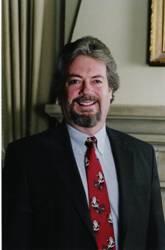
Our Guest Post comes from Phillip Flamm, who teaches Operations Management in the ISQS department at Texas Tech University. This is his 10th posting on our OM blog.

I have been working with total team collaborative learning (TTCL) for 5 years and the impact it has on student retention and speed of learning. In short TTCL involves the manner in which a team of 3-4 students process lecture material. Step by step:
• Lecture 1…Team covers Lecture 1 notes and compile a cumulative understanding of that lecture which is distributed to all members
• Lecture 2…Team covers Lecture 2 then reviews Lecture 1
• Lecture 3…Team covers Lecture 3 then reviews Lectures 1 and 2
• Lecture 4…Team covers Lecture 4 then reviews Lectures 1, 2, and 3
• One last review of all Lectures before an exam yields good scores

Results have been very, very good. TTCL teams tend to average 15 to 20 points higher on exams than the class (450 students) average.
The SWARM process adds to TTCL:
• Lecture 1….same process as above
• Lecture 2….a member from each team rotates from their team (1) to the next team (2) carrying the cumulative version of Lecture 1. Team (2) combines both documents and then covers Lecture 2
• Lecture 3….different team member from 1 goes to 2 with cumulative Lecture 2. Team 2 reviews both cumulative documents then 2 and 3
• Lecture 4….different team member (1) goes to 2 with cumulative 4 document and so on

The idea is that the movement of cumulative documents/students will make available the notes of 8 students instead of 4. I suspect that the exam scores will be higher than previous TTCL classes, but how much is the question.

The next step in my research is to compare a class with no organized collaborative learning teams to the SWARM – TTCL in terms of exam grades.
Guest Blog: Effects of Technology Use on Collaborative Learning Results

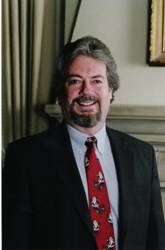
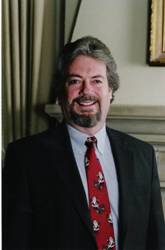
Our Guest Post comes from Phillip Flamm, who teaches Operations Management in the ISQS department at Texas Tech University. This is his 9th posting on our OM blog.

The Rawls College of Business here at Texas Tech U. has recently added a “technology room.” This room has 9 rectangular tables and will seat teams of 5. Each table has a large monitor at the head of the table. At the front of the room is a podium with a large screen monitor behind it. Having plugged in their laptops to the room’s web site, team members have several options:

  • View the master podium screen on the table’s large monitor
  • View the laptop screen of one of the team members
  • View specific documents

Team members interact as follows:

  • Team members take very comprehensive notes in class (lecture is structured with accompanying power point slides)
  • Team posts one member’s notes from the most recent lecture on the table monitor
  • Members go around the table in order discussing the notes they have for each power point slide
  • Extended discussion may result if there are questions about the content (each member offers their individual understanding of the concepts)
  • Member with their notes on the monitor makes changes or additions based on a clearer understanding of the material (all members can see changes as they are made)
  • After reviewing the most recent lecture they move on to the next most recent, etc., until all lectures (for the next exam) are covered
  • Every lecture is covered every time the team meets (past lecture notes generally go faster than the most recent)
  • The posting member distributes a copy of the updated, more descriptive notes at the conclusion of the meeting

Team members experience faster learning rates, increased retention, and better understanding of quantitative material. To exhibit these advantages the team members’ average exam was 15 points higher than the other 380 course students on exams this semester.

Guest Post: Total Team Collaborative Learning in OM at Texas Tech U.

flamm

Our Guest Post comes from Phillip Flamm, who teaches Operations Management in the ISQS Department at Texas Tech University

I have taught Operations Management, using the Heizer/Render/Munson text, for four summers now, with the following course guidelines:

  • Using power point pages with 3 slides per page and lines for notes to the right, teams reviewed notes together following lectures to clean up any questions. Lecture review is compounded daily by adding the new lecture material and begins again after an exam
  • Worked daily quizzes together for a team grade
  • Prepared quantitative teaching sessions during the summer class
  • Calculated quantitative problems together for a team grade

Exam grades for these summer teams were considerably higher than scores in my regular Fall and Spring semester classes (average 89% compared to 64% regular class average).  This Total Team Collaborative Learning (TTCL) improved student performance in the summer setting.

So, what does this mean? It appears that TTCL tends to improve learning, retention, and analytical abilities. I would really like to find a certain format that would help all students learn more, learn faster, and perform better. I think that selecting and training section leaders to be more proactive when it comes to individual performance and integration into the team environment are the keys.

In the Fall, the business school has a new classroom with video equipment at each table. This could be used to train leaders and focus group members and I will continue to experiment with TTCL.


Guest Post: Total Team Collaborative Learning of OM in Spain

flammOur Guest Post comes from Phillip Flamm, who teaches OM in the ISQS Department at Texas Tech University

I have recently returned from teaching operations management this past summer in Texas Tech’s Study Abroad Program in Spain. I divided my 24 students into 8 teams of 3 each with these provisos:

  • Each member of the team will get the same final grade for 80% of the class so they will be forced to help each other
  • Grades will be based on 2 exams (taken as a team), 2 or 3 team presentations, and a peer grade (from team members plus an attitude grade from me)
  • One presentation will be a tutorial of quantitative material
  • The second presentation will be the team solution of an OM case scenario

As part of the class, I also arranged tours of 2 manufacturing plants.

Students studying abroad normally want to talk about what they did and saw while traveling. The teams involved in Total Team Collaborative Learning only wanted to talk about how much they learned and how much they retained. The students truly enjoyed the OM class and the lowest group exam grade was 88/100. (I give the exact same tests during Fall and Spring back in Texas and the average is 64.) This seems to suggest that the teams learned faster, and retained more.

In the Summer Study Abroad 2014, we increased from 15 to 24 students over the prior year, with the final grades staying the same. We:

  • Utilized special power point pages with 3 slides per page, with lines for notes; teams reviewed notes together following lectures to clean up any questions they might have
  • Worked daily quizzes together for a team grade
  • Prepared quantitative teaching sessions 3 times during the month long class
  • Worked homework problems together for a team grade