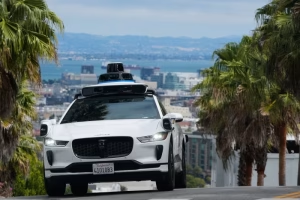
A 26,000-pound box truck loaded with Doritos and Frito-Lay chips rolls out of a distribution center, bound for a Walmart store about 4 miles away. It looks like any other truck, but there is no one at the wheel, writes The Wall Street Journal (June 8, 2026).
 This is one of the 35 driverless trucks PepsiCo is running on Arizona roads, marking it as the first major U.S. consumer-goods company with real-life, large-scale use of autonomous trucks on public roads.
Pepsi’s operation, using trucks outfitted with multiple cameras, sensors and computers, is on par with the technical hurdles being cleared by driverless passenger taxis from Waymo and Tesla. The firm operated with a safety driver in each truck for a few years, and started driverless runs in 2025. The trucks have had no accidents on public roads so far.
In instances where the trucks are making deliveries to stores, Pepsi employees are there to meet the trucks and unload them. Many delivery drivers have always been sales representatives too, and not having to travel with the truck allows them more time to interact with store owners to pitch them on the latest promotions.
The driverless trucks are more reliable than human drivers. The on-time arrival performance from driverless trucks reached 99%. Humans can call in sick or hit up against service limits that cap how many hours a day they can be behind the wheel. And the number of truck drivers has been constrained in recent months by new federal rules enforcing English-language proficiency..
The trucks perform best when they shuttle back and forth in repetitive trips—for instance, a 14-mile trip between a Gatorade bottling plant and storage facility. That route has fewer variables compared with routes that have more pickups and deliveries.
Pepsi employs thousands of drivers in the U.S., some represented by unions that have strongly opposed the rollout of autonomous trucks. The company anticipates retraining and redeploying some drivers to other types of work, including managing the new equipment, synchronizing the movement of people who go to the stores, or handling the unloading themselves. But ultimately, the company expects to hire fewer drivers.
Classroom discussion questions:
- What are the advantages and disadvantages of these Pepsi trucks?
- How will this impact the demand for truck drivers in the next 5-10 years?