
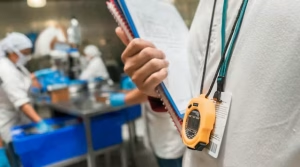
 With inflation keeping the cost of raw materials high, it has become more important than ever for manufacturing companies to reduce waste as much as possible. Not only is this strategy good for the environment, and the company’s bottom line, but it can also boost employee well-being and morale, writes Industry Week (Nov. 12, 2024). Here are five approaches:
- Use Less Material. One obvious solution is to cut down on the amount of materials used. To help identify where waste is coming from – whether it is using more energy or thread than needed to produce a shirt, or printing reports that could easily be shared digitally – a thorough examination of a company’s practices is the first step. Recycling should be prioritized, including printer cartridges, old computers, monitors and batteries from small devices. Recycle containers should be near every workstation.
- Save Time. Time management can help cut down on waste substantially by reallocating unnecessary work to more important tasks that will help boost profit. Real-time tracking using radio-frequency identification (RFID) uses radio waves to follow a product from the beginning of manufacturing all the way through to shipping. This helps identify how to potentially streamline and speed up the production process.
- Embrace Artificial Intelligence. AI has the potential to discover new areas for improvement that humans may not be able to identify on their own. For example, it could be used to analyze the motion of workers and products throughout the manufacturing process. Cameras can be placed throughout a factory to capture the necessary information for the AI system to review and analyze.
- Optimize Workflow. Another type of waste that is important to a manufacturing company’s success is excess movement. When an employee is able to produce more without having to work as hard physically, there is less wear and tear on their bodies. This results in less injuries and sick time needing to be taken, happier employees and ultimately an increase in worker productivity.
- Utilize Talent. Initiating training programs to educate employees on best practices can also reduce waste. When employees perform work that unnecessarily squanders both materials and time, they need to be taught there is a better and often easier way to complete those jobs.
Classroom discussion questions:
- In addition to these 5 ideas in Industry Week, provide several others to reduce waste.
- How else can AI be used in a manufacturing process?
