
In these troubled times, Intel’s announcement (Computerworld, Feb.18,2011) that it would start construction this year on a new $5 billion microprocessor plant in Chandler, Arizona is indeed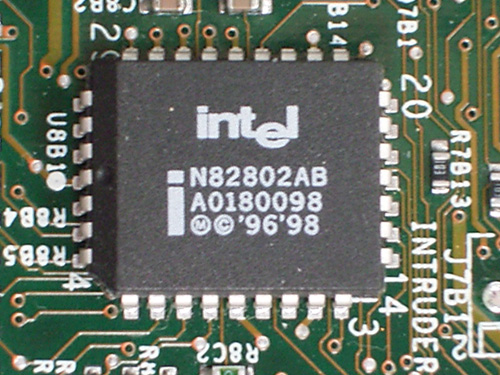 good news. The company, which also does manufacturing in Oregon and New Mexico in the US, and in Israel, Ireland, and China overseas, will open the Arizona plant in 2013 with 1,000 highly paid permanent workers. When complete, the factory will be the most advanced, high-volume semiconductor facility in the world. Fab 42, as it will be called, will produce 14-nanometer chips. (Nanometers, billionths of a meter, measure the width of chip circuits. Shrinking them makes chips more powerful or cheaper to make). The chips will be used in PCs, electronics, and mobile phones.
Intel has already committed another $6-8 billion this year to make upgraded chips at its other plants and to build a new plant in Oregon. This will provide those facilities the ability to produce 22-nanometer chips, which are in turn faster than the company’s current 32-nanometer chip-making process. The upgrades budgeted by this money will create yet another 1,000 high-skilled jobs, along with 6,000+ construction jobs. Intel will further hire 4,000 new R&D workers this year to round out the positive news. Revenue is expected to rise 14% to $49.5 billion, according to Bloomberg (Feb.18,2011).
The company, which makes 3/4 of its chips in the US, was praised last week by President Obama, who stated: “By and large, Intel has placed its bets on America”. Intel execs, meanwhile, have called on the US government for tax breaks to make it cheaper to build facilities in the US.
Discussion questions:
1.Why is the Intel announcement such good news?
2. Why does Intel have plants abroad?
3. What makes chip manufacturing such a difficult business?