Professor Misty Blessley raises an interesting AI issue-chip plant scheduling.
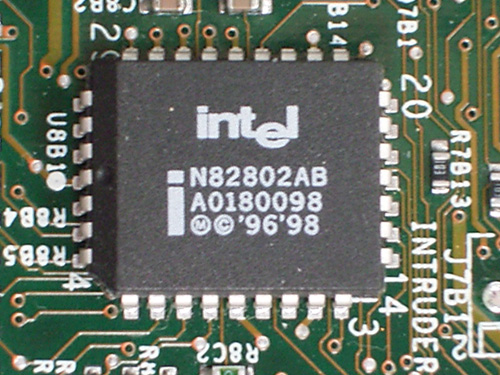
Semiconductors have been called the brains of the modern world. Switching between conducting and blocking electricity, they are essentially “on/off” switches that control the flow of power, and this unique characteristic makes them the building blocks of modern technology. They are behind computing, communications, and energy innovation, and our information dependent society is always hungry for more. Leading chip makers, NVIDIA and TSMC, both use an AI to advance semiconductor design, scheduling, and manufacturing, report ElectronicsUSA (June 4, 2026) and NVIDIA News (May 31, 2026).
 TSMC ( Taiwan Semiconductor Manufacturing Company), the world’s largest semiconductor foundry, makes the most advanced chips on the planet. NVIDIA is a global leader in accelerated computing and AI. For decades, TSMC has manufactured NVIDIA’s chips, and this partnership has come full circle. TSMC uses NVIDIA’s AI technologies inside its fabrication plants (“fabs”), which in the semiconductor industry refers to highly specialized facilities where silicon wafers are processed into microchips.
NVIDIA’s AI models are now embedded directly into TSMC’s manufacturing workflow, transforming production scheduling. A single wafer, a subcomponent of a semiconductor, may require hundreds of tools and thousands of tightly sequenced steps. TSMC can now evaluate millions of scheduling combinations in seconds. This optimizes job sequencing, and instantly rebalancing schedules when tools go down or urgent orders arrive. The result is smoother production flows, less idle time, and higher overall fab productivity. AI comes as close as ever to “running the plant.”
AI driven scheduling is also advancing through emerging capabilities such as predictive dispatching, where models forecast bottlenecks hours ahead and reroute wafers to prevent delays. Another is crossfab load balancing, which evaluates capacity across multiple TSMC sites and shifts work to maximize throughput. Both approaches are expected to reduce fab cycle time 5–10%.
NVIDIA’s AI scheduling helped TSMC cut critical chip production workloads 20-50%. This addresses society’s insatiable demand for semiconductors. It also fuels the next wave of breakthroughs in computing, communications, and energy innovation, the domains powered by these tiny on/off switches.
Classroom discussion questions:
- What are the strategic and operational risks if a company relies too heavily on AI to automatically reroute work without human oversight?
- Discuss how AI’s ability to evaluate millions of combinations in seconds changes a manager’s approach to bottleneck scheduling compared to manual or sequential sequencing rules (like SPT or FCFS).