
I first heard of the importance of learning curves when working at McDonnell Douglas right out of college during the peak of the Viet Nam War. While I toiled designing the wing of the DC-10 jumbo jet in the basement of the St. Louis plant, over 30 F-4 Phantom jets were rolling off the assembly line on the ground floor per month. Each one took less time than the one before it–and we could compute to the hour how long completion would take, as the learning curve effect is well-known in the airplane industry (see Table E.1 in Module E of OM, 10th ed.).
But the F-4 is old news and we want to provide you with a more current example. Businessweek (Aug.23-30, 2011) tells the story of Boeing’s Dreamliner 787, the world’s fastest selling jet, racking up more than 800 orders before it even flew. The planes have an average “catalog price” of $202 million, and Boeing plans to assemble 10 a month by 2013– a record for wide-body jets.
But here comes the bad news. As you know, Boeing is running 3 years behind schedule because of supply chain problems 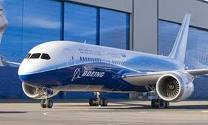 (that we have blogged about several times). The company has amassed $16.2 billion worth of inventory in the form of 35 almost-finished jets scattered at parking spaces from Washington to Texas. Some are waiting for seats, some lavatories, and others engines. Boeing has spent an average of over $250 million to build each of the 44 planes it has “completed” so far. The 45th plane will cost $184 million. To reach a break-even point at 1,000 planes, the unit cost must drop to $113 million. And this can only be accomplished with a very aggressive learning curve of 76%.
Based on the plane (no.45) currently being completed, the rate sits at 82.5%, not far from the 84% learning curve the Boeing 777 jumbo jet has followed. At this rate, the loss will be $4 billion per year through 2015. Is the learning curve critical to Boeing? Absolutely!