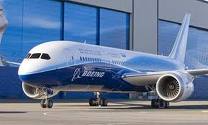
Teaching Tip: Why Quality Inspections Often Fail

We all know that students have trouble staying focused for a long lecture, even with the great job we all try to do. So try to find a short activity that will make a teaching point, break up the class for a few minutes, and get all the students enthused.  Here is something you may want to try in Chapter 6, Managing Quality. It takes about 10 minutes.

In this chapter, we have suggested that building quality into a process and its people is difficult. In the old days, inspection was the main form of quality control. But inspection may not catch all the errors, and it may be expensive. To indicate just how difficult inspections can be, ask your students to turn to the OM in Action box on page 234, called “Inspecting the Boeing 787”.

Ask them to each count the number of E’s (both cap and lower case), including those in the title. This should be a pretty easy inspection job, I think, and I offer a crisp $10 bill to the first student to give me the correct count. That usually gets their attention!

As they each finish, I ask them to shout out their count and I do a tally on the board. There is amazing variation and I only have to shell out the reward in maybe one out of five classes. The answer, by the way, is in the Instructor’s Solutions Manual, as discussion question #18.

If you can share a class exercise of your own, we would be very happy to publish it as a Guest Post.

OM in the News: Quality Control and the Boeing 787

American Airlines supervisors check the rudder and inspect the paint on a new 787. The tail has 13 different colors and is tricky to paint, so it gets close inspection

“Imagine you’re buying a $270 million car. You’d want to kick the tires pretty hard. That’s what airlines do with new airplanes,” writes The Wall Street Journal (Aug. 31, 2017). Delivering one widebody airplane is a big deal—each plane has a list price roughly the cost of a high-rise hotel.

Carriers like American Airlines station their own engineers at Boeing factories to watch their flying machines get built and check parts as they arrive. Then they send flight attendants, mechanics and pilots for what are called shakedown inspections.

“The rubber meets the road here,” says an American manager, as he begins checking a brand new Boeing 787. “It’s inspected and it’s inspected and it’s inspected. And yet we still find things.” American is taking delivery of 57 new planes this year.  Boeing does its own testing, but buyers do their own extra inspection–and note an average of 140 items on a plane’s punchlist.

Five flight attendants, a couple of mechanical experts and an American test pilot attack the 285-passenger plane. All the doors and panels are opened for inspection. Flight attendants shake each seat violently, grab the headrest and pull it up and jerk the cord on each entertainment controller. They test power ports, USB ports, audio jacks and the entertainment system. They open all tray tables, turn all lights on and off. They recline each seat with knee-knocking force. They flush all the toilets, blow fake smoke into smoke alarms, make sure all prerecorded emergency messages sound when required.

Inside the cockpit, an American test pilot flies the jet to its limits, making sure alarms sound when he increases air speed or slows the plane down to stall speed. He turns it sharply until “bank angle” warnings sound. Each engine gets shut down and restarted in the air. Every backup and emergency system is put into use to make sure it works.

Classroom discussion questions:

  1. Why do airlines feel the need to make the quality inspections?
  2. What tools that we see in Chapter 6 could Boeing use to improve quality even further?

Video Tip: Building the New Boeing 787-9 Dreamliner

The wings are being installed onto the plane with heavy machinery

To celebrate the arrival of British Airways’ first 787-9 Dreamliner, it has released a time lapse video showing the aircraft being built at the Boeing factory in Everett, Washington.The behind the scenes footage shows the massive production that is involved in constructing the Dreamliner with parts flown in from all over the world on 747 Dreamlifter cargo planes.

The four-minute video goes inside the plane showing bathrooms being installed as well as galleys, overhead cabin bins and panels being fitted onto the aircraft.The video makes a nice fit to the Global Company Profile on Boeing that opens Chapter 2, Operations Strategy in a Global Environment. We think your students will enjoy it and that it can lead to interesting classroom discussions about global sourcing, assembly lines, project management, and quality.

The wings of the planes are lifted into place as are the engines and finally it is finished with a spray paint of the British Airways logo. British Airways has started flying the new stretched model (20 feet longer than the original 787) to Delhi. Routes to Abu Dhabi, Muscat, Kuala Lumpur and Austin will follow. The Boeing 787-9 Dreamliner seats around 250 passengers, has a flight range of 8,200 nautical miles, and uses 20% less fuel than the 747s.

Video Tip: Watching the Boeing 787 Being Built–in 3 Minutes

boeing 787Jay and I have followed the Boeing 787 project closely for the past decade. The Global Company Profile that opens Chapter 2 details the plane’s design, supply chain, technology, and construction. The 787 has become one of Boeing’s most popular models due to its lightweight carbon composite airframe and the resulting lower fuel burn. Boeing continues to lose money on each Dreamliner it builds, but expects to reach the break-even point on the 787 program this year. The program’s deferred production cost, an accounting measure of how efficient an assembly program becomes over time, rose to $25.2 billion last year, topping the $25 billion cap Boeing had forecast for the 787.

Of course, the 787′s assembly costs will continue to drop over time as workers improve the efficiencies of the line and the rate at which they can build new planes. We discuss this issue on page 768, in Module E, noting the far-reaching consequences of learning curves. Boeing has a backlog of about 850 Dreamliner orders, on sales of 1,072 planes. It builds 10 each month at two plants and plans to boost output gradually to a dozen per month in 2016 and to 14 by 2020.

Your students will enjoy this 3-minute video showing the assembly line in Charleston S.C.  The amazing thing about the building is there are no uprights supporting the roof. Six planes in various stages of completion are under the one roof. When completed, the plane is towed to the paint shop. Boeing has a runway that connects with the Charleston airport, and from here that the planes are delivered to customers.

You might show this video with Chapter 2, OM in a Global Environment (Boeing is one of the U.S.’s largest exporters), Chapter 9, Layout, or Module E.

OM in the News: The Challenge of Fixing a Boeing 787

ethiopian airDesigning a new product such as the Boeing 787 is a huge undertaking, as discussed in Chapter 5, “The Design of Services and Goods.” The thin plastic skin on the 787 Dreamliner, writes The New York Times (July 30, 2013),  “is an engineering marvel, a mix of carbon fibers and epoxy molded into large barrel-shaped sections that are then baked at up to 350 degrees in giant ovens.” But while airlines love how this lightweight concoction saves fuel, the recent fire on a Ethiopian Air 787 in London provides the first test of how much more difficult and costly it will be to repair serious damage than on older aluminum planes.  Each day a jet remains grounded costs an airline tens of thousands of dollars.

The cause of the fire, a pinched wire on an emergency transmitter, was fairly mundane. But the high temperatures weakened the supports in a 10-foot stretch at the top of the rear fuselage and seared the paint on the top of the skin, causing the most extensive damage yet to one of the new 787s. Boeing will have to cut out the damaged areas and bolt a large patch, made of overlapping panels of composite materials, onto the plane. It will also need to install new composite supports and shore up the structural integrity of the plane. If the damage were more extreme, Boeing could remove the entire 23-foot-long barrel containing most of the jet’s rear fuselage and snap in another one.

The use of composite materials on planes has grown steadily over the last 4 decades. Only 1% of the weight of Boeing’s 747 jumbo jet came from composite parts when it was introduced in 1969. That increased to 11% by 1995 on the 777, which has an all-composite tail section. Composites now account for half of the 787’s weight, which, together with more efficient engines, cut fuel consumption by 20%.

Discussion questions:

1. What design issues did Boeing face in creating this plane? (Refer to the Global Company Profile that opens Chapter 2).

2. Why did Boeing make extensive use of composites?

OM in the News: Just How Reliable are the Boeing 787 Batteries?

Burnt 787 lithium battery

For an interesting discussion of reliability when you teach Chapter 17 in our text, we turn to The New York Times (Feb.27, 2013) article on how U.S. and Japanese aviation authorities have confronted a steep learning curve trying to unravel what caused last month’s battery failures on a pair of Boeing 787 Dreamliners. The lithium-ion batteries are commonplace in consumer electronics and electric vehicles, but despite being lighter and more efficient than older technology, they have never been used in aircraft as extensively as on Boeing’s flagship jetliner. After 7 weeks of nearly round-the-clock efforts, the National Transportation Safety Board has failed to find the root cause of the dangerous battery malfunctions that grounded the entire 787 fleet. Industry and government officials on both sides of the Pacific increasingly are skeptical a breakthrough is imminent.

Before approving the Dreamliner to begin carrying passengers in late 2011, regulators embraced Boeing’s risk assessment showing that the chance of a 787 battery meltdown was about one in 10 million flights (That means R= 0.9999999). That is roughly 100 times safer than some of the industry’s most reliable jet engines, which on average malfunction and have to be shut down roughly once every 100,000 flights.

But the U.S. Department of Energy (DOE) sees Boeing’s initial risk analysis as unrealistic, particularly considering variations among parts. “When carefully examining the nature of the material or the tolerance possible within the manufacturing process, it is difficult to arrive at those [risk] numbers,” writes DOE. In commercial use, the batteries have now ruptured and burned twice in less than 50,000 flights (or an R=0.99996). Contrary to FAA projections of an extraordinarily low likelihood of a serious airborne mishap, the Energy Department says the malfunction rate of the batteries has been higher than would be acceptable for uses on the ground. “That wouldn’t be a reasonable number for the auto industry.”

Discussion questions:

1. Why do Boeing’s reliability numbers differ so greatly from observed failures?

2. What are the options for operations managers at Boeing at this point?

OM in the News: Where To Park All The Boeing 787s?

Grounded 787s parked nose-to-tail in Seattle

The New York Times (Feb. 20, 2013) article titled “New Dreamliner Headache: Parking Space”, makes for a great classroom discussion about a wide variety of operations issues: capacity, supply chains, production scheduling, strategy, quality. With the FAAs grounding of the 787  fleet in its 6th week, Boeing faces a problem of where to store the airplanes that continue to roll off the assembly lines at its giant Seattle and Charleston factories. Reluctant to shut down its production lines, Boeing is producing 787s at a rate of  more than one a week. At the time the fleet was grounded, 50 Dreamliners were in service.  Since the 787 needs special F.A.A. permission to fly, Boeing is trying to make room for the Dreamliners by clearing out all the other models awaiting delivery. A consensus suggests, though, that it will be many months before the plane will fly again.

One reporter counted 15 Dreamliners in Seattle and noted that all the spaces on the flight line were taken. Some of those planes are positioned on a runway previously used for general aviation. Last week, a pilot calling Paine Field was reminded to heed the runway closure notice because “all the 787s are piled up there, they just keep stacking them up.”

Still, production of the 787 is continuing at the same pace at both plants. Stopping or even slowing the assembly lines would be very difficult and costly because the aircraft’s attenuated supply chain draws on parts manufactured all over the world. The engines are built in the U.K., the fuselage in Italy, and various parts of the wing are constructed in Korea, Australia and Japan. “You cannot stop factories all over the world from production,” says an MIT prof. “But everything in the end has capacity. The next step is to keep the suppliers manufacturing but not send the parts, but how many wings can Mitsubishi keep in its factory?”

Discussion questions:

1. Why is the 787 grounded?

2. What are Boeing’s options if the plane is not certified to fly for 2 more months?

OM in the News: Boeing’s Dreamliner Nightmare

Recent 787 emergency evacuation

By now, you likely know that the Federal Aviation Administration (FAA) ordered U.S. airlines to ground the Boeing 787 Dreamliners in their fleets until the lithium-ion batteries on the planes could be proved reliable. The FAA’s action, writes USA Today (Jan.17, 2013), came after Japan’s two largest airlines grounded their combined 787 fleets because an All Nippon Airways (ANA) plane had to make an emergency landing when the crew detected a battery’s burning smell.

The 24 Dreamliners flown by ANA and Japan Airlines  represent nearly half the 50 that Boeing has delivered to airlines. More than 800 of the planes are on order. The Dreamliner is Boeing’s newest and most technologically advanced jet, and the company is counting heavily on its success; it is the first commercial aircraft to be made largely of lightweight, fuel saving, carbon composites rather than conventional aluminum and steel.  Passengers like the airy cabins, large windows and comfortable humidity.

But the Dreamliner has had technological and supply chain problems from the start, which resulted in its being 3 years late in delivery. Last month, United Airlines and Qatar Airways had to divert or ground planes because of electrical issues. The 787 relies heavily on electricity and thus needs the large lithium-ion batteries to power it. Batteries, though, aren’t the plane’s only problem: On Jan. 8, a fuel leak on a Japan Airlines flight to Tokyo was detected before takeoff from Boston. On Jan. 11, cracks were spotted in the cockpit window of an ANA in Japan. The same day, another ANA flight was delayed because of an oil leak from an engine generator.

Boeing has said the 787’s reliability is “well above 90%.” As you teach reliability in Chapter 17, however, recall that the overall reliability of the Space Shuttle was .98–and, indeed, 2 Shuttles crashed out of 100+ flights.

How do passenger’s feel about the plane? “The uncertainty surrounding the Dreamliner makes it a plane that isn’t one that you can book and expect to fly reliably,” says one travel analyst.

Discussion questions:

1. What is the major operations issue facing Boeing right now?

2. What was the reliability of other technologically new planes introduced in the past 50 years?

OM in the News: Quality and the Dreamliner

When we discuss quality in Chapter 6, we note that there are 3 views of the term. The 1st is user-based — quality “lies the eyes of the beholder.” The 2nd is manufacturing-based–conforming to standards. And the 3rd is product-based–quality is a “precise and measurable variable”. The Wall Street Journal’s article ( Feb.16,2012), “How Dreamy is the Dreamliner”, covers all three in analyzing Boeing’s new 787, which is now in its 4th month of service and flying daily from Tokyo to Frankfurt for All Nippon Airways.

To passengers (users), the plane approaches a revolution in air travel with better cabin climate, less airsickness, reduced jet lag, and fewer headaches. The humidity level is a more breathable 10-15%, vs. 4-7% for existing planes. The cabin pressurizes at 6,000 feet vs. 8,000 feet on others. Overhead bins are 2 inches larger. Big windows help reduce motion sickness, and a new stability system makes for a smoother ride in turbulence. Cabin attendants even claim the atmosphere is much better for their skin.

From a manufacturing perspective, the body of the plane, constructed from super-strong plastics — carbon fibre composite materials — instead of aluminum, makes the plane lighter and more fuel-efficient. And the number of holes drilled in the fuselage (under 10,000 vs. 1 million in a 747) means better aerodynamics.

The products-based view of quality can claim a plane that flies at Mach .85, compared to Mach .785 for a Boeing 737. Fuel efficiency and emissions are 20% better than on a similar-sized 767.

Discussion questions:

1. Did Boeing’s continuing supply chain problems on the 787 impact the plane’s quality?

2. Which aspect of quality is most important to Boeing? To the airline  buying the 787? To the passenger?

Teaching Tip: Learning Curves and the Boeing 787

I first heard of the importance of learning curves when working at McDonnell Douglas right out of college during the peak of the Viet Nam War. While I toiled designing the wing of the DC-10 jumbo jet in the basement of the St. Louis plant, over 30 F-4 Phantom jets were rolling off the assembly line on the ground floor per month. Each one took less time than the one before it–and we could compute to the hour how long completion would take, as the learning curve effect is well-known in the airplane industry (see Table E.1 in Module E of OM, 10th ed.).

But the F-4 is old news and we want to provide you with a more current example. Businessweek (Aug.23-30, 2011) tells the story of Boeing’s Dreamliner 787, the world’s fastest selling jet, racking up more than 800 orders before  it even flew. The planes have an average “catalog price” of $202 million, and Boeing plans to assemble 10 a month by 2013– a record for wide-body jets.

But here comes the bad news. As you know, Boeing is running 3 years behind schedule because of supply chain problems (that we have blogged about several times). The company has amassed $16.2 billion worth of inventory in the form of 35 almost-finished  jets  scattered at parking spaces from Washington to Texas. Some are waiting for seats, some lavatories, and others engines. Boeing has spent an average of over $250 million to build each of the 44 planes it has “completed” so far.  The 45th plane will cost $184 million. To reach a break-even point at 1,000 planes, the unit cost must drop to $113 million. And this can only be accomplished with a very aggressive learning curve of 76%.

Based on the plane (no.45) currently being completed, the rate sits at 82.5%, not far from the 84% learning curve the Boeing 777  jumbo jet  has followed. At this rate, the loss will be $4 billion per year through 2015. Is the learning curve critical to Boeing? Absolutely!