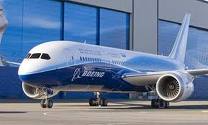
After much wrangling and predictions that Boeing would locate its new 777X plant in nonunion South Carolina, the firm may have reached deals with state and IAM union officials to win the aerospace giant new tax breaks and 8 more years of labor peace in exchange for building its planned jetliner in Washington. The Wall Street Journal (Nov.6, 2013) reports that Gov. Jay Inslee called for a special session of the state legislature to approve a package of tax and policy incentives valued at $18.7 billion. Inslee said approval of that package and of the labor agreement are necessary for Boeing to make the 777X in its longtime Puget Sound base. “Inaction will cost the state of Washington,” said Inslee.
The moves capped an intense period of maneuvering over the plans for the 777X, a long-range jetliner considered pivotal to Boeing’s future. The 777X, scheduled for its 1st delivery by 2020, is likely to be the last major new jet from Boeing for many years, and there has been intense speculation over where the plane and its huge carbon-fiber composite wings would be built. The Wall Street Journal reported just last week that Boeing was leaning towards a nonunion plant in South Carolina. Boeing also announced it would give “much” of the engineering work on the 777X to engineers in 5 U.S. states and Russia, with no mention of plans to use engineers in Washington.
The South Carolina facility, Boeing’s first aircraft assembly plant manned by a nonunion workforce, has been a source of tension with the IAM. Boeing selected it in 2009 as the site of its second 787 Dreamliner assembly line, prompting a complaint from the National Labor Relations Board that the move was retaliation for a 2008 strike by the IAM that halted Boeing’s assembly lines for 58 days. The potential new agreement with IAM leaders conveys to 2024 and includes a $10,000 signing bonus for workers. The union said the deal would provide an “unprecedented degree of labor stability in the volatile and competitive industry.” “It’s a tough one, if you call their bluff and you’re wrong, then you’re just kicking yourself,” adds a machinist.
Classroom discussion questions:
1. Why is this such a critical OM decision for Boeing?
2. What factors discussed in Chapter 8 did the company consider in selecting Washington over S. Carolina?