
When we discuss how to build a lean organization in Chapter 16 (JIT and Lean Operations), we note that one of the many ways 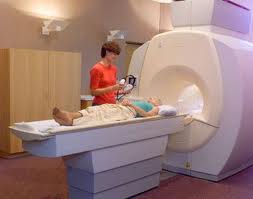 to improve productivity is to eliminate all but value added activities. A new research study in the Journal of the American College of Radiology (Sept., 2011) reports on a German hospital that was able to almost double the percentage of patients receiving an MRI scan in 24 hours, increase scanner productivity by 1/3, and save $338,000 in its first year of implementing lean management techniques.
Long the lifeblood of corporate bosses, lean is only now beginning to filter down to health care. The authors, at the 1,200 bed University Hospital Giessen write: “Many health care organizations do not measure key parameters such as demand, capacity, patient access, process efficiency, and productivity. They are run like cottage industries of dedicated artisans. Among the consequences are underutilization of very expensive resources and long patient delays”.
They identified 33 “failure modes”, or process snags leading to waste, and fixed the 14 most critical ones. Fixes included increasing staffing levels to keep personnel from being overloaded, eliminating redundant exams, and getting rid of superfluous documentation. This dropped radiology information systems time from 3 minutes/exam to under 1 minute. After launching the program, 1,000 additional exams can be run per year. The mean cycle time also dropped (from 52 to 39 minutes), while throughput increased by 38%, and scanner productivity jumped 32%.
“Quality and cost are reconciled by process improvement”, they conclude. We would also note that lean is not just about laying off people to save money. Here is a good class example about using lean to set the best staffing level and finding new ways to use and develop workers.
Discussion questions:
1. Identify other ways to improve hospital productivity with lean tools.
2. How was the hospital able to justify higher staffing costs?
I want to see hospitals work on the core, basic, blocking-and-tackling issues, such as:
1) ensure nurses ALWAYS (OK, almost) have the meds they need for their patients
2) ensure the O.R. always (!!) has the instruments and equipment needed for their patients
Hospitals are failing their staff members and patients in basic, fundamental things. We can’t afford to be dabbling around the edges with lean tools.
I’m glad when hospitals ADD people to a process when it’s necessary. We often (usually?) find productivity improvement with Lean, but Lean is really about the RIGHT number of people… not less.
As a nurse working on a MBA I see so many inefficiencies in the system. I agree with you on #1 of having the meds needed for the patients. I think it is great when I look on this site and see so many things that apply to healthcare. I work in a level 1 trauma center in Chicago. When bad traumas roll in, our wait times increase because radiology and resources are shut down. Keep up the good work on this site!